Why Buyers Remember Video Listings Longer Than Photo Listings
Publicado:
August 24, 2026
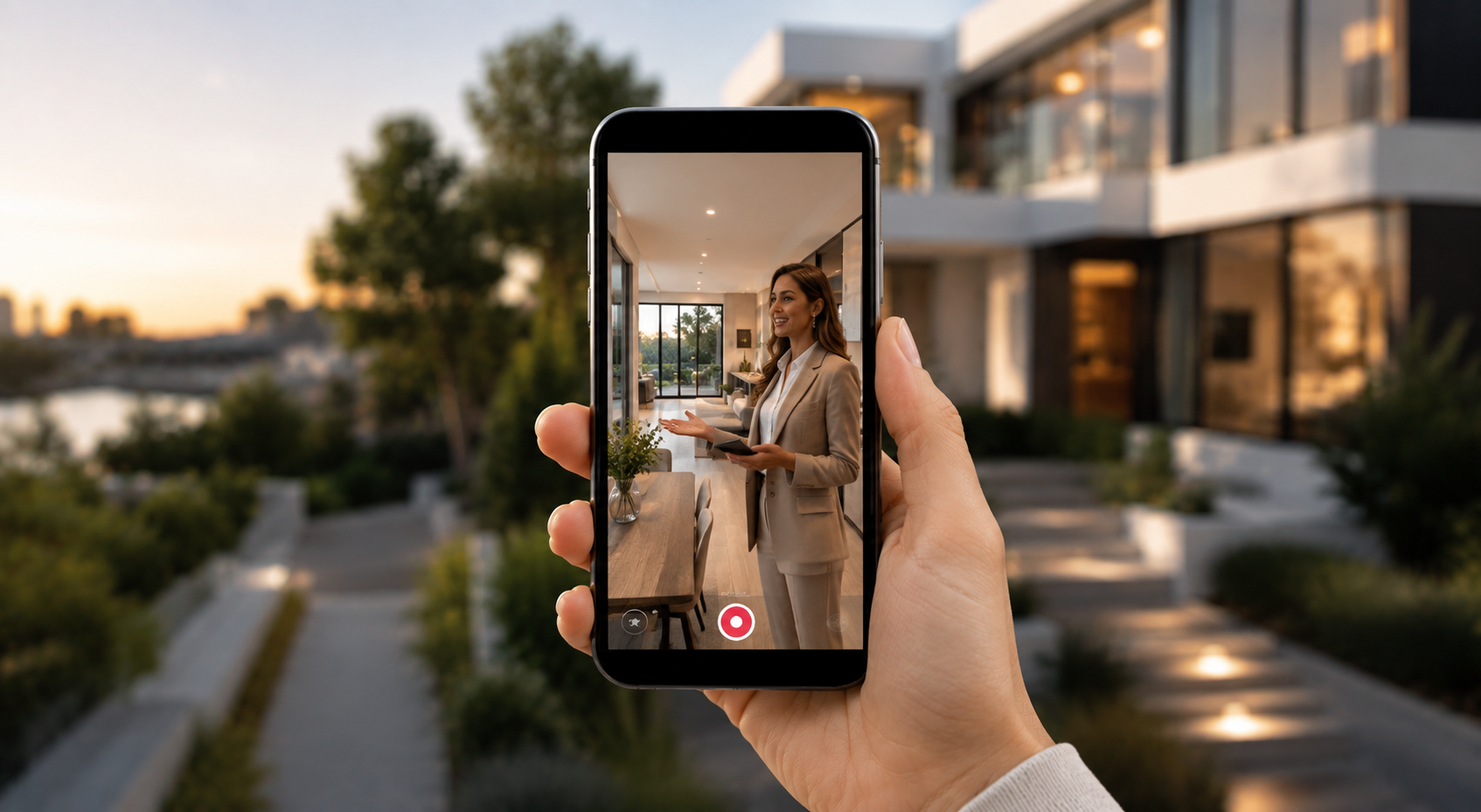
Think about the last time you spent an evening browsing homes online. After twenty or thirty listings, the details probably started blending together. Was the kitchen with the white island in the house with the big backyard, or was that the one with the upstairs loft? Which property had the sunny breakfast nook? Which one had the awkward hallway? This is exactly where video listings gain a memory advantage over photo listings. A photograph can show a beautiful room, but a video gives that room a place inside a larger experience. Instead of receiving isolated visual facts, buyers watch the property unfold in front of them, almost as if they are walking through it themselves.
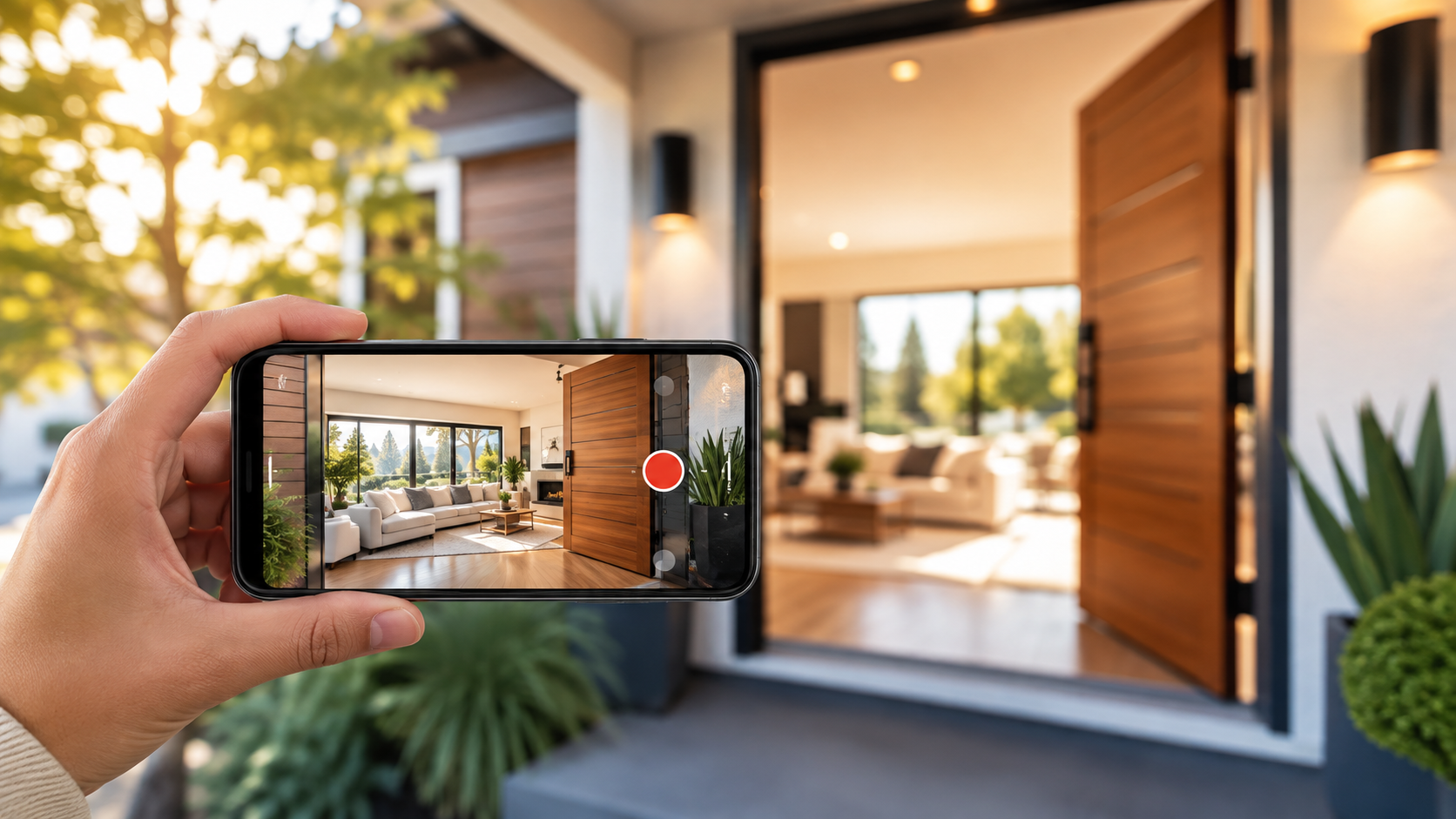
That difference matters because human memory isn't a filing cabinet where every image gets stored neatly in its own folder. We tend to remember experiences, relationships, movement, emotional reactions, and sequences. A video naturally provides more of those memory cues at once. The buyer sees the front door open, moves into the living room, notices how the kitchen connects to the dining area, follows the hallway toward the bedrooms, and finally reaches the backyard. By the end, the property isn't merely a collection of rooms. It has become a small journey.
Photos remain incredibly useful, and nobody should treat video as a replacement for strong listing photography. Buyers still want to zoom in, compare finishes, revisit specific rooms, and quickly scan multiple properties. The difference is that photos are excellent reference tools while video is often a stronger experience-building tool.
That's why a buyer may forget exactly how many listing photos they saw but still remember, “Oh, that's the house where the kitchen opened right into that huge family room.” Video gives the brain more connections to work with. And when hundreds of homes compete for attention on a screen, being remembered can be just as important as being seen.
The Memory Problem in Online Home Shopping
Buying a home may be an enormous financial decision, but the early stages of home shopping can feel surprisingly casual. A buyer sits on the couch, opens a phone or laptop, and starts browsing. Scroll. Tap. Swipe. Back. Next property. Within half an hour, that buyer may have encountered dozens of living rooms, kitchens, bathrooms, patios, staircases, and nearly identical neutral-colored bedrooms. The problem for sellers is obvious: attention is limited, and visual information becomes repetitive very quickly.
This creates what you might call the “beautiful house blur.” Individually, many listings look attractive. Collectively, they begin to resemble one another. Hardwood floors, stone countertops, stainless appliances, large windows, fresh paint, staged furniture—these are valuable selling points, but they aren't always distinctive enough to create a durable memory. A buyer may genuinely like a listing while viewing it and still struggle to remember it later.
Memory becomes especially difficult when photos are consumed rapidly. Each image gives the brain a piece of information, but the viewer has to build the relationships between those pieces. The first photo shows a living room. The next shows a kitchen. Another shows a dining space. Unless the photography and floor plan make those connections extremely clear, the buyer has to mentally assemble the property like a puzzle.
Video changes the workload. Instead of asking the viewer to construct the experience entirely from separate frames, it provides continuity. A doorway leads somewhere. A camera turns and reveals what sits beyond a wall. The viewer sees distance, direction, scale, and progression.
That additional context creates multiple retrieval cues later. A buyer might remember the kitchen because they also remember approaching it from the living room. They might recall the primary bedroom because they remember the hallway leading toward it. These connections give the brain more ways to return to the information.
In a crowded property search, this is a serious advantage. A listing does not necessarily lose because buyers dislike it. Sometimes it loses because buyers simply cannot remember enough about it to keep it emotionally present when the shortlist gets smaller.
Video Gives Buyers a Story, Not Just a Snapshot
People have been using stories to remember information for thousands of years, long before anybody started talking about content marketing, digital listings, or virtual tours. There is a simple reason: events connected through a sequence are easier to understand than disconnected fragments. A well-made property video takes advantage of the same basic principle. It turns a home into something that happens rather than something that merely appears.
Consider a standard set of listing photographs. A buyer sees the exterior, then perhaps the living room, kitchen, dining room, bedrooms, bathrooms, and outdoor area. The information is useful, but every photograph is essentially its own visual statement. “Here is the kitchen.” “Here is the bedroom.” “Here is the patio.” The buyer has to supply the transitions.
A video can create a different internal narrative. You approach the home. You enter through the front door. Natural light pulls your eye toward the living area. The camera moves into the kitchen and reveals an island facing the family room. Then the scene continues toward sliding doors that open onto a patio. Suddenly, the viewer isn't simply seeing features. They're mentally rehearsing what it might feel like to live there.
That tiny narrative makes a powerful difference. Stories create relationships between details, and relationships improve recall. The kitchen becomes connected to the family room. The family room becomes connected to the patio. The patio becomes connected to an imagined Saturday afternoon with friends.
Good listing videos don't need dramatic movie-style plots. In fact, forcing too much drama can make a property presentation feel artificial. The “story” can be as simple as a natural tour through the home.
The key is continuity. Buyers understand where they are, where they're going, and how one space relates to another. Those transitions turn visual information into an experience with a beginning, middle, and end.
Later, when someone asks which homes stood out, the video listing has an advantage. The buyer doesn't have to retrieve twenty separate images. They can recall one connected experience—and that experience brings the individual rooms back with it.
Movement Helps the Brain Build a Mental Map
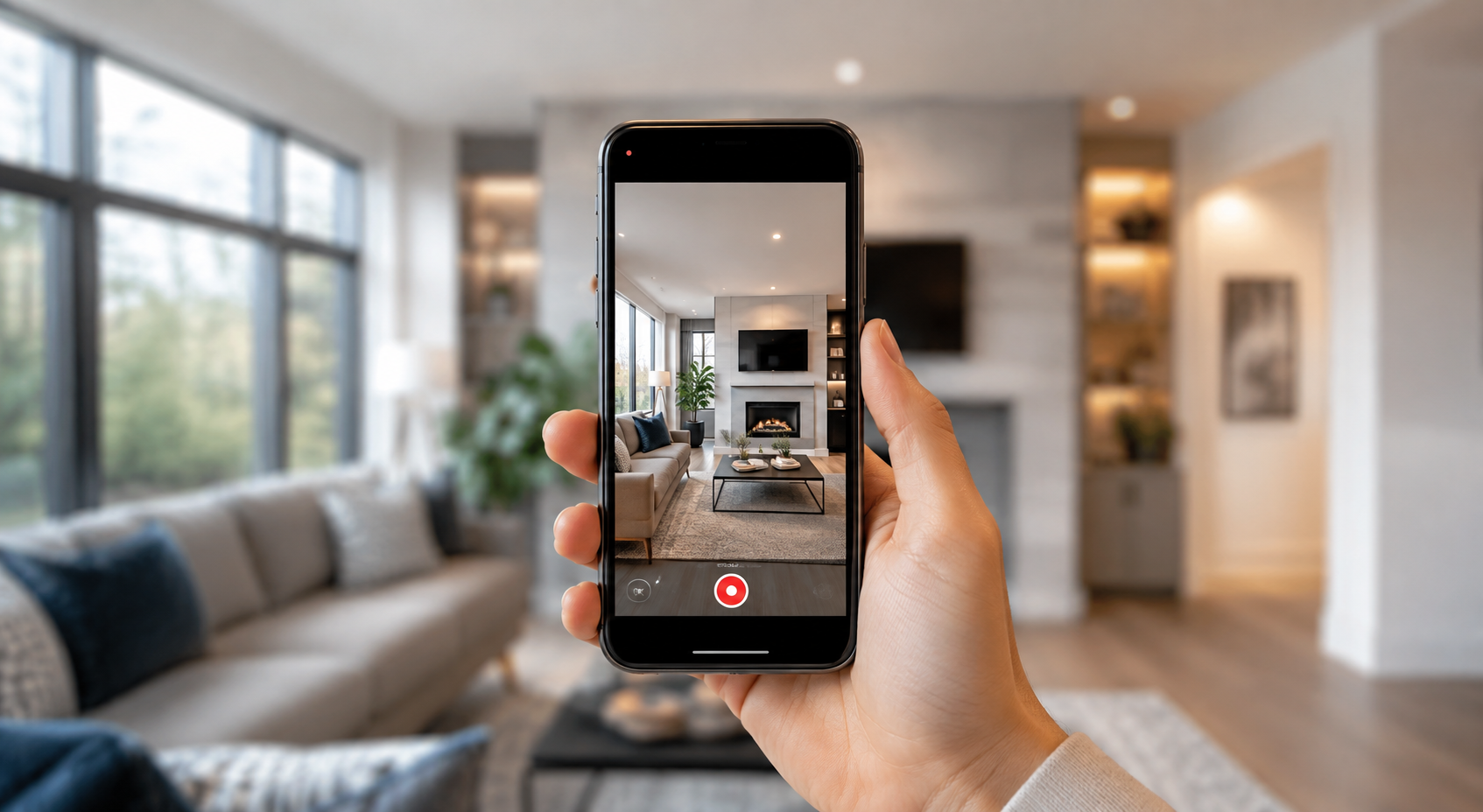
One of the biggest weaknesses of photography is also one of its strengths: a photo freezes the world. That makes it perfect for studying details, but it removes movement, and movement carries information that buyers desperately want when evaluating a home. When the camera travels naturally through a property, it helps viewers understand how spaces connect in three dimensions.
Imagine looking at three photos of the same open-concept living area. One shows the couch and fireplace. Another shows the kitchen island. The third shows a dining table. They may be beautifully photographed, yet you can still find yourself wondering where everything sits in relation to everything else. Is the dining room behind the kitchen? Is the fireplace visible from the island? How far is the patio door from the living area?
A smooth video can answer these questions in seconds because movement reveals relationships. As the camera turns, advances, or passes through a doorway, the viewer receives spatial clues that a static image cannot easily communicate. Distance becomes easier to estimate. Room connections become more obvious. The flow of the floor plan starts making sense.
This process matters for memory because people often remember places by creating internal maps. Think about a childhood home. You may not remember every piece of furniture, but you can probably imagine walking from the front door to the kitchen without consciously thinking about it. Your memory contains relationships between locations.
Video gives online buyers a lightweight version of that experience. They haven't physically visited the house, yet they begin constructing a rough internal map. “The stairs were near the entrance. The kitchen was straight ahead. The backyard was through the family room.”
Those connections make later recall easier because remembering one part of the property can trigger another. The entryway reminds the buyer of the staircase; the staircase reminds them of the upstairs landing; the landing reminds them of the primary suite.
A memorable listing is therefore not just one with pretty rooms. It's one that gives buyers a coherent sense of place. Movement helps create that coherence before they ever walk through the front door.
Sequence Turns Rooms Into a Journey
Sequence sounds like a small technical detail, but it dramatically changes how buyers process a listing. When information arrives in a meaningful order, the brain has less work to do figuring out how the pieces fit together. That's why a property video that follows a logical path usually feels easier to remember than a random montage of impressive rooms.
Picture a video that begins in the backyard, jumps suddenly to an upstairs bathroom, cuts to the garage, returns to the kitchen, flashes the front exterior, and then finishes in a bedroom. The images might all look fantastic, but the experience feels scattered. The viewer is receiving visual highlights without a clear route.
Now imagine the same property presented from the front entrance inward. The camera establishes the exterior, enters the foyer, moves through the main living spaces, shows the kitchen and dining areas, continues upstairs or down the hallway, and eventually reaches private rooms and outdoor spaces. Nothing revolutionary is happening, yet the listing feels easier to follow.
That logical order creates what memory researchers often describe in broader terms as structured encoding: new information becomes easier to store when it has relationships and organization. Buyers do not need to memorize room order intentionally. The sequence quietly does some of that work for them.
There's another advantage. A journey creates anticipation. When viewers move down a hallway, they naturally wonder what comes next. When the camera approaches a large set of glass doors, they expect a reveal. That anticipation keeps attention active.
Photos can create sequencing too, especially when arranged carefully, but viewers control the pace and may jump around. Video guides the progression more firmly.
The strongest listing videos use that guidance without making viewers feel trapped. They move naturally, giving each important area enough time to register before continuing.
By the end, buyers have experienced a route rather than a slideshow. They may not consciously think, “I remember this house because its presentation followed a logical sequence.” They simply feel that the property is familiar.
And familiarity is powerful. Once a house feels mentally navigable, it stops being just another online listing and starts feeling like a place the buyer has already begun to know.
Emotion Makes a Listing Stick
Memory isn't driven by information alone. Emotion acts like a highlighter. When something makes us curious, comfortable, excited, surprised, or even slightly nervous, the brain tends to treat that moment as more meaningful. That's one reason emotionally engaging video listings can stay with buyers longer than a sequence of technically perfect photographs.
Real estate is especially vulnerable to emotional decision-making because people don't buy homes the same way they buy office supplies. A buyer may have a practical checklist—three bedrooms, two bathrooms, a home office, enough storage—but those requirements exist alongside a much less measurable question: “Can I see myself here?”
Video is unusually good at encouraging that question.
A photo of sunlight hitting a kitchen floor can look attractive. A video can show the sunlight shifting across the room as the camera moves, reveal trees outside the window, and then continue toward a breakfast area. The viewer gets more than an architectural fact. They receive a mood.
The same thing happens with outdoor areas. A photograph tells you that a backyard exists. A thoughtful video can communicate depth, privacy, movement in the trees, the distance between the patio and the lawn, and the way the yard connects to the house. Those small sensory clues help people imagine life there.
That imagination matters because emotionally meaningful information gains more pathways into memory. If buyers start picturing morning coffee on the porch, kids running into the backyard, or friends gathered around an island, they aren't merely studying square footage anymore. They're attaching personal scenarios to the property.
Of course, emotional presentation needs restraint. Overly dramatic music, exaggerated editing, or artificial staging can push buyers out of the experience rather than drawing them in.
The goal is not to manufacture feelings. It's to reveal the home's existing atmosphere clearly enough that buyers can respond to it.
When that happens, memory becomes personal. A buyer may forget the exact countertop material, yet remember, “That was the house that felt incredibly bright and relaxed.” That emotional shorthand can keep a listing alive long after the browser tab is closed.
Voice, Pace, and Atmosphere Create Feeling
Video communicates through more than pictures. Even a simple property tour has a rhythm, and that rhythm influences how the viewer feels. Camera speed, editing pace, natural sound, narration, silence, and the amount of time spent in each room can all change a buyer's perception of the same home.
Consider pace first. If the camera rushes through every room, buyers may technically see the property without absorbing much of it. The experience feels like being pulled through a house by someone who is late for an appointment. Important details appear and disappear before the brain has time to organize them.
Move too slowly, though, and attention can drift. A twenty-second shot of an ordinary hallway doesn't become more memorable simply because it lasts longer. Effective pacing gives the viewer enough time to understand a space, notice a meaningful feature, and then move forward before curiosity fades.
Narration can add another layer when used carefully. A voice explaining that a breakfast area catches morning light or that the home office sits away from the main living space can direct attention toward features that might otherwise be missed. More importantly, spoken language combines with visuals, giving the viewer another route for understanding and remembering information.
Atmosphere matters too. A room doesn't exist only as walls and furniture. It has light, proportions, sightlines, and a certain sense of energy. Video can capture some of those qualities because it shows change over time. Curtains shift slightly. Reflections move. A door opens. The camera transitions from a darker hallway into a bright living room.
Those moments help the home feel less like a catalog and more like an environment.
For sellers and agents, the lesson is simple: memorable video is not about making the property louder. It's about controlling attention intelligently. Let important rooms breathe. Keep transitions natural. Avoid editing choices that compete with the house itself.
When the pace matches the property and the presentation feels comfortable, viewers stay mentally present. And the longer attention remains focused, the better chance the listing has of surviving inside the buyer's memory.
Video Reduces the Mental Work Buyers Have to Do
Every time someone looks at a property listing, their brain is solving tiny problems. How large is this room? Where does that doorway lead? Is the dining space connected to the kitchen? Is the second-floor hallway narrow? How far is the backyard from the main living area? With photographs, buyers often have to answer these questions by comparing multiple images and constructing their own interpretation.
That process uses mental effort. Psychologists commonly discuss this type of limitation through the idea of cognitive load: working memory can only juggle so much information at once. When a presentation forces people to assemble too many disconnected pieces, understanding becomes harder.
Video can lighten that burden.
Suppose a buyer sees a photograph of a kitchen and another photograph of a family room. If the angle isn't obvious, the viewer may not realize that the two spaces are directly connected. During a video walkthrough, the camera can move from one into the other without a cut. The relationship becomes immediate.
This matters because information that is easier to understand at the moment of viewing is often easier to remember afterward. The viewer doesn't have to spend as much mental energy reconstructing basic geography. Instead, that attention can go toward evaluating the property: Does the layout work? Does the space feel open enough? Would the furniture fit? Can I imagine living here?
Video can also clarify scale through familiar movement. Watching a camera pass through a doorway, travel along a counter, or cross a living area gives buyers dynamic size cues. It still isn't a substitute for measurements, but it often makes proportions easier to interpret than a wide-angle still image alone.
The result is a smoother mental experience. Buyers are less likely to feel lost, and the home's major features become connected naturally.
This is important because confusion is rarely memorable in a useful way. When buyers cannot understand a floor plan, they may not spend time solving the mystery. They simply move on.
A video that reduces unnecessary mental work gives the property a better chance to be understood, and once buyers understand a home, they have a much stronger foundation for remembering it.
Context Beats Guesswork
Context is one of the quiet reasons video works so well in real estate marketing. Buyers don't evaluate a kitchen as an isolated object. They care about what sits beside it, what they can see from it, how people move through it, and whether it fits the rest of the home. The same is true for bedrooms, bathrooms, offices, patios, and even hallways.
Static photographs can provide context, but each frame has boundaries. Anything outside those boundaries disappears. A professional photographer can use wide angles and thoughtful compositions to reveal relationships, yet the viewer is still looking at selected slices of reality.
Video expands that context by showing what happens between those slices.
A camera enters the bedroom and turns toward the windows. Now the buyer sees not only the room but also its orientation. The camera moves through the closet and back toward the hallway. Suddenly, the relationship between private and shared spaces becomes easier to understand. None of this requires fancy cinematography. Continuous visual context itself is valuable.
Context also helps prevent mistaken assumptions. Buyers frequently form inaccurate ideas from photos because perspective can be difficult to judge. A doorway may appear farther away than it really is. A room may seem larger because of the lens. Two spaces shown in consecutive photos may seem connected even when they sit on opposite sides of the house.
A natural walkthrough corrects some of those uncertainties.
That improved clarity affects memory because the brain doesn't need to preserve a pile of unanswered questions. Instead of remembering vague fragments, the viewer forms a more stable representation of the property.
Think of it like learning a new neighborhood. Looking at five pictures of streets gives you visual information. Driving through the neighborhood shows you how those streets connect. The second experience is usually easier to recall because every location has context.
Property video works in much the same way. It doesn't merely increase the amount of information. At its best, it organizes information into relationships.
For buyers who may evaluate dozens of homes in a short period, that organization can be the difference between “Which house was that?” and “I remember exactly how that one flowed.”
Photo Listings Still Matter—But They Work Differently
The memory advantages of video don't make photography outdated. Far from it. High-quality photos remain one of the most practical tools in a property listing because they serve a different viewing behavior. Buyers don't always want an experience. Sometimes they want an answer immediately.
How does the kitchen look? Tap.
Is there a tub in the primary bathroom? Swipe.
What does the backyard look like? Scroll.
Photography gives buyers control over where they stop, what they study, and how long they examine a particular detail. A video moves according to its own timeline. If the viewer wants to inspect a fireplace surround for thirty seconds, a still image is much more convenient.
Photos are also easier to compare side by side in memory when buyers are evaluating specific features. Someone deciding between three kitchens may return to the relevant photographs repeatedly. Those images function almost like reference cards.
The difference, then, isn't that video is “good” and photography is “bad.” They solve different problems.
Photos are exceptionally efficient at delivering visual facts. Video is exceptionally effective at delivering visual relationships. The strongest property presentations recognize that distinction.
A buyer might first discover a home through its main photo, scan the gallery to decide whether it meets basic expectations, and then watch the video to understand how everything connects. Afterward, they may return to individual images to inspect details again.
This creates a useful cycle. Photography attracts and informs. Video deepens understanding and emotional connection. Photos then support closer evaluation.
Sellers should therefore resist the temptation to treat listing media as a competition between formats. The goal isn't to choose one winner. It's to let each format do what it does best.
When video and photography support each other, buyers receive both clarity and experience. They can examine the property carefully while also forming a coherent memory of moving through it.
That combination is powerful because home buyers need more than attractive visuals. They need enough information to feel confident—and enough connection to remember why the home deserved their attention in the first place.
Photos Win at Scanning and Comparison
There is a reason buyers can race through a photo gallery incredibly quickly: the human visual system is good at extracting major information from a still image almost instantly. Within seconds, someone can register the approximate size of a kitchen, the dominant colors, the cabinet style, the countertops, the windows, and whether the overall design appeals to them.
That speed makes photos perfect for the screening phase of a home search.
If a buyer is evaluating fifty listings, watching a full video for every single property would be exhausting. Instead, they scan photos and eliminate homes that obviously don't fit. Only the more promising properties earn deeper attention.
Still images also make direct comparisons easier. Suppose a buyer has narrowed the search to three homes and cares strongly about outdoor living. They can open each backyard photograph and compare the spaces almost immediately. With video, they may need to scrub through several timelines to locate each yard.
This is why photos and video occupy different points in the buyer's decision process. Photos answer, “Is this worth exploring?” Video often answers, “What would it actually feel like to move through this place?”
Photography can also preserve small design details more effectively. Cabinet hardware, tile patterns, fixture styles, built-ins, landscaping, and architectural details are easier to study when the image doesn't move.
Where video gains ground is in the connections between those details.
A buyer may remember the general experience of a property from video and then use photographs to verify specifics. “That's the home with the great first-floor flow—now let me check the bathroom again.” Memory created through video leads back to information stored in the photo gallery.
Sellers should think about these formats like a map and a set of postcards. The postcards show individual destinations beautifully. The map explains how those destinations relate to one another.
You wouldn't want to plan an entire trip with only one of them.
Likewise, a complete real estate listing benefits from both fast, attractive still images and a coherent video experience. One supports efficient judgment. The other strengthens context and recall.
Why Video Often Feels More Trustworthy
Trust plays a surprisingly important role in memory. When buyers feel that a presentation gives them a clear, believable view of a property, they engage with it differently. They stop spending as much energy questioning what might be hidden and begin concentrating on whether the home genuinely fits their needs.
Video can support that feeling because continuous movement exposes more relationships between spaces. A buyer watches the camera walk from the kitchen into the living room instead of seeing two separately composed photographs. They see the hallway between bedrooms. They notice how long it takes to cross a large room. Those transitions can make the presentation feel less selective.
Photography, by nature, chooses a moment and an angle. That's not deceptive; it's simply what photography does. A skilled photographer looks for the most informative and attractive perspective. But experienced buyers understand that every image has edges, and they naturally wonder what sits outside them.
Video can answer some of those questions.
Continuity provides reassurance. When viewers see a room from several angles during a natural movement, they may feel more confident that they understand its actual shape. When the camera walks through a doorway instead of cutting immediately to the next space, they get additional information about the floor plan.
That sense of transparency contributes to stronger memory because confidence improves mental commitment. Buyers are more willing to imagine the property seriously when they believe they're seeing a realistic representation.
Of course, video can also destroy trust when handled poorly. Excessive speed changes, distorted lenses, aggressive color grading, suspiciously frequent cuts, or avoiding obvious sections of the property can make viewers wonder what the presentation is trying not to show.
The most memorable videos usually aren't the flashiest. They're the ones that feel clear.
Showing a home confidently sends an implicit message: “Here it is. Look around.”
That openness helps buyers lower their guard. And once they stop analyzing the media itself, they can focus on the house.
When that happens, the listing becomes easier to process, easier to visualize, and ultimately easier to remember.
How Video Memory Can Influence Buyer Decisions
Remembering a listing does not automatically mean buying it, but memory has a major influence on which properties remain under consideration. Home searches involve constant filtering. Buyers begin with a large pool, remove obvious mismatches, revisit favorites, discuss possibilities with partners or family members, and eventually decide which homes deserve an in-person visit.
At every stage, properties compete for mental space.
Imagine two homes that meet nearly identical requirements. Both have the right number of bedrooms. Both fall within budget. Both are located in acceptable neighborhoods. One was presented mainly through a gallery of strong photos. The other included photos plus a clear walkthrough video that helped the buyer understand the layout.
Later that evening, the buyer starts talking through the options.
“The second one was the house where you walked from the kitchen straight into the family room, right?”
That sentence reveals the advantage. The property has become easy to describe, and listings that are easy to describe are often easier to discuss and reconsider.
Video can also create familiarity before an in-person showing. When buyers arrive, they may recognize the entrance, anticipate the kitchen around the corner, or remember where the primary bedroom sits. That recognition can make the home feel less unfamiliar.
Psychology has long observed that familiarity can influence preference in many contexts. That doesn't mean buyers will choose a property simply because they've watched its video. Major decisions involve price, condition, location, financing, inspections, and dozens of personal factors.
Still, familiarity can help a suitable property remain mentally accessible.
That's especially important after multiple showings. Buyers often walk through several homes in one afternoon. By the end, features begin overlapping in memory. A strong video gives them something they can revisit later to rebuild the experience.
Instead of relying entirely on hurried memories from the showing, they can mentally reconnect with the home's layout and atmosphere.
In this way, video doesn't merely advertise the property before a visit. It can support the entire decision process, helping buyers remember why a home initially felt worth considering when competing options start piling up.
How Sellers Can Create More Memorable Video Listings
Creating a memorable property video doesn't require turning a home into a movie set. In fact, trying too hard can work against the goal. Buyers aren't looking for cinematic mystery. They want to understand the property, feel its atmosphere, and remember what makes it different.
Start with a simple principle: clarity before creativity.
A buyer should always know where they are. When the camera moves from one room to another, the transition should make spatial sense. Avoid jumping constantly between unrelated areas just because fast editing feels energetic. A memorable home tour usually follows a path that resembles the way someone might explore the house in person.
Next, identify the property's strongest relationships, not just its strongest objects. A beautiful kitchen matters, but perhaps the more memorable feature is the way that kitchen opens toward the family room and backyard. Instead of showing three disconnected beauty shots, demonstrate the connection.
Give important spaces enough screen time. Buyers need a few moments to orient themselves before the camera moves on. At the same time, don't linger on ordinary details that add little information. A long shot of a basic closet can flatten the rhythm of the entire video.
Use movement purposefully. Every camera movement should answer a question, reveal a relationship, or guide attention toward something meaningful. Walking through a doorway makes sense. Slowly turning to reveal a view makes sense. Constant motion for its own sake can make a tour harder to follow.
Natural visual anchors also improve memory. An unusual window, a dramatic staircase, a reading nook, a fireplace, a garden view, or an especially open kitchen can become the “mental label” buyers use to remember the property later.
Most importantly, keep the presentation believable. Buyers should feel that they have experienced the house rather than watched an advertisement trying to overwhelm them.
A good test is surprisingly simple. After the video ends, can someone explain the home's basic layout and name two or three features without replaying it?
If the answer is yes, the video has done more than look attractive. It has created an organized memory—and that's exactly what helps a listing survive in a crowded market.
Conclusion
The reason buyers remember video listings longer than photo listings has less to do with technology than with the way people naturally understand experiences. We remember relationships. We remember movement. We remember stories, emotional reactions, and the sequence of traveling from one place to another. Video happens to combine all of those elements inside a format that suits real estate unusually well.
A photograph says, “Look at this room.”
A good video says, “Here's what it feels like to move from this room into the next one.”
That difference creates context. Buyers begin to understand the home as a complete environment instead of a stack of isolated images. They form rough mental maps, recognize meaningful sightlines, experience transitions between spaces, and attach emotions to certain moments.
None of this means sellers should abandon photography. Strong photos remain essential because buyers need speed, detail, control, and easy comparison. A photograph lets someone stop and inspect exactly what matters to them. Video provides continuity that photographs cannot provide as naturally.
The most effective approach uses both formats deliberately. Photos help the listing earn attention. Video helps that attention become understanding. Once buyers understand the home, they have a much better chance of remembering it.
And memory matters more than many sellers realize.
A property doesn't compete only during the ten minutes someone spends viewing its listing. It continues competing hours later when the buyer is talking with a spouse, reviewing favorites, deciding which homes to visit, or trying to remember what separated one option from another.
The homes that remain vivid have an advantage.
That's why the smartest property videos aren't obsessed with flashy editing or cinematic tricks. They focus on something much more useful: helping a buyer experience the home clearly enough that it stays in their mind.
In a market where buyers may encounter dozens of attractive listings within a few days, that ability to be remembered can turn ordinary exposure into meaningful consideration.
Vídeos imobiliários, simplificados.
Subscrever