What Makes Buyers Stop Scrolling on Property Listings
Publié le :
August 27, 2026
Desire
There's a reason photographers chase natural light: it makes spaces feel alive. Rooms photographed with balanced daylight generally feel warmer, cleaner, larger, and more comfortable than rooms blasted with harsh overhead lighting or heavy artificial editing. Buyers may not consciously think, “I appreciate the color temperature in this image.” They simply feel that the space is inviting. That emotional response matters because buying a home isn't a purely analytical process. People calculate mortgages and compare square footage, but they also walk into rooms and think, I could live here.
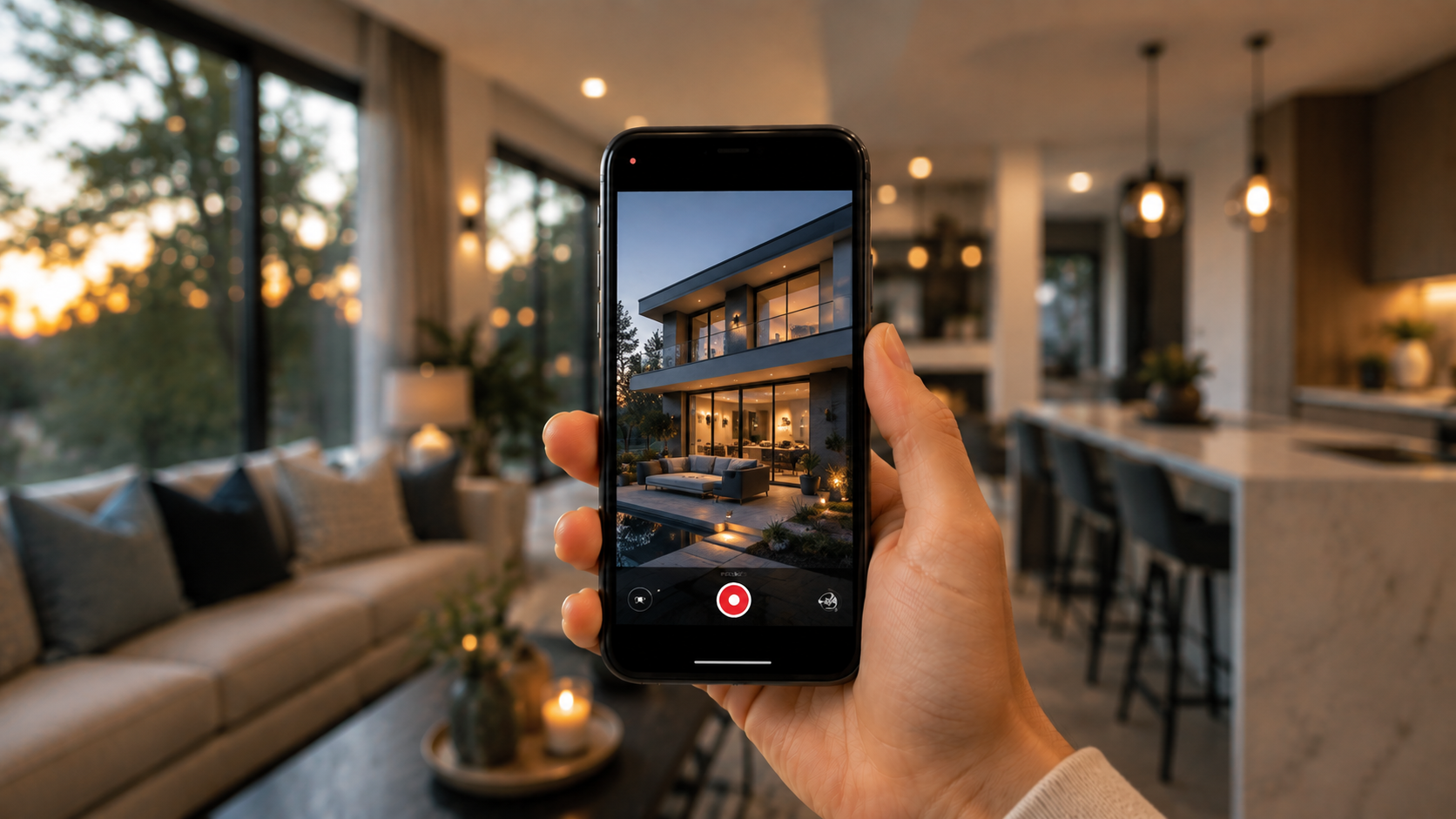
Timing can change everything. A living room photographed when sunlight naturally enters the space may look dramatically better than the same room shot on a dark afternoon. Exterior images taken when the lawn looks healthy and the sky has dimension feel more appealing than washed-out midday photos. For certain properties, twilight photography can create a luxurious mood, especially when exterior lighting, fireplaces, pools, or large windows are major selling points. The goal isn't to turn the property into a fantasy world. It's to reveal the best version of what buyers will genuinely experience.
Honest composition is equally important. Real estate photography has a reputation for tricks—extreme wide-angle lenses, aggressive HDR, unnaturally bright windows, furniture stretched by perspective, and skies that look imported from another planet. Those techniques may stop the scroll temporarily, but they can hurt the listing once buyers realize the presentation doesn't match reality. Great marketing doesn't need to hide the truth. It organizes the truth beautifully.
A strong photographer uses angles that explain the room, not just flatter it. Doorways, windows, furniture, and architectural lines help buyers understand scale. Multiple images can show how spaces connect without creating visual confusion. When buyers trust what they're seeing, they stay longer on the listing because their brain isn't busy asking, “What's being hidden?” That feeling of transparency is powerful. Natural light creates attraction, while honest composition creates confidence—and a listing usually needs both.
Price Is a Visual Signal, Not Just a Number
Buyers don't experience an asking price as an isolated number. They see it sitting beside photos, neighborhood information, property size, condition, and competing listings. In that context, price becomes part of the property's visual identity. A beautifully renovated home priced reasonably for its area can trigger immediate curiosity. The exact same home priced far above nearby alternatives may cause the buyer to swipe away before learning what makes it different. This is why pricing strategy affects online engagement long before negotiations begin.
Search filters make the issue even more important. Buyers often browse within tight price bands. A home listed slightly above a common threshold can disappear from the results of people who might otherwise consider it. Someone searching up to $600,000 may never see a listing priced at $605,000, even if the seller would eventually accept less. Pricing therefore isn't only about estimated market value. It also influences who sees the property in the first place.
Psychology plays a role as well. Buyers constantly make mental comparisons. They see three homes around $475,000 and then encounter another at $525,000. The more expensive property has to explain that difference visually and functionally. Maybe it has a larger lot, better renovations, an extra bedroom, stronger school access, a newer roof, or a more desirable location. If the listing doesn't communicate that value clearly, the higher price feels arbitrary. When value and presentation align, buyers are more willing to investigate.
There's another mistake worth avoiding: using a suspiciously low price purely to attract attention when that number doesn't realistically represent the expected transaction. A dramatic price can generate clicks, but if buyers feel manipulated, those clicks don't become trust.
The best pricing strategy makes the buyer think, I need to understand this property better. Sometimes that happens because the home looks like a great value. Sometimes it happens because the property appears unusually special for its price range. Either way, price functions like a headline written in numbers. It frames everything the buyer sees next. If that frame makes sense, the scroll slows down.
Headlines and Opening Copy Need a Hook
Once the photos and price earn attention, words start doing their job. The mistake many listings make is opening with a pile of adjectives that could describe almost any property: “Stunning! Gorgeous! Beautiful! Must-see!” Those words aren't necessarily wrong, but they're weak because they don't tell the buyer anything distinctive. When every house is “beautiful” and every condo is “luxurious,” the language turns into wallpaper. Buyers stop noticing it.
Strong opening copy identifies the property's reason to care. Instead of saying, “Welcome to this amazing three-bedroom home,” the description might open with a more concrete idea: a renovated craftsman two blocks from downtown, a quiet corner unit with floor-to-ceiling windows, or a single-story home with a backyard built for entertaining. Specificity creates pictures. Generic adjectives create noise.
Good copy also understands that online buyers scan before they read. The first couple of sentences need to carry the weight. Important information buried in paragraph four may never be seen. A strong opening answers some combination of these questions: What is this home? What makes it different? Why might the right buyer care? Once that foundation is established, the description can add texture.
Voice matters, too. Listing copy doesn't need to sound like a legal document or an overexcited game-show host. The best descriptions often sound confident, clear, and natural. If the home has quirks, they can sometimes be framed honestly rather than disguised. A compact kitchen in an otherwise charming historic property shouldn't be called “sprawling.” Buyers will see it eventually. Trust grows when the language feels aligned with what the photos show.
Think of the listing description as a good host at a party. It doesn't grab your arm and shout every feature at once. It introduces you to what's interesting, gives you context, and lets you discover the rest. The hook should create curiosity, not pressure. When buyers feel invited rather than sold to, they're more likely to keep reading.
Buyers Want to Feel the Lifestyle, Not Read a Feature Dump
A property can have quartz countertops, hardwood floors, a two-car garage, smart thermostats, stainless steel appliances, and a fenced yard—and still produce an incredibly boring description. Why? Because buyers don't purchase a collection of features. They purchase a version of daily life. The features matter, of course, but they become more persuasive when the listing shows how those features actually improve the experience of living there.
Take a screened porch. “Screened porch” is information. “A screened porch where summer dinners don't turn into mosquito battles” is a lifestyle. A large kitchen island isn't just a slab of stone with bar stools; it's where kids might do homework while someone cooks dinner, where friends gather during a party, or where a buyer drinks coffee on a quiet Sunday morning. A mudroom isn't exciting because it has hooks. It's exciting because backpacks, shoes, dog leashes, and wet jackets finally have somewhere to go.
That doesn't mean listing descriptions should become sentimental fiction. Buyers can tell when marketing gets too theatrical. The goal is to connect physical features with practical human benefits. A dedicated office matters because someone can close the door during a video call. A finished basement matters because it can absorb toys, guests, workouts, or movie nights. Walkability matters because grabbing coffee doesn't require starting the car.
Location should be described with the same mindset. Instead of dumping a list of nearby businesses, explain what the location makes easier. Can residents walk to dinner? Is there quick highway access for commuters? Are parks, trails, or entertainment nearby? Context helps buyers imagine rhythm, not just geography.
The strongest property listings balance facts with feeling. Buyers still need measurements, room counts, updates, and major systems. But those details become memorable when they're connected to real life. A feature tells buyers what the home has. A lifestyle tells them why they might want it. That's the difference between information they skim and a picture they start carrying around in their head.
Floor Plans Reduce Friction and Answer Hidden Questions
Photos are emotional. Floor plans are logical. The combination is powerful because buyers need both parts of their brain engaged before they feel confident enough to schedule a showing. A beautiful living room photo might generate interest, but it doesn't necessarily explain where that living room sits relative to the kitchen, entry, bedrooms, stairs, or outdoor space. A floor plan fills in those blanks.
This matters more than sellers sometimes realize. Buyers constantly ask hidden questions while browsing: Can the primary bedroom fit a king-size bed? Is the office near the front door or buried upstairs? Do I have to walk through the dining room to reach the backyard? Is the laundry near the bedrooms? Could an older parent stay on the main floor? Does the kitchen connect naturally to the family room? Photos rarely answer all of these efficiently. A clear floor plan can answer several in seconds.
The usefulness becomes even greater when measurements are included accurately. Buyers can compare the space with furniture they already own, evaluate whether a room works for a specific purpose, and understand whether the home's square footage is distributed in a way that suits them. Two homes with identical square footage can live completely differently. One may devote large areas to hallways and formal rooms, while another uses nearly every foot efficiently.
Floor plans also reduce the frustration caused by misleading photography. Wide-angle lenses can make rooms feel larger than they are, while selective photo sequences can disguise unusual layouts. The plan gives buyers an anchor.
For online real estate marketing, that sense of orientation is incredibly valuable. Every unanswered question creates a tiny bit of friction, and enough friction leads to a swipe. A floor plan converts mystery into understanding. It may not be glamorous, but neither is a map when you're lost—and yet that's exactly what you want. Buyers who understand the home are more likely to picture themselves inside it, save the listing, and move closer to a showing.
Video and Short-Form Tours Create Momentum
Still photos help buyers inspect a property. Video helps them feel movement through it. That's an important distinction because homes are experienced in motion. You walk from the entry into the living room, turn toward the kitchen, open the patio door, go upstairs, look down a hallway, and step into bedrooms. Video can recreate that sequence in a way static images can't.
Short-form property tours have become especially effective because they match the way people already consume digital content. A thirty- or sixty-second walkthrough can quickly communicate the home's style, strongest features, and overall flow. When the first few seconds are visually strong, a buyer who wasn't actively searching may still stop and watch. That's why video has become such a useful bridge between property listings and social media discovery.
The best videos don't try to show every closet. They're edited around a clear story. Maybe the opening shot reveals a dramatic kitchen, followed by the living area, primary suite, backyard, and neighborhood. Maybe a voiceover explains three reasons the home stands out. Maybe the agent walks through naturally and calls attention to practical details that photos might miss.
Longer video serves a different purpose. Once buyers are seriously interested, a slower walkthrough can help them understand room connections, scale, storage, outdoor spaces, and overall condition. That can be especially helpful for relocation buyers who may not be able to tour immediately.
The danger is overproduction. Extremely fast cuts, dramatic music, excessive transitions, and cinematic effects can make a property video entertaining without making it useful. Buyers aren't watching a movie trailer. Eventually they want to understand the house.
Good video creates momentum because it reduces the distance between seeing a listing and imagining an in-person tour. It makes the property feel less abstract. Photos say, “Here's what the home looks like.” Video says, “Here's what it feels like to move through it.” When both work together, buyers have fewer reasons to keep scrolling.
Mobile-First Listings Win More Attention
A property listing can look fantastic on a twenty-seven-inch desktop monitor and still fail where many buyers actually see it: a phone. Mobile screens change everything. Images are smaller, descriptions are collapsed, buttons compete for space, and users scroll with their thumb while doing three other things. If a listing needs patience to understand, mobile browsing will expose that weakness immediately.
The hero image becomes even more important because the thumbnail may occupy only part of the screen. Small visual details disappear. Dark rooms look darker. Text placed over photos becomes difficult to read. Clutter becomes more obvious because every object competes for limited screen space. The strongest mobile images have clear subjects, strong light, balanced composition, and enough visual simplicity to make sense instantly.
Copy needs mobile thinking, too. Nobody wants to open a property description and encounter a giant wall of promotional language. The opening sentences should communicate the home's identity quickly, while the rest of the copy should flow naturally and make important details easy to find. This doesn't mean reducing every description to bullet points. It means respecting the fact that readers are working with a narrow screen and limited attention.
Speed also matters. Heavy media, broken virtual tours, slow-loading galleries, or links that open awkwardly can kill momentum. Every extra second or technical hiccup gives buyers another reason to leave. On mobile, convenience isn't a minor design preference; it directly influences behavior.
There's a useful mental exercise for sellers and agents: review the entire listing using only one hand on a phone. Don't zoom. Don't switch to desktop. Browse exactly as a buyer might while sitting in a parking lot. Are the best photos visible early? Does the description make sense? Is key information obvious? Can you find the floor plan? Does the video play cleanly? If the experience feels annoying to you, it probably feels annoying to buyers. Mobile-first design doesn't require flashy technology. It requires removing friction wherever a thumb might hesitate.
Trust Signals Keep Buyers From Bouncing
A buyer can love a property's kitchen and still leave the listing because something feels off. Trust is often invisible until it's missing. Maybe the photos look heavily manipulated. Maybe there are only eight images for a 3,000-square-foot house. Maybe the listing description avoids mentioning obvious issues. Maybe important information is inconsistent. Those small signals create suspicion, and suspicion is poison for online engagement.
The strongest property listings feel transparent. Photo coverage is broad enough that buyers understand the major spaces. Details are consistent across the description and listing fields. Major improvements are described specifically rather than vaguely. If the roof was replaced in 2022, saying so is stronger than writing “many updates.” If the HVAC system is newer, give buyers useful context where appropriate. Specific information creates credibility because it sounds verifiable.
Professional presentation is another trust signal. That doesn't mean everything must look luxurious. It means the listing appears intentional. Photos are level. Rooms are tidy. Descriptions are proofread. Measurements make sense. Contact information is clear. These things sound basic, yet buyers notice when they're missing.
Honesty about limitations can actually strengthen a listing. A smaller backyard, older kitchen, shared driveway, or busy road doesn't disappear because the marketing avoids it. Buyers who care will discover those facts anyway. When the rest of the listing is transparent, they can evaluate the trade-off rationally instead of feeling misled.
Social proof can help as well when buyers encounter properties through agents or brokerage channels they recognize and trust. Consistent branding, verified professional information, and clear communication all reduce uncertainty.
Ultimately, buyers aren't just deciding whether they like the house. They're deciding whether they believe the representation of the house. Trust keeps curiosity alive. A listing that feels exaggerated creates resistance. A listing that feels accurate allows the buyer to focus on the more exciting question: “Could this actually be my home?”
The Best Listings Remove Uncertainty
Every unanswered question creates a small amount of mental work. Buyers may not articulate it, but they feel it. Where is the parking? Is there an HOA? How old is the roof? Does the second bedroom actually fit a bed? Is the backyard private? Are there stairs to the main living area? Can you see the highway from the deck? When basic questions pile up, interest turns into friction.
Great listings anticipate those questions and answer as many as reasonably possible without drowning the buyer in information. Think of the process like clearing obstacles from a walkway. The smoother the path, the easier it becomes for someone to move from casual interest to serious consideration. This is why accurate room dimensions, complete photo sets, floor plans, clear feature descriptions, useful location context, and well-organized disclosures can matter so much.
Uncertainty isn't always about physical features. Buyers also want to understand what happens next. Is the property easy to show? Are there offer instructions? Is there an upcoming open house? Is the home occupied or vacant? Clear calls to action reduce hesitation by telling interested buyers how to proceed.
There's a delicate balance here. Too little information creates doubt, but too much poorly organized information creates overload. Dumping every maintenance receipt and neighborhood detail into the main description isn't useful. Information should arrive where buyers expect it. The marketing copy can communicate identity and benefits. Listing fields handle structured facts. Supplements, disclosures, and agent communication can provide deeper transaction details.
The most effective listings make buyers feel oriented. Even before visiting, they understand the basic layout, condition, location, value proposition, and next step. That confidence matters because a showing request is a commitment of time. Buyers are more willing to make that commitment when the property already feels worth exploring.
Attention gets the listing opened, but clarity keeps the buyer moving. When people don't have to fight through ambiguity, they're free to imagine possibilities. And imagination is one of the strongest forces in residential real estate.
Small Details Can Make a Listing Feel Premium
“Premium” doesn't always mean expensive. Often, it means thoughtful. Buyers notice when a listing feels finished rather than rushed, even if they couldn't explain exactly why. Curtains are straight. Kitchen counters are clean. Beds are made properly. Bathroom lids are closed. Trash cans aren't sitting in the middle of the driveway. Cars haven't blocked the home's exterior in the hero photo. These details don't change the square footage or neighborhood, but they change the buyer's perception of care.
The same principle applies digitally. Photo order follows a logical path. Image quality is consistent. The property description avoids strange capitalization and obvious typos. Features are described clearly. Floor plans are easy to read. Videos aren't shaky. Links work. None of these elements is glamorous individually, but together they create a feeling of competence.
That feeling can influence how buyers perceive the property itself. When marketing looks careless, people sometimes wonder whether maintenance was careless too. That's not always fair, but human beings make associations quickly. A clean, organized presentation subtly suggests that the home has been handled with attention.
Styling matters, but restraint wins. A few fresh towels, neutral bedding, clean landscaping, warm lamps, simple flowers, or well-placed furniture can make photographs feel inviting without turning the house into a staged showroom that nobody could realistically live in. Buyers usually respond to spaces that feel aspirational but believable.
Even photo captions can add value when they're available. Instead of repeating “Kitchen,” a useful caption might point out a hidden pantry, new appliances, or backyard access. Tiny pieces of context reduce guesswork.
The broader lesson is that buyers experience quality through accumulated details. There isn't always one dramatic trick that stops the scroll. Sometimes it's the absence of mistakes. The listing simply feels easier, cleaner, clearer, and more appealing than everything around it. Like a well-tailored jacket, the buyer may not consciously study every stitch. They just notice that the whole thing fits.
Conclusion
What makes buyers stop scrolling on property listings isn't one secret headline, one photography trick, or one magic marketing formula. It's the combined effect of relevance, clarity, emotion, and trust. Buyers want a reason to look closer, and they want that reason quickly. A strong first image gets attention. A believable price creates context. Good copy explains why the property matters. Floor plans answer practical questions. Video adds movement. Complete information removes doubt. When these pieces reinforce one another, the listing starts to feel less like an ad and more like an opportunity.
The biggest mistake sellers can make is assuming buyers will patiently hunt for the home's best qualities. They usually won't. Online real estate is too crowded, and the next listing is one thumb movement away. If the backyard is incredible, show it. If the location saves twenty minutes of commuting, explain it. If the home has a flexible layout, make that obvious. If an important system has been replaced recently, communicate it clearly. Don't make buyers solve a puzzle to understand why the property deserves attention.
At the same time, scroll-stopping marketing shouldn't become misleading marketing. A distorted bedroom photo may earn a click and lose a showing. Overheated copy may create curiosity and destroy credibility. The strongest listing is persuasive precisely because the presentation and reality match.
Think about the buyer's journey as a chain of tiny yeses. Yes, I'll stop. Yes, I'll open it. Yes, I'll view the photos. Yes, I'll read more. Yes, I'll save it. Yes, I'll send it to someone. Yes, I'll schedule a tour. Every part of the listing either supports that chain or breaks it.
A home doesn't need to be perfect to stop the scroll. The listing needs to make the right buyer understand, quickly and honestly, why this particular home might be worth their next click.
Des vidéos immobilières, en toute simplicité.
S'abonner