How AI Is Changing Real Estate Video Marketing in 2026
Publicado:
July 9, 2026
Why Real Estate Video Marketing Feels Totally Different in 2026
Real estate video marketing in 2026 does not feel like the old days where an agent walked through a house with shaky phone footage, added some background music, uploaded it to Facebook, and hoped someone would bite. That era is pretty much cooked. Today, buyers scroll faster, compare harder, and expect a listing video to feel like a mini Netflix trailer, a local lifestyle guide, and a sales pitch all at once. They do not just want to see the kitchen countertops or the backyard fence. They want to know what it feels like to wake up there, drink coffee on that patio, walk the dog around the neighborhood, and host friends on a Friday night. That is where AI real estate video marketing is changing the whole game.
In 2026, AI is not just some fancy tech buzzword that agents throw around to sound modern. It is becoming the quiet engine behind almost every serious real estate video strategy. It helps agents write better scripts, edit faster, create property walkthroughs, generate captions, translate videos, analyze viewer behavior, and even personalize content for different buyer types. A first-time buyer, a luxury investor, a relocating family, and a downsizing couple might all see different versions of the same listing video, each one shaped around what they actually care about. That is wild, but it is also where the market is heading.
The biggest shift is that video has moved from “nice to have” to “you better have it.” A clean, well-produced listing video can build trust before a buyer ever books a showing. It can make an average property feel more memorable and help a great property stand out in a crowded feed. But the secret sauce is not just pretty visuals anymore. The real power comes from using AI to understand attention, emotion, timing, and intent. Real estate is still a people business, but video is now the handshake before the handshake. And AI? AI is the assistant making sure that handshake does not feel awkward, boring, or forgettable.
Buyers No Longer Want “Just a Listing Video”
Buyers in 2026 are not impressed by a basic pan across a living room anymore. They have seen too much content. Their standards have been trained by TikTok, YouTube, Instagram Reels, Netflix, drone footage, creator-style storytelling, and slick brand ads that pop up every day. So when they click on a property video, they are not thinking, “Please show me a slow shot of every wall.” They are thinking, “Show me why this home should matter to me.” That is a totally different challenge, and it is exactly why AI has become so useful in real estate video content creation.
The modern buyer wants speed, clarity, and vibe. They want to know the price range, the layout, the neighborhood feel, the commute situation, the natural light, the storage, and whether the home fits their lifestyle. But they also want the content to feel real. Over-polished videos can sometimes feel fake, while messy videos feel careless. AI helps agents find that sweet spot. It can cut out dead moments, highlight the most attractive parts of a property, suggest stronger opening hooks, add subtitles for silent scrolling, and reformat the same video for YouTube, Instagram, TikTok, Facebook, and listing portals. That means the buyer gets a cleaner experience without the agent needing to spend three days stuck in editing hell.
What is really interesting is how buyer psychology has shifted. People now make emotional decisions earlier in the search journey. Before they ever tour the home in person, they may already feel attached because a video helped them imagine life there. A good video does not just say, “Here is a three-bedroom house.” It says, “Here is where your kid might do homework, where your friends might gather, where your dog might crash after a walk, and where your next chapter could start.” AI helps shape that story faster, but the emotional punch still has to come from understanding people. That is why the best agents are not using AI to replace personality. They are using it to make their personality easier to see.
AI Has Turned Video Into a Sales Engine
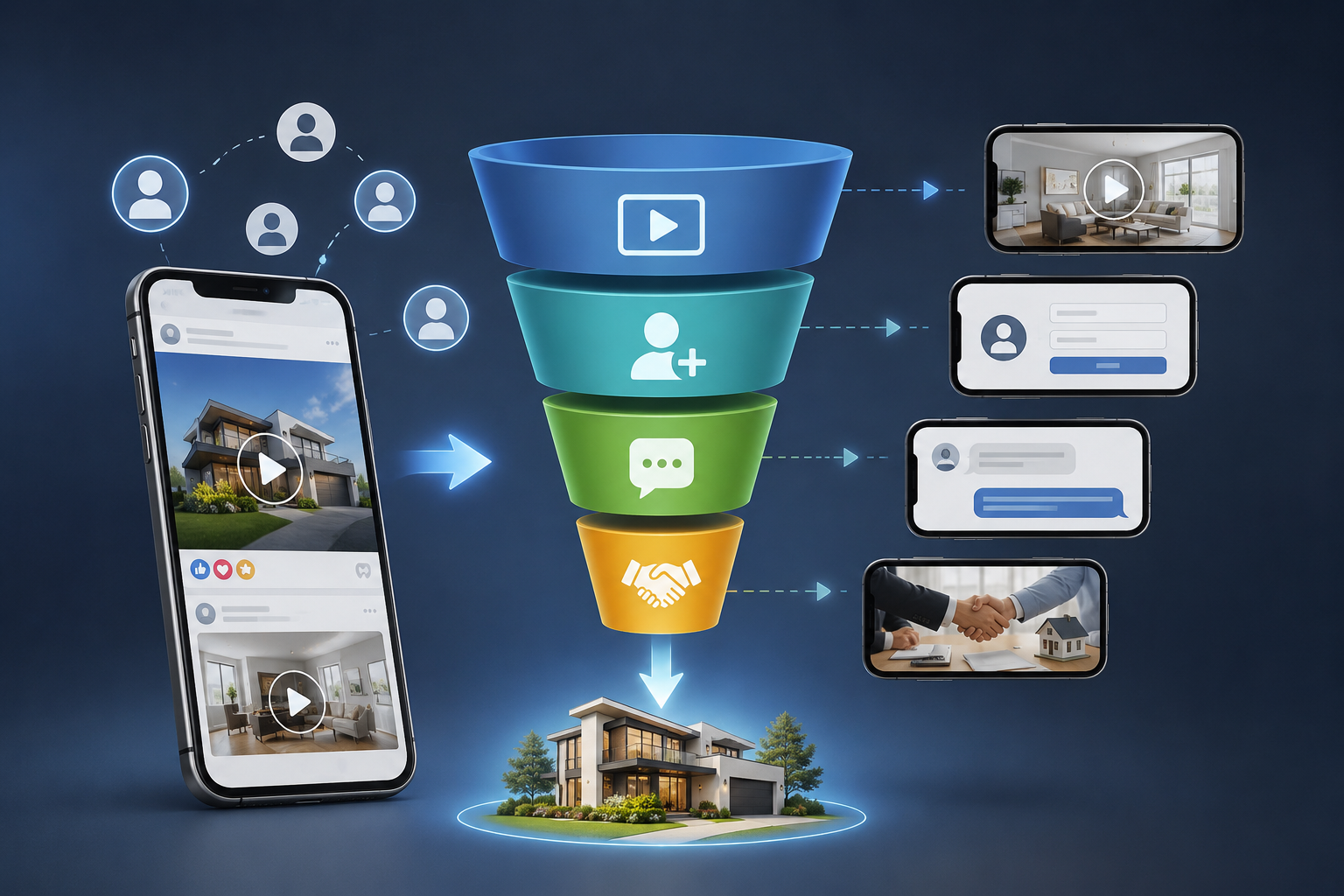
For a long time, real estate video was treated like decoration. Agents made videos because they looked professional, not always because they knew exactly how those videos moved buyers through the funnel. In 2026, that mindset has changed. AI-powered real estate videos are becoming direct sales tools. They can attract leads, qualify interest, answer common questions, retarget viewers, and help agents understand which prospects are actually serious. Instead of simply posting a video and praying to the algorithm gods, agents can now use AI to track what happens after someone watches.
Think of video like a digital open house that never sleeps. Someone might watch a listing tour at midnight, pause on the kitchen, replay the backyard section, click the neighborhood guide, and then request a showing the next morning. AI can help connect those dots. It can show which parts of the video kept attention and which parts caused people to drop off. It can identify whether viewers are engaging more with price, location, design, schools, investment potential, or lifestyle. That kind of insight is gold because it helps agents stop guessing. Instead of saying, “I think buyers like the pool,” an agent can see that viewers replayed the pool section three times more than the bedroom clips.
AI also turns one video into a full marketing campaign. A 5-minute listing tour can become a 30-second teaser, a 15-second Reel, a YouTube Short, a neighborhood clip, an email thumbnail video, a paid ad, a virtual open house segment, and even a follow-up message for interested leads. That is not just convenient. That is leverage. In the past, creating all that content required a videographer, editor, copywriter, social media manager, and paid ads specialist. Now, a smart agent with the right AI tools can produce a whole content ecosystem around one property. The agents winning in 2026 are not the ones making the most videos. They are the ones making videos that actually move people from curiosity to conversation.
AI Video Creation Is Making Agents Look Like Full Media Teams
One of the biggest reasons AI is blowing up in real estate video marketing is simple: it saves time without making everything look cheap. Real estate agents are already juggling showings, calls, paperwork, negotiations, inspections, client emotions, and about a thousand tiny fires that pop up every week. Asking them to also become professional video editors is a bit much. But in 2026, AI video tools for real estate agents are making it possible for one person or a small team to create content that used to require a full production crew. That changes the playing field in a big way.
AI can now help with nearly every part of the video workflow. Need a listing script? AI can draft one based on the property details, neighborhood, buyer persona, and tone. Need captions? Done. Need to remove awkward pauses? Easy. Need to turn a horizontal walkthrough into vertical clips for Reels and TikTok? No sweat. Need a voiceover that sounds polished but not robotic? AI voice technology is getting better every year. Need background music that matches a luxury condo, cozy family home, or modern downtown loft? AI can suggest that too. The process is becoming less like traditional editing and more like directing a smart assistant.
But here is the catch: looking like a media team does not mean agents should all sound the same. That is the risk. When everyone uses the same templates, the internet starts to feel like a copy-paste soup. The agents who stand out are the ones who use AI as a creative boost, not a personality replacement. They add their own local flavor, honest opinions, humor, and real market knowledge. They say things like, “This mudroom is a lifesaver if you have kids, dogs, or both causing chaos before 8 a.m.” That kind of human detail matters. AI can polish the video, but it cannot fake lived experience the same way a sharp local agent can.
Scriptwriting, Editing, Voiceovers, and Captions Got Faster
The old workflow for real estate video could be painfully slow. First, the agent had to plan the shots. Then record the walkthrough. Then send the footage to an editor. Then review the first cut, ask for changes, wait again, approve captions, export different sizes, and finally post. By the time the content went live, the hottest buyers may have already moved on. In 2026, AI has crushed that timeline. Now, agents can go from raw footage to publish-ready video much faster, and that speed matters in markets where attention disappears faster than free snacks at an open house.
Scriptwriting is one of the biggest upgrades. Instead of staring at a blank page wondering how to describe “open concept” for the millionth time, agents can feed AI the listing details and get a conversational script in seconds. The good agents then tweak it. They add local insight, remove generic fluff, and make it sound like themselves. Editing has also become much smoother. AI can detect the best shots, stabilize shaky clips, brighten dark rooms, clean audio, remove background noise, and cut long videos into tighter stories. Captions are basically non-negotiable now because so many people watch videos with the sound off. AI captioning helps make videos more accessible, more watchable, and more platform-friendly.
Voiceovers are another big shift. Not every agent loves being on camera, and not every property needs a face-to-camera walkthrough. AI voiceovers can help create polished narration, but they must be used carefully. A voice that sounds too perfect can feel soulless. A voice that matches the brand, pacing, and emotional tone of the listing works much better. For luxury homes, the tone might be calm and cinematic. For a starter home, it might be warm, energetic, and practical. The goal is not to trick people. The goal is to make the video easier to understand and more enjoyable to watch. AI speeds up the process, but the human decision-making behind the tone is what keeps it from feeling like bland corporate oatmeal.
Small Agencies Can Now Compete With Big Brokerages
AI is doing something pretty cool for smaller real estate teams: it is lowering the cost of looking professional. For years, big brokerages had a clear advantage because they could afford premium video teams, brand departments, paid ad specialists, and high-end marketing systems. Smaller agencies and solo agents had to hustle harder with fewer resources. In 2026, that gap is shrinking. A smart solo agent with a phone, a good microphone, basic lighting, and AI-powered editing tools can create listing videos, market updates, neighborhood guides, buyer education clips, and seller tips that look surprisingly polished.
This does not mean money no longer matters. Big brokerages still have advantages in scale, distribution, and brand recognition. But AI gives smaller players a fighting chance. A boutique agency can build a recognizable video style without hiring a giant creative department. A new agent can create weekly content without spending every night learning complicated editing software. A rural or niche-market agent can make educational videos that rank locally and build trust with buyers who are tired of generic big-city real estate advice. In many ways, AI is helping the scrappy players punch above their weight.
The real winners are the agents who understand consistency. One beautiful listing video is nice, but consistent video content builds authority. AI helps agents stay visible even when the market gets busy. They can batch record several clips, let AI help edit and repurpose them, and publish regularly across platforms. Over time, this creates a content library that keeps working in the background. Buyers start recognizing the agent’s face. Sellers see that the agent knows how to market homes properly. Local residents begin associating that person with real estate expertise. That is the kind of brand-building that used to take years and a serious budget. Now, with AI, it is more accessible than ever.
Personalized Property Videos Are Becoming the New Normal
Generic marketing is getting weaker. People are tired of being treated like one big audience blob. A young couple looking for their first condo does not care about the same things as an investor comparing rental yields. A family relocating from another state has different concerns than a retiree searching for a quiet single-level home. In 2026, personalized real estate video marketing is becoming one of the biggest AI-driven trends because it lets agents speak directly to different buyer motivations without filming everything from scratch.
Imagine one property listing with multiple video angles. For families, the video highlights schools, parks, storage, bedroom layout, safety, and backyard space. For investors, the video focuses on rental demand, local development, estimated maintenance considerations, and resale potential. For remote workers, it shows office space, internet-friendly setup, quiet corners, nearby coffee shops, and lifestyle perks. Same property, different story. That is the magic. AI can help reshape the script, reorder clips, change captions, adjust the call-to-action, and produce different versions based on audience segments.
This matters because attention is personal. People watch longer when they feel like the video understands them. A buyer does not want to decode why a home might be right for them. They want the marketing to connect the dots. AI helps agents do that at scale. But again, the human touch matters big time. Personalization should feel helpful, not creepy. Nobody wants a video that feels like it crawled through their browser history wearing sunglasses. The best personalized videos feel like a thoughtful agent saying, “Hey, based on what you care about, here is what you should notice.” That is useful. That builds trust. That makes buyers lean in instead of scroll away.
One Listing Can Become Ten Different Buyer-Focused Videos
A single listing video used to be a one-and-done asset. You filmed the home, edited the video, posted it, and that was that. Now, AI can turn one listing into a whole menu of buyer-focused content. This is one of the smartest ways to stretch a marketing budget because it gives every property more chances to connect with the right person. A four-bedroom suburban home, for example, can become a family lifestyle video, a relocation video, a “top five features” clip, a neighborhood tour, a short-form teaser, a virtual open house, an email follow-up video, a seller branding asset, and a paid ad creative. That is not overkill. That is modern distribution.
Different platforms also need different energy. A YouTube video can be slower, deeper, and more detailed. An Instagram Reel needs a stronger hook and tighter pacing. A TikTok-style video might need a more casual voice and a punchy opening like, “This house looks normal from the street, but wait until you see the backyard.” A LinkedIn post might focus more on market positioning and property value. AI helps adapt one core video into all those formats without forcing the agent to start from zero every time. That kind of repurposing is basically content marketing cheat code energy.
The key is making each version feel intentional. Buyers can smell lazy automation from a mile away. If the same generic caption appears everywhere, it feels robotic. If the video opens with the same stale phrase like “Welcome to this beautiful property,” people check out. AI can suggest variations, but agents should choose the ones that sound fresh and specific. Maybe the hook is about the morning light in the kitchen. Maybe it is about the rare oversized garage. Maybe it is about the fact that the home is close to the kind of weekend spots locals actually care about. One listing can absolutely become ten videos, but each one should have its own reason to exist.
AI Helps Match the Right Story to the Right Buyer
Real estate is storytelling, but not every buyer needs the same story. Some people buy with their heart first and logic second. Others need spreadsheets, comparisons, and practical details before they feel comfortable. AI helps agents understand these different buyer styles and shape video content around them. This does not mean making things up or manipulating people. It means presenting the most relevant parts of a property in a way that matches what the viewer is likely trying to solve. A home is not just walls and a roof. It is a solution to someone’s problem.
For example, a relocating buyer might feel anxious because they do not know the area. A video that only shows marble countertops will not calm that anxiety. They need context. They need street views, nearby grocery stores, commute notes, school information, and a sense of neighborhood rhythm. An investor, on the other hand, may not care about emotional music or cozy fireplace shots. They want numbers, demand signals, property condition, and upside. AI can help create these different story paths from the same raw material, especially when combined with CRM data, lead forms, and viewing behavior.
This is where video becomes less like advertising and more like consultation. The best agents use AI to anticipate questions before buyers ask them. They create videos that answer the silent thoughts running through a viewer’s head: “Is this area safe?” “Will this layout work for my family?” “Is this property overpriced?” “Can I rent this out?” “What is the catch?” When a video answers those questions honestly, the buyer feels respected. And when buyers feel respected, they are more likely to reach out. AI helps organize the message, but trust still comes from transparency. A smart story does not hide flaws. It frames the home clearly so the right buyer can say, “Yep, this makes sense for me.”
Virtual Tours, AI Avatars, and 3D Walkthroughs Are Leveling Up
Virtual tours are no longer just a pandemic-era workaround. In 2026, they are a normal part of the buying journey, especially for out-of-town buyers, investors, luxury clients, busy professionals, and younger buyers who prefer to filter hard before visiting in person. The basic slideshow-style tour is not enough anymore. People want smoother movement, clearer room flow, better context, and more interactive details. AI is making real estate virtual tours feel more immersive, useful, and emotionally engaging.
AI can help stitch footage together, generate room labels, improve lighting, create guided tour paths, and highlight features automatically. Instead of making viewers wander around a 3D model like they are lost in a video game map, AI can guide them through the home with a clear narrative. It can say, in effect, “Start here, notice this, now move into this space, here is why this feature matters.” That guidance is important because too much freedom can actually overwhelm buyers. A strong virtual tour should feel like a helpful agent walking beside you, not like being dropped into a digital maze with no instructions.
AI avatars are also entering the scene, though agents need to use them wisely. A polished avatar can present basic property details, answer common questions, or guide viewers through a listing when the agent cannot be physically present. But avatars should not become a weird replacement for real connection. Real estate is too emotional for that. People want to know there is a real human behind the process, especially when hundreds of thousands or millions of dollars are involved. The best use of avatars is practical: multilingual tours, after-hours explanations, quick property summaries, or scalable content for large teams. The worst use is pretending the avatar is the agent’s personality. That can feel fake fast.
Remote Buyers Expect More Than Photos
Remote buyers have become a major force in many markets, and their expectations are high. They are not flying across the country just to see a home that looked better online than it does in real life. They need enough confidence to narrow their shortlist before they spend time or money on travel. Photos can help, but photos are selective by nature. They show moments, not movement. Video shows flow. Virtual tours show space. AI-enhanced video adds clarity, context, and confidence. That is why remote buyers increasingly treat video quality as a trust signal.
A remote buyer wants to understand things that photos often hide. How close is the primary bedroom to the kids’ rooms? Does the living room actually feel open, or did the wide-angle lens perform a little magic trick? Is the backyard private? Is the street noisy? How does the kitchen connect to the dining area? Can a desk fit in that extra room, or is it basically a closet with ambition? AI tools can help label dimensions, summarize layouts, highlight transitions between rooms, and create guided clips that make these details easier to grasp.
This is also where honesty becomes a competitive advantage. AI can make videos look better, but agents should not use it to misrepresent reality. Over-smoothing walls, hiding flaws, exaggerating space, or making a gloomy room look sun-drenched can backfire badly. Buyers hate feeling tricked. A better strategy is to use AI for clarity, not deception. Brighten footage enough to reflect what the eye sees. Add labels that help people understand size. Include neighborhood context. Show the street, the entrance, the storage, and the less glamorous but important parts of the home. Remote buyers reward transparency because it saves them from nasty surprises. In 2026, trust is not built by making every home look perfect. It is built by making every home feel understandable.
AI Makes Empty Spaces Feel Lived-In
Empty homes can be weirdly hard to market. Without furniture, rooms often feel cold, smaller than they are, or just plain confusing. Buyers may struggle to picture how a sofa fits, where the dining table goes, or whether a bedroom can handle a queen bed and a desk. That is why staging has always mattered. But physical staging can be expensive and slow. In 2026, AI virtual staging is becoming a major part of real estate video marketing because it helps empty properties feel warmer, clearer, and more emotionally inviting.
AI staging can add furniture, decor, rugs, lighting, plants, and even style variations to a video or virtual tour. A downtown condo might be shown with sleek modern furniture for young professionals, then with softer neutral styling for downsizers. A family home might be staged with a playroom setup, a home office, or a cozy guest room. This does not just make the video prettier. It helps buyers understand function. A room stops being “random empty space” and becomes “a nursery,” “a media room,” “a gym,” or “a work-from-home setup.” That mental shift is powerful.
But there has to be transparency. Virtual staging should be clearly labeled. Buyers should know what is digitally added and what is physically present. When used honestly, AI staging is incredibly helpful. When used sneakily, it creates distrust. The best agents show both versions or include a note like “virtually staged to show design possibilities.” That keeps the marketing clean and ethical. Also, AI staging should match the actual scale of the room. Oversized fantasy furniture or impossible layouts may look nice for five seconds, but they will disappoint buyers in person. The goal is not to create a dream house that does not exist. The goal is to help buyers see the potential that already does.
AI Is Changing Real Estate Social Media Video Strategy
Social media is still one of the loudest battlegrounds in real estate marketing, but in 2026 the rules feel sharper. Posting random listing clips is not enough. Agents have to think like creators, educators, entertainers, and local market guides. That sounds exhausting, and honestly, it can be. But AI makes the workload more manageable by helping with ideas, hooks, captions, trend adaptation, editing, repurposing, and performance analysis. AI for real estate social media is not just about saving time. It is about making content more watchable.
The biggest mistake agents make on social media is assuming people care about listings the same way agents do. Most people are not waking up excited to watch another “just listed” video. They care when the content gives them something: a useful tip, a surprising detail, a dream-home moment, a local secret, a market warning, or a reason to imagine themselves in a space. AI can help package that value into stronger content. It can turn a boring caption into a sharper hook, suggest trending formats, and identify which clips have the best chance of keeping attention.
Still, social media rewards authenticity. A video that feels too automated can flop because people scroll past anything that smells like generic marketing. The agents who win are the ones who bring their own voice. They talk like real people. They share opinions. They show behind-the-scenes moments. They explain market shifts without sounding like a textbook. AI helps them move faster, but their personality is the brand. In a world where everyone has access to similar tools, being genuinely useful and memorable becomes the real flex.
Short-Form Video Is Still the Attention King
Short-form video continues to dominate real estate discovery because it fits how people actually browse. Nobody opens Instagram during lunch thinking, “I would love to watch a 12-minute property analysis from a stranger.” But they might watch a 22-second clip that starts with, “This tiny detail could cost homebuyers thousands,” or “Here is why this house sold faster than everything else on the block.” That is the short-form hook economy, and AI is helping agents play it better.
AI can analyze long videos and pull out the strongest moments. It can spot clean transitions, emotional visuals, interesting room reveals, and soundbite-worthy lines. It can suggest punchier openings, rewrite captions, and resize clips for vertical platforms. This matters because short-form content is not just shorter long-form content. It has its own language. The first two seconds have to slap. The visuals need movement. The point has to be clear. The payoff has to come fast. AI can help structure that rhythm so videos do not feel like slow elevator music with granite countertops.
But short-form does not mean shallow. A great real estate short can teach, tease, and sell all at once. For example, a quick clip might show why a certain floor plan works better for families, how natural light changes a room, what buyers should check during a showing, or why one neighborhood is heating up. These micro-lessons build authority over time. People may not call after one video, but after seeing helpful content again and again, they start thinking, “This agent actually knows their stuff.” That is the long game. Short videos create tiny trust deposits, and AI helps agents make those deposits consistently.
Algorithms Reward Better Hooks, Not Bigger Budgets
There is a funny truth about real estate social media: a simple phone video with a killer hook can outperform a glossy $2,000 listing video that starts too slowly. Algorithms care about attention. They watch how fast people swipe away, whether viewers finish the video, whether they replay it, comment, save it, or share it. AI helps agents improve those signals by making content tighter and more relevant. In 2026, the smartest agents are not just asking, “Does this video look nice?” They are asking, “Does this video make someone stop scrolling?”
Hooks are everything. A weak opening like “Welcome to my newest listing” is basically a lullaby for the algorithm. A stronger hook might be, “This backyard is why this home will not last,” or “Most buyers miss this problem until inspection,” or “This looks like a normal condo, but the layout is genius.” AI can generate dozens of hook options, but agents should choose the one that feels accurate and human. Clickbait might get views once, but it damages trust if the payoff is weak. A good hook creates curiosity and then actually delivers.
Bigger budgets still help with distribution, but they cannot save boring content. Paid ads can push a weak video in front of more people, but if nobody watches, the money burns fast. AI analytics can help catch that early. If viewers drop off at second three, the opening needs work. If they watch but do not click, the call-to-action may be weak. If they click but do not convert, the landing page or lead capture might be the problem. This is where AI makes social media less mysterious. It turns content from a guessing game into something closer to a feedback loop. Test, learn, tweak, repeat. That is how agents grow without throwing cash into the void.
AI-Powered Analytics Are Making Video Marketing Smarter
For years, real estate marketing had a lot of vanity metrics. Agents loved saying a video got thousands of views, but views alone do not pay the mortgage. The better question is: did the video attract the right people? Did it create inquiries? Did it help sellers see the agent’s marketing skill? Did it reduce wasted showings? Did it move someone closer to making a decision? In 2026, AI video analytics for real estate is helping answer those questions with much more clarity.
AI analytics can show which parts of a video hold attention, which audiences engage most, and which platforms produce higher-quality leads. It can compare different hooks, thumbnails, captions, video lengths, and calls-to-action. This is huge because real estate agents often operate in busy local markets where every hour matters. If a certain type of video consistently brings serious buyers, agents can make more of it. If another type gets views but no leads, they can stop wasting energy. That is not cold or robotic. That is smart business.
Analytics also helps sellers understand value. When an agent can show a seller that their property video reached targeted buyers, generated engagement, and led to qualified inquiries, the marketing conversation becomes more concrete. Sellers do not just hear, “We posted your home online.” They see how the campaign performed. That can build confidence and reduce those awkward “What are you doing to sell my house?” conversations. Data does not replace communication, but it gives agents better receipts. And in a competitive listing presentation, showing a smart AI-backed video strategy can make an agent look far more prepared than someone offering the same old photos-and-flyer routine.
Agents Can See What Actually Converts
One of the most useful things AI brings to real estate video marketing is conversion clarity. In plain English, agents can finally see what is working and what is just making noise. A video might get tons of likes because the house has a dreamy kitchen, but if the people engaging are outside the buying area or not financially ready, that attention may not mean much. Another video might get fewer views but generate three serious showing requests. Guess which one matters more? AI helps separate flashy engagement from real business value.
Conversion tracking can connect video behavior to lead actions. Did someone watch 80% of the tour before clicking “schedule a showing”? Did they watch multiple neighborhood videos before downloading a buyer guide? Did a seller prospect view the agent’s marketing case study and then request a valuation? These patterns help agents understand intent. Not every viewer is equal. Some are casually browsing during a coffee break. Others are quietly preparing to make a move. AI helps identify those hotter signals so agents can follow up smarter.
This also improves the follow-up experience. Instead of sending the same generic message to every lead, an agent can tailor the conversation based on what the person watched. If someone spent time on a relocation video, the agent can offer neighborhood guidance. If they watched investment content, the agent can discuss rental strategy. If they watched a listing video twice, the agent can ask whether they want a private tour or additional details. That kind of follow-up feels personal because it is based on actual interest. The agent is not guessing. They are responding to behavior. And when done respectfully, that feels less like sales pressure and more like good service.
Data Helps Fix Weak Videos Before Money Gets Wasted
Bad video marketing is expensive, even when the tools are cheap. The real cost is wasted attention. If an agent spends time filming, editing, posting, and promoting videos that do not connect, they lose opportunities. AI analytics helps catch weak spots early. Maybe the intro is too slow. Maybe the video is too long for the platform. Maybe the thumbnail looks bland. Maybe the caption does not explain why someone should care. Maybe the call-to-action is buried at the end where nobody sees it. AI can highlight these problems before an agent dumps more money into promotion.
This is especially important for paid ads. A lot of agents boost posts without really knowing whether the creative is strong. That is like putting premium fuel into a car with flat tires. AI can test different versions of a video, compare performance, and help identify the strongest cut. One version might open with the front exterior. Another might open with the kitchen. Another might open with a bold price or neighborhood statement. Small changes can make a big difference. AI makes testing easier, which means agents can improve faster.
Data also helps agents learn their local audience. Maybe buyers in one market care most about commute and schools. Maybe luxury buyers in another area engage more with privacy, architecture, and lifestyle footage. Maybe investors respond better to straight-talk videos than cinematic tours. These insights are not always obvious at first. But over time, AI can reveal patterns that help agents build a stronger content strategy. The point is not to become obsessed with numbers. The point is to listen to what the audience is already telling you through their behavior. Good data is like a compass. It does not walk the road for you, but it keeps you from wandering in circles.
The Human Side: Why AI Still Needs Real Agents
With all this AI hype, it is easy to imagine a future where machines handle everything. But real estate is not a vending machine transaction. People are making huge financial and emotional decisions. They are worried about timing, money, family, risk, inspections, negotiations, and whether they are making a mistake. AI can help market a property beautifully, but it cannot fully replace trust. In 2026, the best real estate video marketing still needs human judgment, empathy, and local expertise.
AI does not know the tiny neighborhood details the way a good agent does. It does not know that one street feels different from another even though they are only three blocks apart. It does not understand the emotional hesitation in a buyer’s voice after a showing. It cannot look at a seller and sense they are overwhelmed because the house is tied to a major life change. Those things matter. Real estate is full of context, and context is where humans shine. AI can support the process, but the agent has to lead with honesty and care.
The strongest video brands in real estate are not the most automated ones. They are the most trustworthy ones. People want to work with agents who explain things clearly, show up consistently, and do not make every home sound like “a rare gem you must see.” Sometimes the most powerful thing an agent can say on video is, “This home is not perfect for everyone, but it is a great fit for someone who values space, privacy, and a quiet street.” That kind of honesty stands out because buyers are tired of hype. AI can help polish the message, but the courage to be real comes from the person behind the camera.
Trust, Emotion, and Local Knowledge Still Win
Trust is the real currency in real estate. Videos can create visibility, but trust creates conversations. AI can help an agent look professional, but it cannot automatically make them believable. Believability comes from how they talk, what they choose to show, how honest they are about trade-offs, and whether their advice feels grounded in real experience. In 2026, buyers and sellers are becoming more sensitive to content that feels fake. They have seen enough auto-generated fluff to know when a video has no soul.
Emotion also matters more than many marketers admit. A buyer may justify a decision with logic, but emotion often opens the door. They imagine family dinners, quiet mornings, holiday decorations, a new job, a fresh start, or finally having enough space. Good agents understand that. They use video to help people feel possibilities while still giving practical information. AI can help structure that emotional journey, but the agent has to know which emotions fit the property. A luxury penthouse should not feel like a cozy farmhouse. A starter home should not be marketed like a private resort. Tone matters.
Local knowledge is the final piece. Anyone can generate a generic video script about a “charming neighborhood.” A real local expert can say which coffee shop is always packed on Sunday, which park has the best sunset view, which commute route gets annoying after 5 p.m., or why buyers love a certain pocket of town. That detail makes content feel alive. It also signals expertise. AI can support local SEO and content formatting, but agents need to feed it real-world knowledge. Without that, the video becomes smooth but empty, like a beautiful house with no furniture.
The Best Results Come From Human + AI, Not Human vs AI
The smartest conversation in 2026 is not “Will AI replace real estate agents?” The better question is, “Which agents will use AI well enough to outperform the ones who do not?” AI is not a magic wand. It is more like a power tool. In the hands of someone careless, it can make a mess faster. In the hands of someone skilled, it creates better results with less wasted effort. The agents who combine human insight with AI efficiency are the ones building stronger video brands.
A strong human + AI workflow might look simple. The agent records authentic footage and shares real thoughts about the property. AI helps clean the video, create captions, suggest hooks, produce platform-specific versions, and analyze performance. The agent reviews everything to make sure it sounds accurate, ethical, and on-brand. Then AI helps repurpose the content into emails, ads, social posts, and follow-up messages. The result is not robotic. It is scalable human communication. That is the sweet spot.
This also protects agents from burnout. Content creation can feel like a hungry monster that always wants more. AI helps feed the machine without draining the agent’s entire week. But the human still decides what matters. The human still builds relationships. The human still negotiates, advises, comforts, and guides. In the end, buyers and sellers do not hire an agent because of one perfect video. They hire the agent because the video helped them feel, “This person gets it.” AI can open the door. The agent still has to walk through it with confidence, honesty, and actual value.
Conclusion
AI is changing real estate video marketing in 2026 by making it faster, smarter, more personal, and more measurable. It helps agents create polished videos without needing a massive production team. It turns one listing into multiple pieces of content for different platforms and buyer types. It improves virtual tours, supports remote buyers, powers smarter social media strategies, and gives agents data they can actually use. That is a massive shift from the old “post and hope” style of marketing.
But the heart of real estate has not changed. People still want trust. They still want guidance. They still want someone who understands the local market and can explain things without making them feel dumb. AI can polish the package, but the agent’s personality, honesty, and expertise are still what make the message land. The future is not about replacing humans with machines. It is about giving good agents better tools so they can show up more consistently, communicate more clearly, and market homes in a way that feels both modern and real.
The agents who win with AI real estate video marketing will not be the ones who automate every word and disappear behind templates. They will be the ones who use AI to amplify what already makes them valuable: local knowledge, human judgment, storytelling, negotiation skill, and trust. In 2026, video is no longer just a marketing extra. It is the front door to the client relationship. And AI is helping agents make sure that door opens smoothly.
Vídeos imobiliários, simplificados.
Subscrever