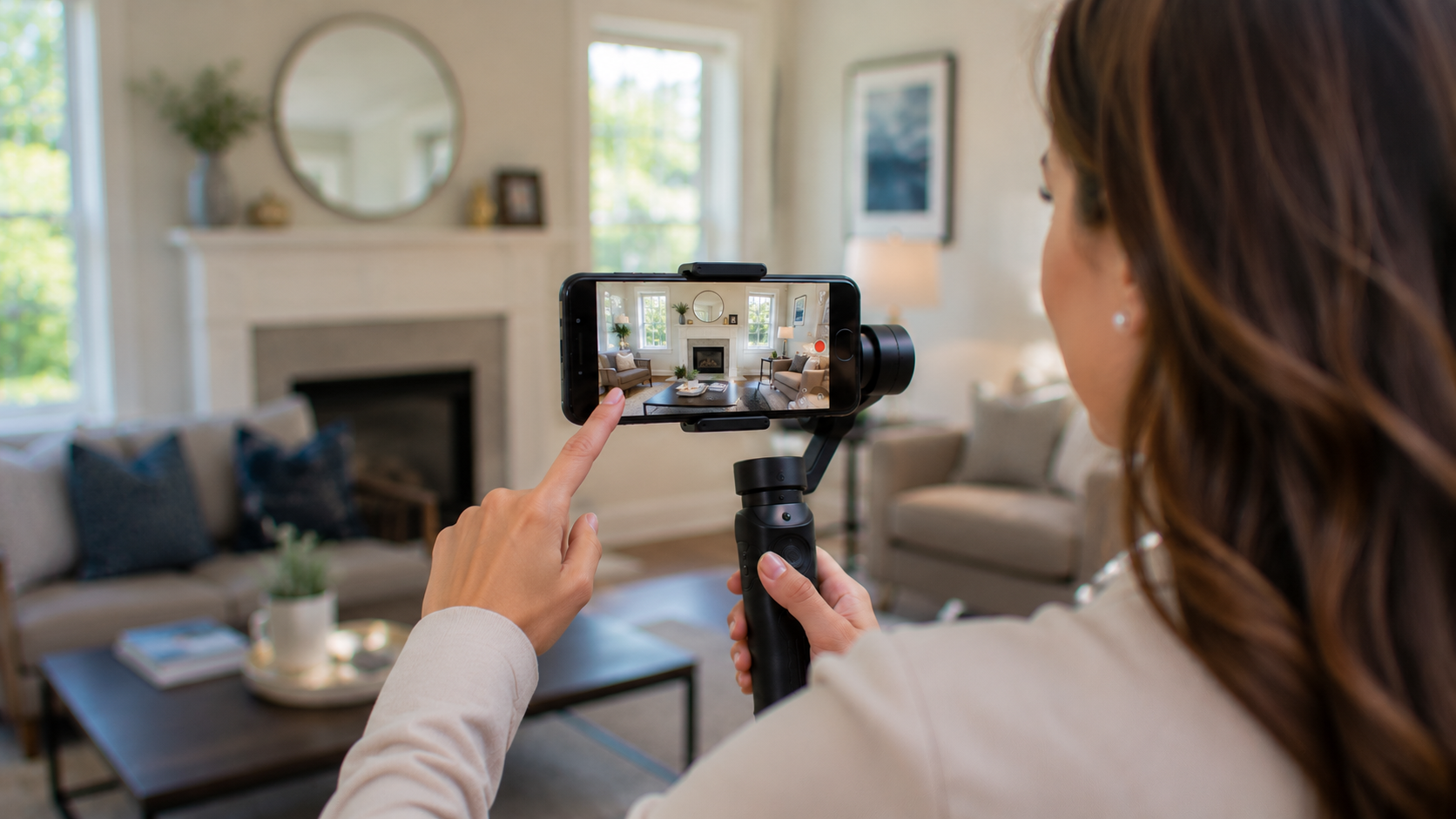
Zillow Listings With Video: Do They Get More Attention?
Publicado:
July 11, 2026
Let’s be real: Zillow is where a lot of buyers go to daydream, compare, stalk neighborhoods, judge kitchens, zoom in on weird bathroom tile, and quietly decide which homes are worth a showing. It is basically the digital mall of real estate. And in that crowded feed, every listing is fighting for the same thing: attention. So the big question is simple but important: do Zillow listings with video get more attention? The honest answer is yes, they often can — but only when the video is actually useful, clear, and made with the buyer’s brain in mind.
A video does something photos cannot fully do. Photos show moments. Video shows movement. A photo can make a living room look bright, but a video can show how the living room connects to the kitchen, how natural light moves through the space, and whether the layout actually makes sense. Buyers are not just looking at walls and floors. They are trying to imagine daily life. Where does the couch go? Is the kitchen awkward? Does the hallway feel tight? Can the backyard handle a dog, kids, parties, or all three at once? Video helps answer those questions faster.
But here is where some agents mess it up: they think any video is better than no video. Nope. A shaky, dark, rushed walkthrough with heavy breathing in the background is not exactly a lead magnet. Video can get more attention, but bad video can also create doubt. A strong Zillow video should make the property easier to understand, more memorable, and more emotionally appealing. It should not feel like someone accidentally recorded their pocket while walking through a house.
So, if you are a Realtor, investor, seller, or marketer wondering whether adding video to Zillow listings is worth the effort, the better question is not just “Does video work?” The better question is, “What kind of video makes buyers stop scrolling, stay longer, and actually want to book a showing?” That is where the money is.
Why Video Matters in the Zillow Search Game
Zillow is not just a listing platform in the buyer’s mind. It is a discovery engine, a comparison tool, and honestly, sometimes entertainment. People scroll through listings while drinking coffee, sitting on the couch, taking lunch breaks, or pretending not to look at homes they cannot afford yet. That means your listing is not getting calm, focused, perfect attention. It is competing with texts, TikToks, emails, kids yelling in the background, and the buyer’s own short attention span. In that kind of environment, video can give your listing a serious edge because it adds motion, context, and personality.
Photos are still essential. Nobody is saying video replaces great listing photography. But photos alone can sometimes create more questions than answers. A buyer may see a beautiful kitchen photo but not understand where it sits in relation to the dining room. They may see a bedroom and wonder if it is actually big enough or just wide-angle lens magic. They may see a backyard and wonder whether it feels private or backs up to something weird. Video helps fill those gaps. It gives the buyer a more realistic sense of space, and that can make them more comfortable taking the next step.
The Zillow search game is also about standing out quickly. Buyers often open multiple listings in one session. After a while, the homes start blending together: white kitchen, gray walls, staged sofa, cute porch, next. A video can interrupt that blur. It can make the home feel more alive and memorable. When done well, a video gives the listing a heartbeat. It makes the property feel less like another online card in a feed and more like a place someone might actually want to experience in person.
Buyers Do Not Browse Like Robots
Buyers do not sit down and analyze every Zillow listing like engineers reviewing blueprints. Most of the time, they browse emotionally first and logically second. They click because something catches their eye. They stay because something feels interesting. They save a listing because they can picture themselves there. Later, they may compare price per square foot, taxes, commute, schools, and all the practical stuff. But the first move is usually emotional. That is why video matters so much. It gives buyers more to feel.
A good video can help a buyer imagine the rhythm of living in the home. They can see the front door open, move through the living space, notice the kitchen flow, peek outside, and feel the transition from room to room. That is different from flipping through photos. Photos can be beautiful, but they are still disconnected pieces. Video connects the dots. It lets the buyer mentally walk through the property before booking a showing. That little bit of emotional rehearsal can make a big difference.
There is also a trust factor here. Buyers know listing photos are designed to show the home at its best. They expect good angles, bright editing, and selective framing. Video feels harder to fake, even though it can still be edited. When buyers see a clean walkthrough, they often feel like they are getting a more honest sense of the home. That does not mean every video needs to show every flaw in dramatic detail, but it should feel real. If the video helps the buyer think, “Okay, I get this home now,” the listing has already moved ahead of many competitors.
Attention Is the First Win
Before a Zillow listing can generate a showing, lead, offer, or sale, it has to win attention. That sounds obvious, but agents often skip over it. They focus on the final goal — get the buyer to call — without thinking about the small steps that happen before that. First, the buyer has to notice the listing. Then they have to click. Then they have to stay. Then they have to care enough to save it, share it, ask questions, or schedule a showing. Video helps with the “stay” and “care” parts when it is done right.
Attention online is fragile. If the first few seconds of a video feel boring, buyers bounce. If the video is too long, too shaky, too dark, or too slow, they leave. But if the video opens with the strongest part of the home — the view, the kitchen, the backyard, the open layout, the natural light, the cool entryway — buyers are more likely to keep watching. That is why video strategy matters. You do not just film rooms in whatever order you happen to walk through them. You guide attention.
Think of the video as a mini showing. In person, a good agent does not start by saying, “Here is a random closet.” They lead with the property’s strongest selling points and then build the story. Zillow video should do the same. The goal is not to show every inch of drywall. The goal is to make the buyer curious enough to take the next step. Attention is the first win, and in a crowded Zillow feed, video gives you another weapon to win it.
The Real Zillow Listing Reality
The reality of Zillow is that buyers are comparing homes fast. They may look at ten, twenty, or thirty listings in a single session. Some homes get saved. Some get ignored. Some get sent to a spouse with a message like, “Thoughts?” Some get rejected instantly because the photos feel off, the price feels high, or the layout looks confusing. In that quick decision-making environment, video can help a listing explain itself better. And a listing that explains itself better usually has a better shot at keeping attention.
But Zillow is not magic. Uploading a video does not automatically turn a weak listing into a hot one. If the price is wrong, the photos are poor, the description is lazy, or the home has issues buyers do not like, video cannot fully save it. What video can do is improve the way buyers understand and experience the listing. It can reduce confusion, highlight strengths, and create more emotional connection. That can be enough to push a buyer from “maybe” to “let’s go see it.”
The smartest agents treat Zillow as one piece of a bigger marketing system. A Zillow video should match the listing photos, description, social media clips, email campaign, YouTube content, and agent follow-up. Everything should tell the same story. If the home is all about lifestyle, the video should show lifestyle. If the biggest selling point is layout, the video should make the layout crystal clear. If the neighborhood is the magic, the video should not ignore the area. Zillow is the window, but the marketing strategy is the whole store.
Zillow Is a Digital Shopping Window
Zillow works like a digital shopping window. Buyers walk past listings online, and each property gets a tiny chance to pull them in. The main photo is usually the first hook, but once the buyer clicks, the listing has to keep earning attention. Video can make that window display more engaging. Instead of looking at still images only, buyers can experience the home in motion. That matters because motion naturally draws the human eye. We are wired to notice movement.
A video also gives buyers a reason to spend more time with the listing. The longer someone spends with a property, the more likely they are to form an opinion about it. That opinion may not always be positive, and that is okay. Not every home is right for every buyer. But if the video helps the right buyer understand why the home fits, it has done its job. Real estate marketing is not about making everyone love the property. It is about helping the right people see the value quickly.
For sellers, this is a big deal. Sellers want exposure, but they also want meaningful exposure. A listing that gets many views but little engagement may not be positioned well. A video can help improve the quality of that engagement because buyers are getting more information before they reach out. That can mean better showings, fewer wasted appointments, and more serious conversations. Again, video is not a magic spell. But as part of a strong listing package, it can make the Zillow experience much stronger.
Video Helps Buyers Feel the Layout
Layout is one of the hardest things to understand from photos alone. Even with great photography, buyers can struggle to figure out how rooms connect. Is the kitchen open to the living room? Is the primary bedroom near the kids’ rooms or on the other side of the house? Does the dining area feel natural or squeezed into a corner? Is the basement actually usable or just a dark bonus cave? Video can answer these questions in seconds.
This is one of the biggest reasons Zillow listings with video can get more attention. Buyers do not just want beauty. They want clarity. A listing that feels easy to understand is less mentally exhausting. When buyers have to work too hard to piece together the layout, they may move on. A smooth walkthrough removes some of that friction. It lets them think, “Okay, I see how this works.” That confidence can lead to more saves, shares, and showing requests.
The best layout videos are not random. They move through the home in a logical way. Start at the entrance, flow into the main living areas, show the kitchen connection, then move through bedrooms, outdoor space, and any bonus features. Avoid jumpy cuts that confuse the viewer. Use gentle pacing. Give the buyer enough time to understand the room without dragging the shot forever. Remember, the goal is not to create an art film. The goal is to help someone understand the home quickly and feel good about taking the next step.
Do Zillow Listings With Video Get More Attention?
In practical real estate marketing, Zillow listings with video often have a stronger chance of getting attention because they give buyers more information and a better sense of the property. Video can make a listing feel more complete, more transparent, and more engaging. When buyers are deciding which homes deserve their time, that extra context can matter. A home with only photos may still perform well, especially if it is priced right and beautifully presented, but a home with strong photos plus strong video has more ways to connect with buyers.
That said, the answer depends heavily on video quality. A polished, clear, helpful video can improve attention. A bad video can do the opposite. Buyers are quick to judge. If the video feels sloppy, they may assume the listing is sloppy too. If the video makes the home look darker, smaller, or more awkward than the photos, it can weaken interest. So yes, video can help, but it has to be intentional. “We added a video” is not the win. “We added a video that makes buyers understand and want the home” is the win.
The deeper value of video is that it can attract more serious attention. A buyer who watches the video is doing more than casually clicking. They are spending time. They are exploring. They are trying to decide whether the property fits. That kind of engagement is useful. It may lead to better inquiries because the buyer has already seen more of the home before reaching out. Video does not just create attention. It can create more informed attention, and that is much more valuable.
More Visual Information Usually Means More Confidence
Buyers are more confident when they feel like they have enough information. That is true in almost every buying decision, and real estate is no different. A home is a massive purchase, so uncertainty kills momentum. If a buyer is confused about the layout, unsure about the condition, or unable to imagine the space, they may hesitate. Video reduces some of that uncertainty by giving them more visual information. It helps them see the home as a connected experience instead of a gallery of separate images.
Confidence matters because buyers have limited time. Most people do not want to tour homes that might be a waste of energy. They want to narrow down the best options before scheduling showings. A Zillow listing with a helpful video makes that easier. Buyers can rule homes in or out faster. For the right buyer, the video can create enough confidence to say, “Let’s go see this one.” That is exactly the kind of movement agents want.
This also helps out-of-town buyers and relocation clients. They may not be able to tour immediately, so video becomes even more important. It gives them a better feel for the space from a distance. If the listing includes a strong video, a buyer in another state may feel more comfortable asking questions, requesting a virtual showing, or even making travel plans to see it. In relocation-heavy markets, video is not just nice. It can be a serious competitive advantage.
Video Can Increase Time on the Listing
One of the quiet benefits of video is that it can keep people on a listing longer. When someone watches a video, they are spending extra time with the property. That time creates more opportunity for emotional connection. A buyer may notice details they missed in photos. They may start imagining furniture placement. They may show the video to a partner. They may pause, replay, or compare it with another listing. More time does not guarantee a lead, but it increases the chances that the listing becomes memorable.
Time on listing also matters psychologically. The longer a buyer engages with a property, the more mental space it takes up. A quick photo scroll can be forgotten. A strong video walkthrough can stick. Maybe the buyer remembers the kitchen opening to the deck. Maybe they remember the view from the primary bedroom. Maybe they remember how the basement could become a gym, office, or movie room. Video gives the brain more hooks to hold onto.
For agents, this is valuable because online attention is usually shallow. Many people click, skim, and leave. A video gives them a reason to slow down. It is almost like inviting them to a mini open house without asking them to leave the couch. If the video is clear and engaging, it can turn casual browsing into real interest. And in real estate, real interest is where leads begin.
Bad Video Can Hurt the First Impression
Now let’s not sugarcoat it: bad video can hurt a Zillow listing. A low-quality video can make a home feel less appealing than it actually is. Dark footage, shaky movement, awkward angles, messy rooms, bad audio, and random pacing can all create a negative impression. Buyers may not consciously think, “This video production is poor.” They may simply feel, “Something is off.” That feeling can be enough to make them move on.
The biggest mistake is filming without a plan. Walking through a home too fast makes buyers dizzy. Moving too slowly makes them bored. Starting in an uninteresting area wastes the opening seconds. Filming vertical when the platform experience works better with horizontal, or vice versa depending on usage, can also create awkward viewing. And please, no accidental mirror shots where the agent appears holding the phone like they are recording a hostage video. Buyers notice this stuff, even if they do not say it out loud.
Bad video also creates a branding problem for Realtors. Sellers are watching how agents market homes. If your videos look careless, future sellers may wonder whether you would market their home the same way. That is why quality matters beyond one listing. Every public video is part of your reputation. The video does not need to be Hollywood-level, but it should be clean, steady, bright, and intentional. Minimum viable professional is the goal.
What Kind of Video Works Best on Zillow?
The best Zillow listing videos are clear, buyer-focused, and easy to watch. They do not try to be too clever. They do not bury the best features. They do not waste time with long intro graphics, cheesy music, or dramatic drone shots that show the roof for thirty seconds before anyone sees the actual home. Buyers want the good stuff fast. They want to understand the home, feel the space, and decide whether it deserves a showing. Your video should help them do that.
A strong Zillow video usually has three jobs. First, it shows the property accurately. Second, it highlights the features buyers care about most. Third, it creates a little emotional pull. That emotional pull could come from a sunny kitchen, a cozy living room, a private backyard, a killer view, or a neighborhood lifestyle clip. The video should make the home feel real and desirable without misleading anyone. That balance is important.
The best videos also respect the buyer’s time. You do not need a ten-minute documentary for a standard listing. In many cases, one to three minutes is plenty for a clean walkthrough. Luxury homes, unique properties, large estates, or lifestyle-heavy listings may need more time, but even then, pacing matters. Every shot should earn its place. If a shot does not help the buyer understand or want the home, cut it. Real estate video should feel smooth, not bloated.
Lifestyle-Driven Walkthroughs Beat Boring Room Tours
A boring room tour says, “Here is the kitchen. Here is the living room. Here is a bedroom.” A lifestyle-driven walkthrough says, “Here is how this home actually lives.” That is the difference. Buyers do not just want a checklist of rooms. They want to know what the home feels like day to day. Can they entertain here? Can they work from home? Can the kids play outside? Can they host Thanksgiving without everyone standing shoulder-to-shoulder like sardines? Lifestyle answers those questions.
To make a walkthrough more lifestyle-driven, focus on use cases. Instead of simply showing the kitchen island, show how it connects to the dining and living areas. Instead of just filming the backyard, show the patio, privacy, grass area, and flow from indoors to outdoors. If there is a home office, show why it works. If there is a bonus room, suggest possibilities without overhyping. Buyers love when a video helps them imagine practical living, not just pretty surfaces.
This style also helps listings stand out emotionally. Many homes have similar specs online. Three bedrooms. Two baths. Open concept. Updated kitchen. Nice yard. Cool, but what makes this one feel different? Video can answer that by showing the experience. Maybe the home feels peaceful. Maybe it feels social. Maybe it feels perfect for a remote worker. Maybe it screams weekend BBQ energy. That is the story buyers remember.
Short, Clean, Mobile-Friendly Edits Matter
Most buyers are looking at Zillow on their phones at least part of the time, so your video needs to work on a small screen. That means clean framing, good lighting, steady movement, and strong opening visuals. Tiny details can get lost on mobile, so avoid cluttered shots and confusing movement. If the viewer cannot understand what they are seeing quickly, they will bounce. Mobile attention is ruthless.
Keep the edit tight. You do not need to show every corner at the same speed. Spend more time on the strongest features and less time on basic spaces. A laundry room may matter, but it probably does not need a dramatic slow pan unless it is unusually impressive. The kitchen, living area, primary suite, outdoor space, view, and unique features usually deserve more attention. Edit like you respect the buyer’s time.
Captions or subtle text labels can help, especially if the video includes explanations. Many people watch with sound off, so text can make the video easier to understand. But do not overload the screen with giant words flying everywhere. This is a real estate listing, not a nightclub flyer. Keep it clean. A little text can guide the viewer. Too much text becomes noise.
Neighborhood Clips Add Extra Buyer Context
A Zillow listing video does not always need neighborhood footage, but when location is a major selling point, local context can be powerful. If the home is near a beach, park, downtown area, school, walking trail, golf course, shopping district, or popular restaurant zone, show it briefly. Buyers care about what surrounds the home. Sometimes the neighborhood is what turns a nice listing into a must-see listing.
This is especially useful for relocation buyers. They may not know the area at all, so a few quick shots of nearby amenities can help them understand the lifestyle. A home that seems ordinary in photos might become more exciting when buyers see it is five minutes from a lively main street or close to a peaceful trail system. Context creates value. Location is not just a line in the description. It is part of the emotional sales pitch.
Just keep neighborhood clips relevant and honest. Do not imply something is right next door if it is actually twenty minutes away. Buyers hate feeling misled. Use phrases like “nearby,” “a short drive,” or “close to local favorites” accurately. Trust matters more than hype. When neighborhood footage is truthful and well-placed, it can make the listing feel more complete and more memorable.
How Realtors Can Use Zillow Video to Generate Leads
Video attention is nice, but leads are the real prize. A Zillow listing video should not just be a pretty extra. It should support a lead-generation strategy. That means the video should make buyers want to ask questions, schedule showings, save the listing, share it with someone, or reach out to the agent. For sellers, it should quietly prove that you know how to market properties well. Every video should have a business purpose behind it.
For buyer leads, the video should remove confusion and create desire. If buyers understand the layout and feel excited by the strongest features, they are more likely to take action. For seller leads, the video should show professionalism. Homeowners who see high-quality listing videos may think, “This agent would make my home look good too.” That kind of indirect lead generation is underrated. Your current listing video can help win your next listing.
The smartest Realtors also use Zillow video as part of a larger content loop. They do not upload the video once and forget about it. They use clips on social media, embed the video in email campaigns, share it with buyer leads, include it in seller presentations, and use it to retarget interested viewers when possible. One video can do a lot of work if you do not let it sit there collecting digital dust.
Use Calls-to-Action Without Being Pushy
A call-to-action does not need to sound like a late-night infomercial. You do not need to yell, “Call now before this home disappears forever!” Buyers can smell that desperation. A better call-to-action is simple and helpful. Something like, “Want the full floor plan or a private showing? Reach out and I’ll send the details,” feels natural. It tells the viewer what to do next without making the video feel cheap.
For Zillow listing videos, the call-to-action can be subtle because the platform already gives buyers ways to contact an agent. But if the video includes a voiceover or closing slide, make the next step clear. Invite buyers to schedule a showing, request more details, ask about the neighborhood, or get similar listings. The key is matching the CTA to what the buyer likely wants after watching. If they just saw the video, they may want clarity, not a hard close.
For sellers watching your work, the CTA can be broader when you repurpose the video elsewhere. On social media, you might say, “This is the kind of video marketing we create to help buyers feel the home before they tour it.” That message speaks directly to homeowners considering selling. It turns your listing video into a marketing proof point. You are not just selling the house. You are selling your ability to sell houses.
Repurpose One Video Across Multiple Channels
One of the biggest wins with listing video is repurposing. A full Zillow video can become multiple pieces of content. You can cut a 60-second social teaser, a 15-second Reel, a neighborhood highlight, a feature clip about the kitchen, a backyard-focused clip, and a seller-facing marketing example. This makes the original video way more valuable. You are not just creating content for one platform. You are building a mini campaign around the listing.
Repurposing also helps drive more traffic back to the listing. A buyer may first see the home on Instagram, then click through to Zillow for details. Another buyer may see it in an email. A relocation client may watch a YouTube version. Different people discover homes in different ways, so using the video across channels increases the chances of reaching the right audience. Zillow is important, but it should not be the only place the video lives.
For Realtors, repurposing saves time and boosts consistency. Instead of constantly wondering what to post, one well-shot listing video can feed your content calendar for days or weeks. This is how smart agents create more visibility without running themselves into the ground. Film once, edit smart, distribute everywhere. That is not lazy. That is efficient marketing.
Common Mistakes Realtors Make With Zillow Videos
The biggest mistake Realtors make with Zillow videos is treating them like an afterthought. They get the photos done, write the listing description, upload everything, and then toss in a quick video because someone said video is good. That approach usually leads to weak results. Video should be planned from the beginning. The agent should know what the property’s strongest selling points are, what buyer type they are targeting, and how the video will support the overall listing strategy.
Another mistake is making the video too much about the agent. Buyers clicked to see the home, not a long personal intro. A little branding is fine, but do not hijack the video. The property should be the star. The agent’s expertise should show through the way the video is structured, not through a giant ego parade at the start. Keep the focus on helping the buyer understand the home.
Realtors also sometimes forget that video creates expectations. If the video makes the home look wildly different from reality, buyers will feel tricked when they show up. That is bad business. Good video should highlight the home beautifully, but honestly. It should not hide major layout issues, exaggerate room size, or make the property feel like something it is not. The goal is not to get more showings at any cost. The goal is to get better showings from buyers who understand what they are coming to see.
Treating Video Like Decoration Instead of Strategy
Video is not decoration. It is not a shiny bow you slap on top of a listing package. It is a communication tool. Its job is to answer buyer questions, highlight value, create emotion, and move people toward action. When Realtors treat video like strategy, they make better choices. They choose stronger opening shots. They plan the route through the home. They show features in order of importance. They add neighborhood context when it matters. They edit for attention, not just aesthetics.
A strategic Zillow video starts with the buyer. Who is most likely to love this home? A first-time buyer? A growing family? A luxury buyer? A downsizer? An investor? Once you know that, you can shape the video around what that person cares about. A family may care about bedroom layout, backyard space, storage, and schools. A luxury buyer may care about finishes, privacy, architecture, and entertaining spaces. An investor may care about condition, rental potential, and location. One-size-fits-all videos often feel bland because they do not speak directly to anyone.
Strategy also means measuring results. Pay attention to whether listings with stronger video receive more inquiries, better showings, faster saves, or stronger seller feedback. Even if you cannot see every detail behind the platform, you can track your own business outcomes. Are buyers mentioning the video? Are sellers impressed by your marketing? Are social clips driving traffic? Use that feedback. The best agents do not just create video. They learn from it and improve.
Conclusion
Zillow listings with video can absolutely get more attention when the video is clear, useful, and built around how buyers actually search. Video helps buyers understand layout, feel the space, trust the presentation, and spend more time with the listing. It can make a home more memorable in a crowded search feed and give serious buyers more confidence before booking a showing. But video only works when it is done with intention. Bad video is not a bonus. It is a liability.
For Realtors, the real power of Zillow video goes beyond one listing. A strong video can attract buyer interest, impress sellers, support social media, strengthen listing presentations, and show the market that you know how to present homes professionally. That is a serious advantage. In a world where buyers scroll fast and sellers judge marketing quality before signing, video helps you stand out for the right reasons.
The winning formula is simple: great photos, smart pricing, clear listing copy, and a video that makes the home easier to understand and harder to forget. Do not use video just because everyone says you should. Use it because it helps buyers feel the property and helps sellers see your value. That is when Zillow listings with video stop being “extra” and start becoming a real marketing asset.
Vídeos imobiliários, simplificados.
Subscrever