How to Use a Teleprompter in Real Estate Videos
Publicado:
June 17, 2026
Creating real estate videos can feel a little intimidating, especially when you're trying to remember key selling points, stay on script, and still come across as natural. That’s where a teleprompter can be a game-changer.
A lot of agents avoid video because they worry about forgetting lines, stumbling over words, or sounding awkward on camera. The good news? A teleprompter helps you stay focused without sacrificing authenticity. When used correctly, it can make your real estate videos look polished while still feeling genuine and conversational.
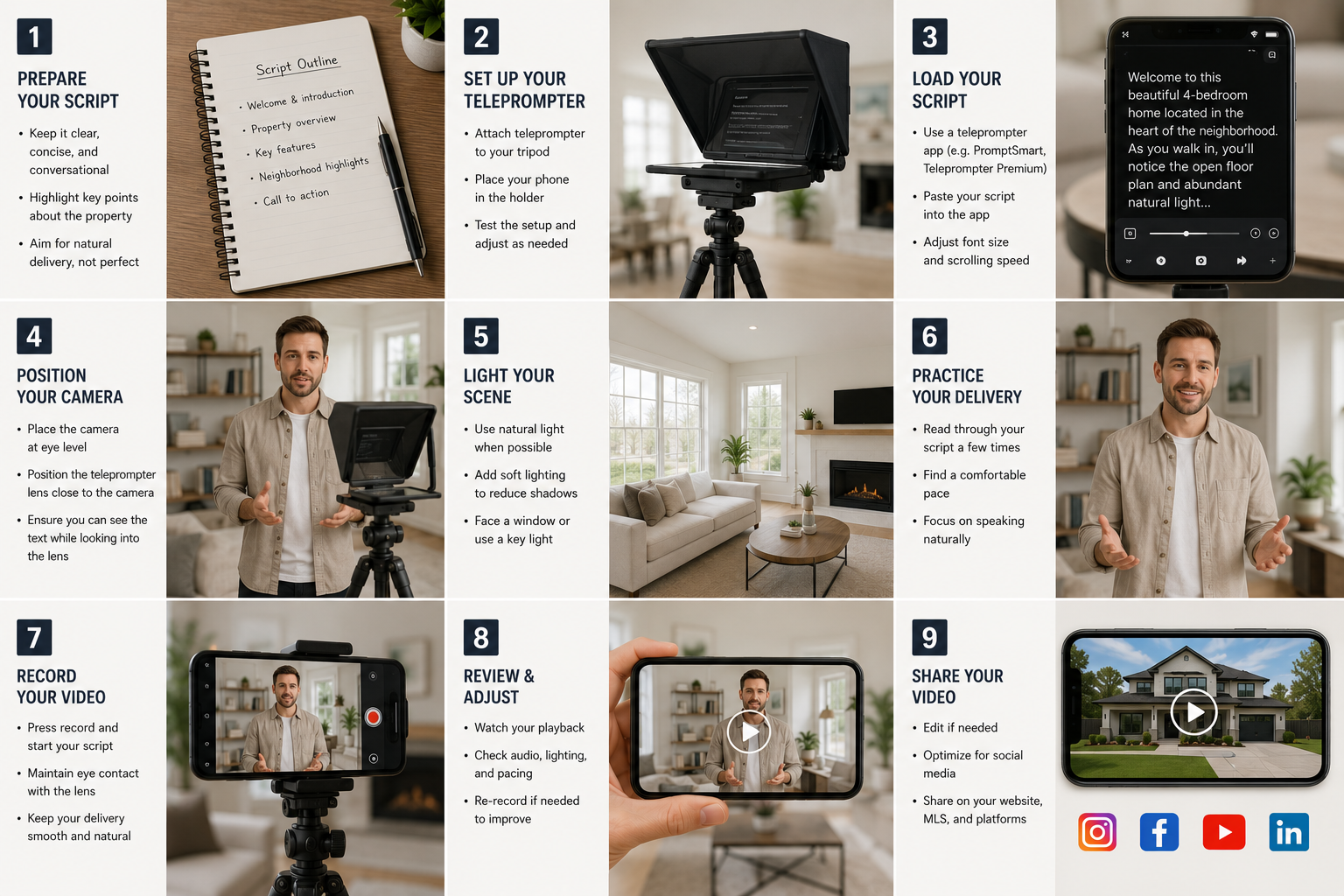
In this guide, you'll learn how to use a teleprompter in real estate videos without sounding robotic, helping you connect with potential buyers and build trust on camera.
Why Use a Teleprompter for Real Estate Videos?
Real estate videos often include a lot of information. You're talking about property features, neighborhood highlights, market insights, and unique selling points—all while trying to keep viewers engaged.
A teleprompter helps you:
- Stay on message
- Reduce retakes
- Deliver information accurately
- Maintain eye contact with the camera
- Feel more confident during recording
Think of it as having a cheat sheet that's invisible to your audience. Instead of constantly worrying about what comes next, you can focus on presenting the property in a way that feels natural and engaging.
Choosing the Right Script for Your Video
Before touching a teleprompter, you need a script that sounds like something you'd actually say in a conversation.
Write Like You Talk
One of the biggest mistakes people make is writing formal scripts that sound great on paper but awkward on camera.
Instead of saying:
"This magnificent residence offers unparalleled opportunities for luxurious living."
Try:
"This home has a ton of space and some really cool features that make everyday living feel a little more special."
The second version feels more human and easier to deliver naturally.
Keep Sentences Short
Long sentences are tough to read smoothly, even with a teleprompter.
Break complex ideas into smaller chunks. This helps you maintain a steady pace and prevents that rushed, breathless delivery that can make viewers tune out.
Setting Up Your Teleprompter Correctly
The setup plays a huge role in how natural your video looks.
Position the Camera Properly
Your teleprompter should sit directly in front of the camera lens. This allows you to read the script while appearing to make eye contact with viewers.
If the text is too far from the lens, your eyes may drift side to side, making it obvious that you're reading.
A subtle eye movement might go unnoticed, but excessive movement can break the connection with your audience.
Adjust Text Size
The goal isn't to read every word perfectly. It's to glance at the script while staying relaxed.
Use a font size that's comfortable to read from your recording position. If the text is too small, you'll squint. If it's too large, you'll struggle to read naturally.
Most presenters find that slightly larger text creates a smoother experience.
Set the Right Scrolling Speed
A common rookie mistake is setting the teleprompter speed too fast.
The script should move at your natural speaking pace. If you're constantly trying to catch up, your delivery will sound forced.
Do a few test runs and adjust the speed until it feels comfortable. The sweet spot is where you're barely thinking about the scrolling at all.
How to Sound Natural While Reading
A teleprompter is a tool, not a substitute for personality.
Don't Read Word for Word
This might sound weird, but the best teleprompter users don't treat the script like a strict set of instructions.
Use it as a guide. If a phrase comes out differently than written, that's totally fine.
Viewers care more about authenticity than perfect wording.
Imagine Talking to One Person
Instead of speaking to a giant audience, imagine you're showing the property to a single buyer.
This simple mindset shift can instantly make your delivery feel warmer and more conversational.
When you think of the camera as one person rather than hundreds of viewers, your tone naturally becomes more engaging.
Add Natural Pauses
Real conversations include pauses.
Take a moment after highlighting an important feature. Pause before transitioning to a new room. Give viewers time to absorb what you're saying.
Without pauses, even a great script can feel rushed and artificial.
Using a Teleprompter During Property Tours
Many real estate professionals assume teleprompters only work for stationary talking-head videos. That's not the case.
Use Talking Points Instead of Full Scripts
When walking through a property, reading every word can become difficult.
A better approach is to load short bullet points or key phrases into the teleprompter.
For example:
- Open-concept kitchen
- Quartz countertops
- Backyard entertaining space
- Walking distance to schools
These prompts keep you on track while allowing you to speak naturally about each feature.
Keep Moving Naturally
Don't become glued to the teleprompter.
Your body language matters just as much as your words. Walk through the property, gesture naturally, and interact with the space.
If you look stiff, viewers may feel disconnected from the experience.
Focus on Storytelling
People don't buy square footage—they buy lifestyles.
Instead of listing features one after another, help viewers imagine living in the home.
For example:
"This backyard is perfect for summer barbecues. You can already picture friends hanging out here while the kids run around the yard."
That's far more engaging than simply saying the backyard is large.
Common Teleprompter Mistakes to Avoid
Even experienced presenters can fall into a few traps.
Speaking Too Fast
Nervousness often causes people to speed up.
Slow down more than you think you need to. A relaxed pace feels confident and professional.
Staring at the Screen
Your eyes should stay soft and natural.
If you're intensely focused on every word, viewers can tell you're reading.
Practice enough that the script becomes a guide rather than your sole focus.
Memorizing Every Line
Ironically, over-rehearsing can make you sound less authentic.
Know the flow of your message, but leave room for spontaneity. A little imperfection often feels more human.
Ignoring Facial Expressions
A teleprompter doesn't replace enthusiasm.
Smile when appropriate. Show excitement when discussing standout features. Let your personality come through.
Energy is contagious on camera.
Practicing Before You Record
The best teleprompter performances happen before the camera starts rolling.
Read the Script Out Loud
A script that sounds great in your head may feel awkward when spoken.
Reading aloud helps you identify clunky phrases and unnatural wording before recording.
Record Test Clips
Watch yourself on video and pay attention to:
- Eye movement
- Speaking pace
- Body language
- Energy level
Small adjustments can dramatically improve the final result.
Embrace Imperfection
Nobody expects you to sound like a professional news anchor.
In fact, viewers often trust people who sound genuine rather than overly polished.
A little personality goes a long way in real estate marketing.
Final Thoughts
Using a teleprompter in real estate videos isn't about delivering a perfect performance. It's about helping you communicate clearly while staying confident on camera. When paired with a conversational script, natural pacing, and authentic personality, a teleprompter can make your videos more engaging and professional without making them feel scripted.
The key is to treat the teleprompter as a helpful guide rather than something you depend on word for word. Keep your delivery relaxed, focus on connecting with potential buyers, and let your personality shine through. Once you get comfortable with the process, you'll likely wonder how you ever filmed real estate videos without it.
Vídeos imobiliários, simplificados.
Subscrever