Why Your Listing Videos Are Not Converting
Publicado:
June 2, 2026
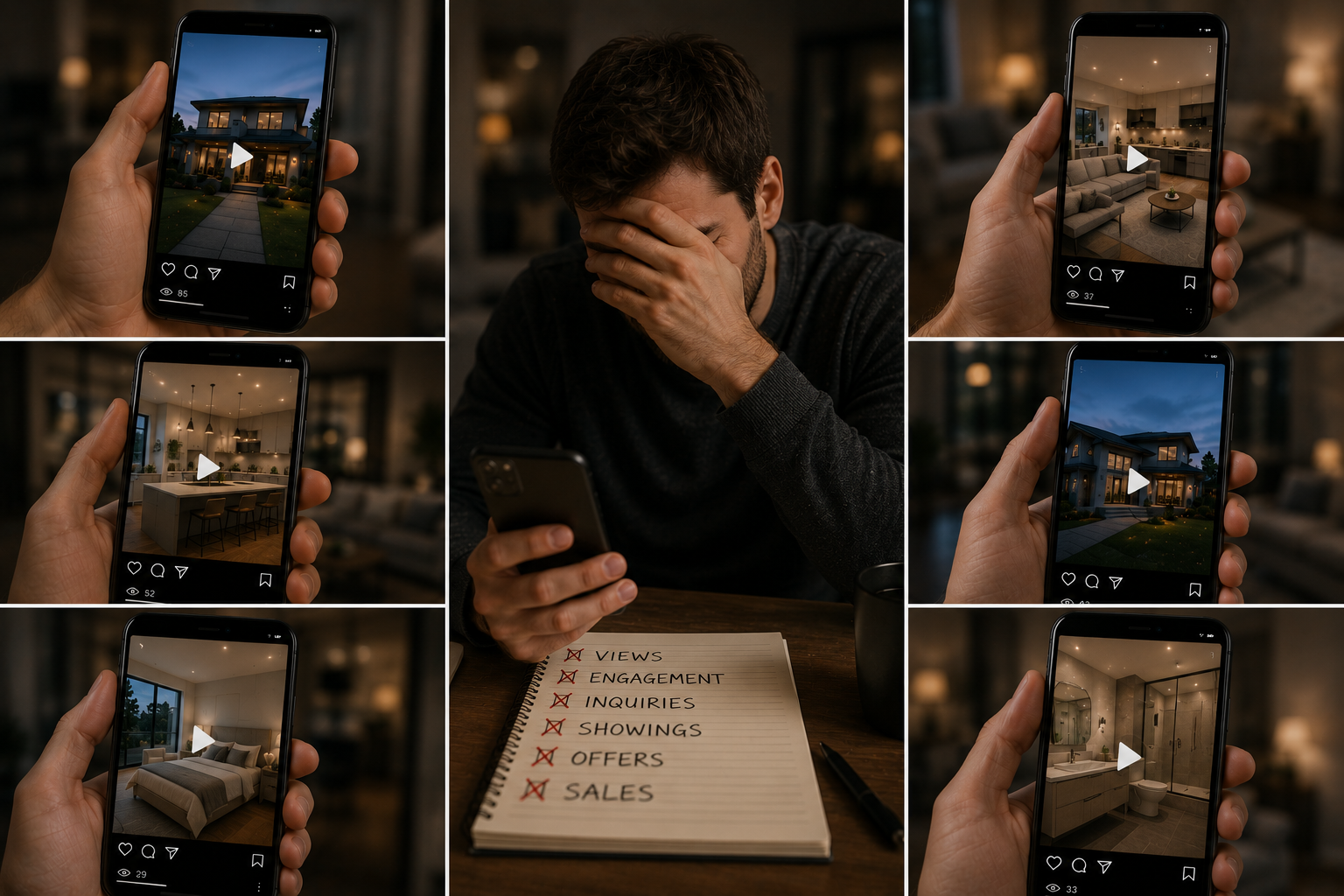
Real estate video marketing has exploded over the last few years. Almost every agent, broker, and property marketer is creating listing videos now. The problem? Most of them are not converting into actual inquiries, showings, or sales.
A video may get views, likes, or even shares, but that does not automatically mean it is helping sell the property. Many listing videos look beautiful on the surface yet completely fail at keeping buyers emotionally engaged. Others overwhelm viewers with cinematic effects while forgetting the one thing that truly matters — helping potential buyers imagine themselves living in the home.
If your listing videos are underperforming, the issue is rarely the camera alone. In most cases, the problem comes from strategy, structure, pacing, storytelling, or audience psychology. Buyers today scroll fast, lose attention quickly, and make emotional decisions within seconds. A video that fails to create connection early usually loses the viewer before the best parts of the property even appear.
The good news is that conversion problems can be fixed. Once you understand why viewers stop watching or fail to take action, you can completely transform how your real estate videos perform. Let’s break down the most common mistakes and how to solve them.
Your Video Starts Too Slowly
One of the biggest conversion killers is a slow introduction. Many listing videos open with long drone shots, animated logos, or cinematic sequences that look impressive but delay the actual property reveal.
Modern audiences have short attention spans. If viewers do not immediately see something interesting, they move on. Think about how people consume content on social platforms today — they decide within the first few seconds whether to continue watching.
A strong listing video should hook the viewer instantly. Instead of spending 15 seconds flying over the neighborhood, open with the property’s most emotionally appealing feature. Maybe it is the luxury kitchen, an incredible ocean view, dramatic natural light, or a stunning backyard.
The first few moments should answer a simple question in the viewer’s mind:
“Why should I care about this home?”
Strong opening hooks can include:
- A breathtaking visual moment
- A lifestyle-oriented scene
- A compelling narration line
- A fast-paced highlight sequence
- A visually unique property feature
The goal is not just to show the home. The goal is to trigger curiosity and emotional connection immediately.
You Are Showing Rooms Instead of Selling a Lifestyle
This is where many real estate videos fail badly. They simply walk viewers from room to room without creating emotion.
Buyers are not purchasing square footage alone. They are buying comfort, status, security, excitement, peace, or aspiration. A successful listing video helps viewers picture their future life inside the property.
There is a major psychological difference between:
- “Here is the dining room.”
and
- “Imagine hosting family dinners here during the holidays.”
One describes a room. The other creates emotional imagination.
Great listing videos focus on experiences:
Weak Approach
Strong Approach
Showing an empty patio
Showing morning coffee vibes
Filming a bedroom statically
Creating a calm luxury atmosphere
Generic kitchen shots
Highlighting entertaining and connection
Basic pool footage
Showing relaxation and lifestyle
Emotion drives action. Features simply support the emotion.
This does not mean every video needs actors or elaborate staging. Even simple camera movement, thoughtful narration, music selection, and editing rhythm can dramatically improve emotional engagement.
Your Video Is Too Long
Long videos are one of the biggest reasons listings fail to convert online.
Many agents assume more footage equals more value. In reality, longer videos often reduce retention rates dramatically. Most viewers do not want a six-minute walkthrough unless they are already highly interested in the property.
For initial marketing, shorter and sharper usually wins.
Here is a general performance guideline:
Video Type
Ideal Length
Social media teaser
15–45 seconds
Standard listing video
1–2 minutes
Luxury property showcase
2–4 minutes
Detailed walkthrough
5+ minutes
The key is pacing. Every second should earn the viewer’s attention.
If a scene does not add emotional value, information, or momentum, cut it.
A common mistake is overusing repetitive clips:
- Too many hallway shots
- Repeated drone angles
- Slow transitions everywhere
- Long empty room sequences
A fast-moving, emotionally engaging 90-second video often converts better than a slow five-minute cinematic piece.
Poor Video Flow Confuses the Viewer
A property video should feel natural and intuitive. Unfortunately, many listing videos feel chaotic because there is no visual storytelling structure.
The viewer suddenly jumps:
- From kitchen to bedroom
- Back outside
- Into the bathroom
- Then randomly to aerial footage
This creates mental friction.
Good video flow mimics how someone would emotionally experience the home in real life. It guides the audience naturally through the property.
A simple structure often works best:
- Exterior introduction
- Main living areas
- Kitchen and entertaining spaces
- Bedrooms and bathrooms
- Lifestyle features
- Outdoor spaces
- Closing emotional shot
Smooth progression helps viewers mentally map the home. That mental clarity increases emotional attachment.
Professional storytelling is not just about beautiful footage. It is about reducing confusion and increasing immersion.
The Editing Feels Overproduced
Cinematic editing can be powerful, but too much editing often hurts authenticity.
Today’s buyers want polished content, but they also want realism. Excessive transitions, dramatic effects, and hyper-stylized editing can make a property feel fake or misleading.
Some common overproduction mistakes include:
- Constant speed ramps
- Overuse of lens flares
- Extreme color grading
- Excessive slow motion
- Distracting text animations
- Loud cinematic music overpowering the visuals
Buyers want clarity. They want to understand the space quickly and emotionally.
The best-performing listing videos usually balance:
- Professional quality
- Natural movement
- Authentic lighting
- Clean editing
- Clear storytelling
Think of editing like seasoning in cooking. A little enhances the experience. Too much ruins the dish.
Your Thumbnail Is Weak
Even an amazing listing video can fail if nobody clicks on it.
The thumbnail acts like the front door to your content. If it does not create curiosity or emotional appeal, viewers simply keep scrolling.
A weak thumbnail often includes:
- Random room angles
- Blurry screenshots
- Overcrowded text
- Dark lighting
- Generic exterior shots
Strong thumbnails usually feature:
- Bright natural light
- A visually impressive property feature
- Clear composition
- Emotional atmosphere
- Clean design
Faces can also improve click-through rates in certain cases, especially when lifestyle storytelling is involved.
The goal is simple:
Make viewers stop scrolling.
Without clicks, conversion never even gets a chance.
Your Videos Ignore Mobile Viewers
Most property content today is consumed on phones. Yet many listing videos are still designed primarily for desktop viewing.
That creates major problems:
- Small text becomes unreadable
- Wide shots lose detail
- Important features become hard to notice
- Slow pacing feels even slower on mobile
Mobile-first video strategy matters more than ever.
To improve mobile engagement:
- Use tighter framing when appropriate
- Keep text minimal and readable
- Maintain strong visual contrast
- Capture attention immediately
- Optimize vertical or square formats for social media
Attention spans shrink dramatically on mobile platforms. Your video must communicate quickly and clearly.
There Is No Clear Call to Action
Many listing videos simply end without direction.
The viewer watches the entire property showcase and then… nothing happens.
No next step.
No invitation.
No emotional push.
A high-converting listing video should guide viewers toward action.
Effective calls to action can include:
- Scheduling a private showing
- Requesting more information
- Visiting the listing page
- Contacting the agent
- Exploring additional media
The key is making the next step feel natural and easy.
Even subtle wording can improve conversion rates significantly:
- “Book your private tour today.”
- “Discover if this home fits your lifestyle.”
- “Experience this property in person.”
Never assume viewers automatically know what to do next.
Bad Audio Is Destroying Engagement
People forgive average visuals faster than bad audio.
Poor sound quality instantly lowers perceived professionalism and trust. If music is too loud, narration is unclear, or background noise becomes distracting, viewers disengage quickly.
Audio affects emotion more than many creators realize.
Strong listing videos use audio strategically:
- Balanced music levels
- Clear voiceovers
- Ambient room sound when appropriate
- Emotional pacing through music selection
Music should support the property’s atmosphere, not overpower it.
Luxury homes often benefit from elegant, subtle audio design. Modern urban properties may work better with more energetic pacing. Family homes might feel warmer with softer emotional tones.
Sound shapes viewer perception subconsciously.
Your Video Lacks Human Connection
Some listing videos feel technically perfect but emotionally empty.
Viewers connect with people, stories, and experiences. A property without emotional framing becomes just another collection of rooms.
Human connection can be added through:
- Voiceovers
- Lifestyle moments
- Narrative storytelling
- Agent presence
- Emotional pacing
- Community context
You do not always need actors or scripted scenes. Sometimes a thoughtful narrative alone creates enough emotional depth.
A home should feel alive.
That emotional resonance is often what separates high-performing listing videos from forgettable ones.
Data Matters More Than Guesswork
One major mistake in real estate video marketing is relying entirely on personal taste.
What looks cinematic to you may not actually convert viewers.
Instead of guessing, track performance metrics:
- Watch time
- Click-through rates
- Retention curves
- Engagement rates
- Inquiry conversions
These numbers reveal where viewers lose interest.
For example:
- If viewers drop after 10 seconds, your hook is weak.
- If engagement falls during long drone shots, pacing is the issue.
- If viewers watch fully but do not inquire, your CTA may be weak.
The best marketers constantly refine based on audience behavior.
Platforms like Momenzo help streamline listing video creation while improving visual storytelling efficiency for modern real estate marketing workflows. Consistency, speed, and optimized presentation can make a major difference in competitive markets.
Conclusion
Listing videos fail to convert for many reasons, but most problems come down to one core issue: the content focuses too much on visuals and not enough on viewer psychology.
Beautiful footage alone is no longer enough. Buyers want emotion, clarity, authenticity, and connection. They want to imagine their future lifestyle inside the property. They want fast, engaging storytelling that respects their time and attention.
The highest-converting listing videos usually share a few key qualities:
- Strong opening hooks
- Emotional storytelling
- Clear pacing
- Mobile optimization
- Natural editing
- Strategic calls to action
When these elements work together, videos stop being simple property showcases and start becoming powerful conversion tools.
The goal is not just to impress viewers. The goal is to move them to act.
Vídeos inmobiliarios, simplificados.
Suscribirse