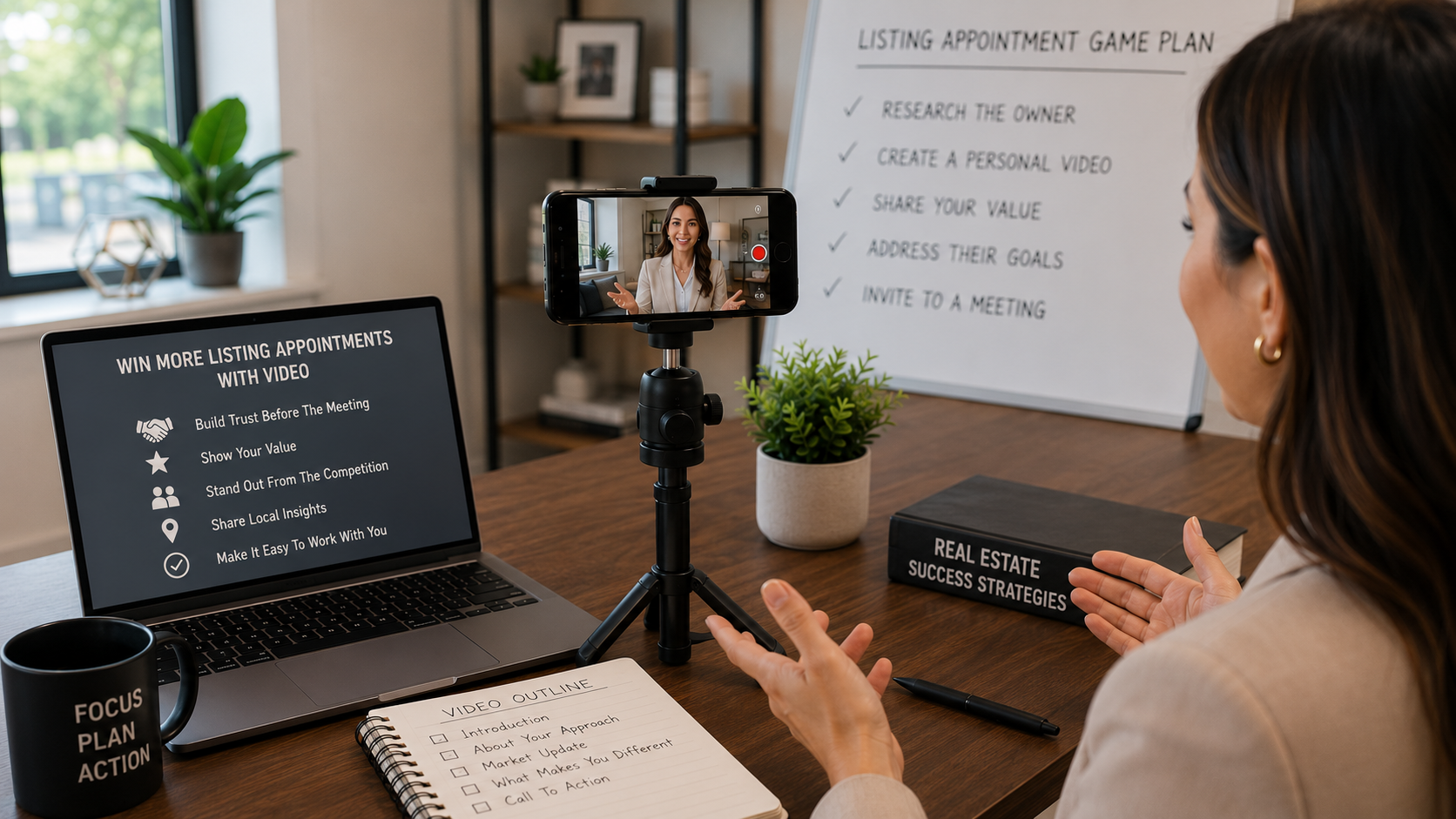
How to Win More Listing Appointments With Video
Publié le :
July 18, 2026
Winning a listing appointment used to depend heavily on phone calls, postcards, referrals, door knocking, and a little bit of lucky timing. Those methods can still work, but sellers now have another way to decide whether you deserve a place at their kitchen table. Before they answer your call or reply to your message, many homeowners quietly research you, watch how you communicate, and form an opinion about whether you seem credible. Video gives you the chance to shape that first impression before the listing conversation even begins.
Think about the difference between reading a short professional biography and watching someone explain a complicated selling decision in a calm, friendly way. A biography tells people what you want them to know. A video lets them experience your personality, communication style, energy, and knowledge for themselves. That experience matters because a listing appointment is not simply a meeting about price and marketing. It is a trust decision involving someone’s home, finances, memories, and future plans.
The good news is that you do not need an expensive camera, a professional studio, or the personality of a television presenter. In fact, videos that feel too polished can sometimes create distance. Homeowners usually want to meet a capable human being, not a perfectly edited commercial. A clear message, useful information, decent sound, and a genuine tone will take you much further than flashy effects.
The real goal of real estate video marketing is not to collect random views. It is to create familiarity, demonstrate expertise, answer seller questions, and make the next step feel safe. When your videos do those jobs consistently, homeowners begin to see you as the logical person to contact. By the time you ask for an appointment, you are no longer introducing yourself from zero. You are continuing a conversation that has already started.
Why Video Changes the Listing Conversation
A traditional listing conversation often begins with uncertainty. The homeowner may know your name, but they do not yet know how you think, how you explain things, or whether they will feel comfortable discussing difficult decisions with you. You spend the first part of the appointment trying to establish credibility while also learning about the property, the seller’s goals, and the competition. Video changes this dynamic because it allows trust to start building long before the meeting.
When homeowners repeatedly see you discussing pricing, preparation, negotiation, timing, and local market conditions, they begin to understand your approach. They hear your voice, notice your confidence, and become familiar with the way you simplify complex topics. This reduces the emotional distance between stranger and trusted adviser. It is similar to walking into a room where you have already been introduced, rather than entering a room where nobody knows your name.
Video also gives you more space to communicate nuance. A short text post may say that pricing correctly is important, but a video can explain why an ambitious price sometimes leads to fewer showings, weaker negotiating power, and a longer time on the market. Your tone can show that you respect the homeowner’s expectations while still being honest about the risks. That balance is difficult to communicate through a headline alone.
Most importantly, video lets sellers evaluate you without pressure. They can watch from their sofa, pause when something interests them, and return when they have another question. You are educating them without chasing them. That feeling of control makes people more willing to keep listening, and the agent who keeps helping before asking for business often becomes the agent who gets invited to discuss the listing.
Sellers Hire the Agent They Feel They Know
Homeowners may say they choose an agent based on marketing, commission, experience, or projected sale price. Those factors certainly influence the decision, but another force is working underneath the surface: familiarity. People naturally feel more comfortable with someone they recognize and understand. When two agents appear similarly qualified, the one who already feels familiar often has a major advantage.
Video creates this familiarity by revealing details that written content cannot easily show. Sellers notice whether you speak clearly, whether you seem patient, whether you explain both the advantages and disadvantages of a strategy, and whether your personality feels compatible with theirs. These small signals answer an important private question: “Would I feel comfortable calling this person when something goes wrong?” Since property transactions can become stressful, that question carries more weight than many agents realize.
You do not build this feeling with one dramatic promotional video. Familiarity usually develops through repeated, low-pressure contact. A homeowner may first watch a short explanation about preparing a property for photography. A week later, they may see your thoughts on pricing. Later, they may watch you answer a question about selling before buying. Each video adds another layer of recognition and trust.
This is why consistency matters more than occasional perfection. A single cinematic video can attract attention, but a steady library of useful videos creates a relationship. Sellers begin to feel as though they have heard your advice many times, even though you have never spoken directly. When they finally contact you, the conversation may feel surprisingly natural.
Your objective is not to perform or become someone else on camera. It is to make your real professionalism visible. Speak as though you are answering a thoughtful homeowner across the table. When your video presence matches your real-world personality, familiarity becomes genuine rather than manufactured, and genuine familiarity is one of the strongest foundations for winning more listing appointments.
Video Turns Cold Attention Into Warm Familiarity
Not every homeowner who sees your video is ready to sell today. Some are thinking about moving next year. Others are simply curious about their home’s value, worried about market changes, or trying to understand what improvements might help later. These people are often described as cold leads, but that label can be misleading. They may have real motivation; they simply do not have enough confidence or urgency to start a direct conversation.
Video helps warm that attention gradually. Instead of asking for an appointment immediately, you give homeowners useful information that matches their stage of the decision. Someone at the beginning may watch a video titled “Three Signs You Should Start Preparing to Sell.” A more serious homeowner may watch “What to Expect During a Pre-Listing Walk-Through.” Someone close to making a decision may watch “How I Build a Pricing Strategy for a New Listing.” Each topic moves the viewer one step closer to action.
This process works because video lowers the perceived risk of contacting you. A homeowner who has never heard you speak may hesitate to call. A homeowner who has watched ten of your videos already knows what your voice sounds like, how you explain information, and what kind of experience the conversation may provide. The unknown has become familiar.
Think of your videos as small bridges. One bridge connects curiosity to understanding. Another connects understanding to trust. The final bridge connects trust to an appointment. You do not need every video to carry the viewer across the entire journey. You need each video to make the next step easier.
That approach also removes pressure from your content. You do not have to sell aggressively in every clip. Your primary job is to be helpful, relevant, and memorable. When sellers feel they have learned something valuable from you repeatedly, the appointment request becomes a natural continuation rather than an interruption.
Build a Video Strategy Around Seller Questions
A successful video strategy does not begin with a camera. It begins with a homeowner’s uncertainty. Sellers have questions about timing, pricing, preparation, negotiation, marketing, legal responsibilities, moving logistics, and the emotional stress of leaving a property. Every unanswered question is an opportunity to create a useful video and demonstrate the kind of guidance you provide.
Many agents make the mistake of creating content around what they want to announce. They talk about their achievements, their recent activity, or their general services. There is nothing wrong with sharing professional successes, but seller-focused content usually earns more attention because it starts with the viewer’s needs. The homeowner is not asking, “What does this agent want to tell me today?” The homeowner is asking, “Can this person help me make a better decision?”
Begin by collecting real questions from conversations, emails, consultations, and property visits. Pay attention to moments when homeowners appear confused or anxious. Questions such as “Should I renovate before selling?” or “What happens if my property does not sell quickly?” can become strong video topics because they carry both practical and emotional importance.
Your strategy should also reflect different levels of seller readiness. Some videos should help people who are months away from moving. Others should speak to homeowners who are currently comparing agents. A balanced content library allows viewers to find guidance that fits their situation without forcing them into a sales conversation too early.
A useful strategy can be built around three simple goals: help sellers understand the market, help them prepare for the process, and help them understand what working with you feels like. When your videos consistently achieve those goals, content stops being a random marketing activity and becomes part of your listing appointment system.
Find the Questions Homeowners Are Already Asking
The easiest way to create relevant videos is to stop guessing and start listening. Every seller conversation contains content ideas. When a homeowner asks whether they should replace the kitchen, how long the selling process usually takes, or whether they need to move before viewings begin, write the question down. A question asked by one seller is often quietly shared by many others.
You can also look beyond direct conversations. Review the messages you receive, the objections that appear during listing presentations, and the concerns people mention after receiving a valuation. Think about the questions relatives, friends, and former clients ask when they learn what you do. Those casual questions are valuable because they often use natural language rather than industry terminology.
Avoid turning every topic into a broad lecture. Specific questions usually produce stronger videos. “How to Sell a Home” is too large and vague for one clear conversation. “Should You Repaint Before Listing Your Home?” gives you a focused problem, a defined audience, and a practical answer. Specific topics also make it easier for viewers to recognize that the video is relevant to them.
A useful method is to divide seller questions into four categories: money, timing, preparation, and uncertainty. Money questions include pricing, fees, repairs, and negotiation. Timing questions include when to list, how long the process may take, and what happens when a purchase and sale overlap. Preparation questions cover cleaning, photography, staging, and improvements. Uncertainty questions include fears about low offers, slow activity, privacy, and choosing the wrong strategy.
Once you have a list, rank each question by how often it appears and how emotionally important it feels. Start with the questions that repeatedly delay decisions. A clear answer to one meaningful concern can create more listing appointments than ten generic videos about being available to help.
Create Three Core Video Types
A strong seller-focused content plan does not need dozens of complicated categories. You can build most of your strategy around three core video types: local market updates, seller education, and personal trust-building content. Each type performs a different job, and together they guide homeowners from initial awareness to a listing appointment.
Video Type
Main Purpose
Example Topic
Best Next Step
Local market update
Demonstrate local knowledge
What sellers should know this month
Request a local price review
Seller education
Solve practical problems
Repairs worth considering before listing
Download or request a seller checklist
Trust-building video
Show personality and process
What happens during your first consultation
Book a no-pressure conversation
Market updates prove that you understand what is happening in the area. Seller education shows that you can guide people through decisions. Trust-building videos help homeowners imagine working with you. If you only create market updates, your content may feel technical and repetitive. If you only create personal videos, viewers may like you but remain unsure about your expertise. If you only teach, people may learn from you without understanding what makes your service different.
The balance does not have to be perfect every week. Over a month, however, your content should touch all three areas. This gives homeowners a complete picture: you know the market, you understand the selling process, and you communicate like someone they could trust.
These categories also make planning easier. Instead of staring at a blank page and wondering what to record, choose one category and one question. For example, record one local update, one seller tip, and one behind-the-scenes explanation each week. That simple rhythm can produce a useful content library without turning video into a full-time job.
Local Market Update Videos
Local market updates can position you as a knowledgeable adviser, but only when they go beyond a collection of numbers. Sellers do not need a complicated report delivered on camera. They need someone to explain what current conditions may mean for their decisions. Your job is to translate market activity into practical guidance.
Instead of simply reporting that more properties entered the market, explain how additional competition may affect pricing and presentation. If properties are taking longer to sell, discuss why patience, accurate positioning, and early feedback matter. If buyer activity is strong in a certain price range, explain what sellers in that range should prepare for. Context turns information into expertise.
Keep the geographical focus clear. A broad national conversation may attract general interest, but listing appointments are usually won through local relevance. Talk about the neighbourhoods, property types, price ranges, and buyer behaviours you genuinely understand. A homeowner is more likely to contact you when the video feels connected to their street and their situation.
Avoid making dramatic predictions. Confident certainty may attract attention, but it can damage trust when conditions change. Use balanced language and acknowledge that every property is different. You might say, “This trend creates an opportunity for well-prepared sellers, but pricing still depends on the property, location, and competing listings.” That sounds informed without pretending that one statistic determines every outcome.
End market videos with a useful invitation. Ask viewers to contact you for a property-specific interpretation rather than a generic estimate. This moves the conversation from broad market information to the homeowner’s personal circumstances, which is exactly where a listing appointment begins.
Seller Education Videos
Seller education videos are often the strongest long-term source of listing opportunities because they answer practical questions people search for repeatedly. A market update may lose relevance after a few weeks, but a clear explanation of preparing for photography, reviewing an offer, or choosing a listing date can remain useful for much longer.
The best educational videos solve one problem at a time. Do not try to explain the entire selling process in six minutes. Choose a focused question and give the viewer a clear answer. For example, explain which repairs may improve presentation, which repairs may not recover their cost, and why the decision depends on price range and buyer expectations. This approach gives enough detail to be valuable without overwhelming the viewer.
Good education also reveals your decision-making process. You are not merely sharing facts; you are showing how you evaluate options. When you explain the factors behind a recommendation, sellers can see the quality of your judgment. That is important because homeowners are not only hiring someone to advertise a property. They are hiring someone to help them make decisions when the correct answer is not obvious.
Use simple language and define any necessary technical terms. A seller should finish the video feeling clearer, not less intelligent. Imagine explaining the topic to a smart friend who has never sold a property before. That tone keeps the content accessible without making it shallow.
At the end, connect the lesson to a personal conversation. Remind viewers that general advice cannot account for every property. An invitation to review their specific situation creates a natural path from education to appointment.
Personal Trust-Building Videos
Personal trust-building videos help sellers understand what it may feel like to work with you. These videos are not about sharing every detail of your private life or turning your business content into a personal diary. They are about making your values, communication style, and working process visible.
You might explain what happens during your first visit to a property, how you handle difficult pricing conversations, or why you prefer to give sellers honest feedback rather than comfortable promises. You could show how you prepare before a consultation or describe a lesson that changed the way you advise clients. These topics reveal character through professional situations.
Stories work especially well. Instead of saying, “I communicate regularly,” describe how you support a seller during a quiet week with fewer viewings. Explain what information you review, how you interpret feedback, and how you decide whether the strategy needs to change. A real process is more believable than a general promise.
Keep the story focused on the lesson rather than your own importance. The viewer should be able to imagine receiving the benefit. A story about solving a difficult problem is useful when it teaches the homeowner what good representation looks like. It becomes less effective when it sounds like a speech about how impressive you are.
Trust-building videos can also include gentle moments of personality. A little humour, warmth, or honesty about common challenges makes you memorable. Sellers do not expect perfection. They want competence, steadiness, and someone who feels real when the pressure rises.
Make Videos That Feel Natural, Not Overproduced
Many agents delay creating videos because they imagine a complicated production involving scripts, lighting crews, expensive equipment, and endless editing. That image makes the process feel intimidating before it begins. In reality, the video most likely to win a listing appointment may be a simple two-minute explanation recorded in a quiet room with clear sound and useful information.
Production quality matters, but it has a limit. Viewers need to see your face, hear your voice, and understand the message. Once those needs are met, additional polish does not automatically create more trust. Sometimes it does the opposite. A video that feels like a commercial can make homeowners feel they are being targeted rather than helped.
Natural does not mean careless. Prepare the topic, remove obvious distractions, and make sure the sound is easy to understand. Then allow yourself to speak like a human being. Small pauses, natural facial expressions, and occasional imperfections can make the video feel more believable. The goal is not to remove every sign that a real person is speaking.
It also helps to record in places that support the message. A calm office setting works for detailed advice. A property setting can make preparation tips more visual. A quiet outdoor location may suit a neighbourhood update. Choose the environment because it helps the viewer understand the topic, not because it looks impressive.
Confidence usually comes from repetition, not preparation alone. Your first few videos may feel uncomfortable. That does not mean you are bad on camera. It means you are learning a new communication skill. Record, review only what is necessary, publish, and move to the next topic. Natural delivery develops when you stop treating every video as a final examination.
Use a Simple Script That Still Sounds Like You
A script can make recording easier, but a word-for-word speech often creates a new problem: you begin to sound as though you are reading. Your eyes become fixed, your rhythm becomes unnatural, and the warmth disappears from your voice. A better approach is to use a simple structure that guides the conversation without controlling every sentence.
Start with a hook that identifies the question or problem. You might say, “Thinking about renovating before you sell? Some upgrades can help, but others may delay your move without adding enough value.” The hook tells the viewer exactly why the video matters. Next, explain the key idea, give two or three practical points, and finish with a relevant next step.
A useful structure is problem, insight, example, invitation. First, name the concern. Then explain the principle that helps solve it. Add a brief example so the advice feels concrete. Finally, invite the viewer to continue the conversation if their situation requires a personal answer.
Write bullet-point prompts rather than full paragraphs. Keep the prompts near the camera, but do not try to deliver every word perfectly. Imagine you are speaking to one homeowner, not addressing a large anonymous audience. That mental picture naturally makes your tone warmer and more conversational.
When you make a small mistake, continue unless the meaning becomes unclear. Constantly restarting can drain your energy and make the final delivery feel stiff. A slight stumble is rarely the reason someone refuses a listing appointment. Confusing advice, weak sound, or an insincere tone are much bigger problems.
Your best script should sound like a slightly more organised version of your normal conversation. It should help you stay focused while leaving enough room for your personality to appear.
Improve Lighting, Audio, and Framing Without a Studio
You do not need professional equipment to create credible videos, but a few basic improvements can make your message much easier to watch. Start with sound. Viewers may tolerate an image that is not perfect, but they quickly leave when the voice is difficult to hear. Record in a quiet room, close windows, silence unnecessary devices, and avoid empty spaces that create a strong echo.
Place the camera near eye level. A low camera angle can feel awkward, while a camera positioned too high may make the conversation feel distant. Keep a small amount of space above your head and frame yourself from approximately the chest upward for direct-to-camera explanations. Look at the camera lens rather than watching your own face on the screen. This creates the feeling of eye contact.
Natural light can work beautifully when used correctly. Face a window rather than placing the window behind you. Strong backlighting can turn your face into a shadow, while direct sunlight may create harsh contrast. Soft, even light is usually more flattering and easier to manage.
Your background should support the message without demanding attention. Remove clutter, private documents, distracting movement, and anything that may pull the viewer’s eyes away from you. A clean wall, organised room, or relevant property setting is enough. You are not building a television set.
Before recording the full video, make a ten-second test. Listen with headphones, check the framing, and confirm that the light is stable. This tiny habit prevents many frustrating mistakes. Once the basics are working, stop adjusting and start speaking. The value of the advice will always matter more than the price of the equipment used to record it.
Turn Every Video Into a Listing Appointment
A helpful video creates attention and trust, but those benefits do not automatically become appointments. Viewers need to know what to do next. Without a clear path, even an interested homeowner may watch, agree with your advice, and continue with their day. Your content should make the next step obvious, easy, and relevant to the topic.
The next step should match the viewer’s level of readiness. Someone watching an early planning video may not be ready to book a full listing consultation. They may be comfortable requesting a preparation checklist or asking a question. Someone watching a detailed pricing video may be closer to arranging a property review. By matching the invitation to the topic, you reduce pressure and improve the chance of response.
Your video also needs a practical destination. Tell people how to contact you and what they can expect after they do. Vague statements such as “Reach out anytime” sound friendly but require the viewer to decide what the conversation should be about. A clearer invitation might be, “Send me a message with your area and approximate timeline, and I’ll suggest the first three things worth reviewing.”
The transition from video to appointment should feel like a continuation of the help already provided. The viewer has a question, your video answers part of it, and the personal conversation completes the answer. This is much more effective than suddenly switching from education to a hard sales pitch.
Review each video before publishing and ask one simple question: “What specific action should an interested homeowner take after watching this?” If the answer is unclear, improve the closing. A good video opens the door, but a good invitation shows the viewer how to walk through it.
Use Strong Calls to Action Without Sounding Pushy
Many agents feel uncomfortable using calls to action because they do not want to sound aggressive. That concern is understandable, but avoiding the invitation completely creates another problem. Homeowners may appreciate your content and still have no idea whether you are available, what kind of help you offer, or how to begin a conversation.
A strong call to action does not pressure the viewer. It connects the topic to a useful next step. After a video about preparing a property, you could say, “If you are unsure which improvements are worth doing, I can walk through the property with you and help you prioritise.” After a market update, you might say, “If you want to understand how these changes affect your property, ask for a local pricing review.”
Notice that these invitations focus on the seller’s problem rather than your need for an appointment. They offer clarity, not pressure. The viewer understands what they will receive and why it may be useful.
Avoid stacking several different requests at the end of one video. Asking people to message, call, subscribe, share, download, comment, and book a meeting creates confusion. Choose one primary action that matches the content. You can place secondary options in the accompanying text, but the spoken invitation should remain simple.
It also helps to reduce perceived risk. Phrases such as “no-pressure conversation,” “initial review,” or “first-step planning call” can reassure homeowners who are still exploring. Use these phrases honestly. Do not describe the conversation as educational and then turn it into an aggressive sales presentation.
The strongest call to action feels like good service. It says, “You have learned the general principle; now I can help you apply it to your property.” That is a natural, respectful bridge to a listing appointment.
Follow Up With Personalized Video Messages
Public videos help many homeowners become familiar with you, but personalised videos can create a stronger connection with individual prospects. A short message recorded for one person shows attention and effort. It can also communicate warmth and clarity more effectively than a long block of text.
After an initial enquiry, record a brief video using the homeowner’s name and refer to the question they asked. You might say, “Thanks for asking about selling while your current tenant is still in the property. There are a few timing and access issues worth planning early, so I wanted to explain the first step.” Keep the message focused and avoid discussing private details that should be handled securely.
Personalised video is also useful after a valuation request, an open conversation, or a previous consultation. Instead of sending a generic follow-up, mention one or two points from the discussion and explain what you recommend next. The recipient can see that you listened, which is a powerful signal of the service they may receive after listing.
Do not make these messages unnecessarily long. One to three minutes is usually enough to acknowledge the situation, provide a useful thought, and suggest a next step. The video should save the homeowner time, not create another task.
You can also use personalised follow-up when a potential seller becomes quiet. Rather than sending repeated messages asking whether they have made a decision, offer something useful. Share a relevant market change, answer an earlier concern, or clarify a step that often causes hesitation. This keeps the conversation helpful rather than needy.
Public content builds broad trust. Personalised video converts that trust into a direct relationship. When used thoughtfully, it can make your follow-up feel less like a campaign and more like genuine professional attention.
Build a Repeatable Weekly Video System
Video becomes effective when it is consistent enough to create familiarity. That does not mean you need to record every day or turn your schedule into a production calendar. It means building a simple system that you can maintain during busy weeks, quiet weeks, and everything in between.
Choose a realistic publishing rhythm. One strong video each week can be more valuable than five rushed videos followed by two months of silence. Select one day for planning, one short recording session, and one time for publishing or distributing the content. When these activities have a regular place in your calendar, video stops depending on inspiration.
Batch recording can make the process easier. Prepare several related topics and record them during one session while the equipment and environment are ready. Change the opening, examples, and call to action so each video feels distinct. You do not need to pretend they were recorded on different days unless the timing matters.
Create a simple topic rotation. Week one might focus on a local market question. Week two can answer a seller preparation concern. Week three can explain part of your process. Week four can address a common objection. The rotation prevents your content from becoming repetitive and ensures you demonstrate different aspects of your expertise.
Track meaningful results rather than becoming obsessed with views. Notice which videos generate questions, private messages, consultation requests, and conversations with homeowners. A video with modest public engagement may still produce a valuable listing opportunity. The right viewer matters more than a large number of passive viewers.
At the end of each month, review what worked and update your topic list. Keep the system light enough to survive. The best video strategy is not the most ambitious one. It is the one you can continue long enough for trust to compound.
Common Mistakes That Cost You Appointments
One common mistake is making every video about yourself. Awards, achievements, and successful results can support credibility, but they should not dominate the content. Sellers are primarily interested in their own decisions. Use your experience to explain how you can help rather than turning every video into a personal announcement.
Another mistake is speaking too generally. Advice such as “Prepare your home well” or “Choose the right price” sounds correct but does not demonstrate much expertise. Explain what preparation involves, how priorities change by property type, and why certain pricing decisions create particular consequences. Specificity makes your knowledge visible.
Agents also lose opportunities by hiding the next step. They provide useful information but never invite the homeowner to continue the conversation. This often happens because the agent wants to avoid sounding salesy. A relevant, respectful invitation is not aggressive. It is helpful guidance for viewers who are ready to act.
Poor follow-up can waste the trust created by video. When someone responds, answer thoughtfully and connect your reply to the topic they watched. Sending an immediate generic sales message breaks the personal feeling that attracted them in the first place.
Perfectionism is another expensive mistake. Some agents record repeatedly, dislike every attempt, and never publish. Others wait for better equipment, a better location, or more confidence. Meanwhile, less polished but more consistent professionals become familiar to local homeowners.
Finally, avoid making promises you cannot support. Dramatic claims may attract clicks, but sellers remember whether your advice feels balanced and credible. Trust grows when you explain opportunities and risks honestly. The goal is not to sound certain about everything. The goal is to show that you can help homeowners make better decisions even when the situation is complex.
Conclusion
Winning more listing appointments with video is not about becoming famous, producing perfect commercials, or spending every day in front of a camera. It is about making your knowledge, personality, and reliability easier for homeowners to experience before they decide whom to contact. A useful video can answer a question, reduce anxiety, and help a stranger feel that they already know how you communicate.
Start with the questions sellers genuinely ask. Build content around local market insight, practical education, and trust-building explanations of your process. Speak naturally, keep the technical setup simple, and focus on one useful idea at a time. Every video should help the viewer understand something and offer a clear next step when personal guidance is needed.
Consistency will do more for you than occasional perfection. A growing library of thoughtful videos keeps working when you are busy with appointments, negotiations, and current clients. Homeowners can discover your advice at any time, watch several videos, and begin forming an opinion without waiting for a direct introduction.
The strongest position is not being the loudest agent in the market. It is being the agent who feels familiar, capable, and easy to contact. Video helps you create that position by allowing sellers to experience your value before they make a commitment.
Record one useful answer this week. Do not wait for the perfect background or the perfect delivery. Choose a real seller question, explain it as though you were speaking across the kitchen table, and finish with a helpful invitation. That simple habit can begin more listing conversations than another month spent planning content you never publish.
Des vidéos immobilières, en toute simplicité.
S'abonner