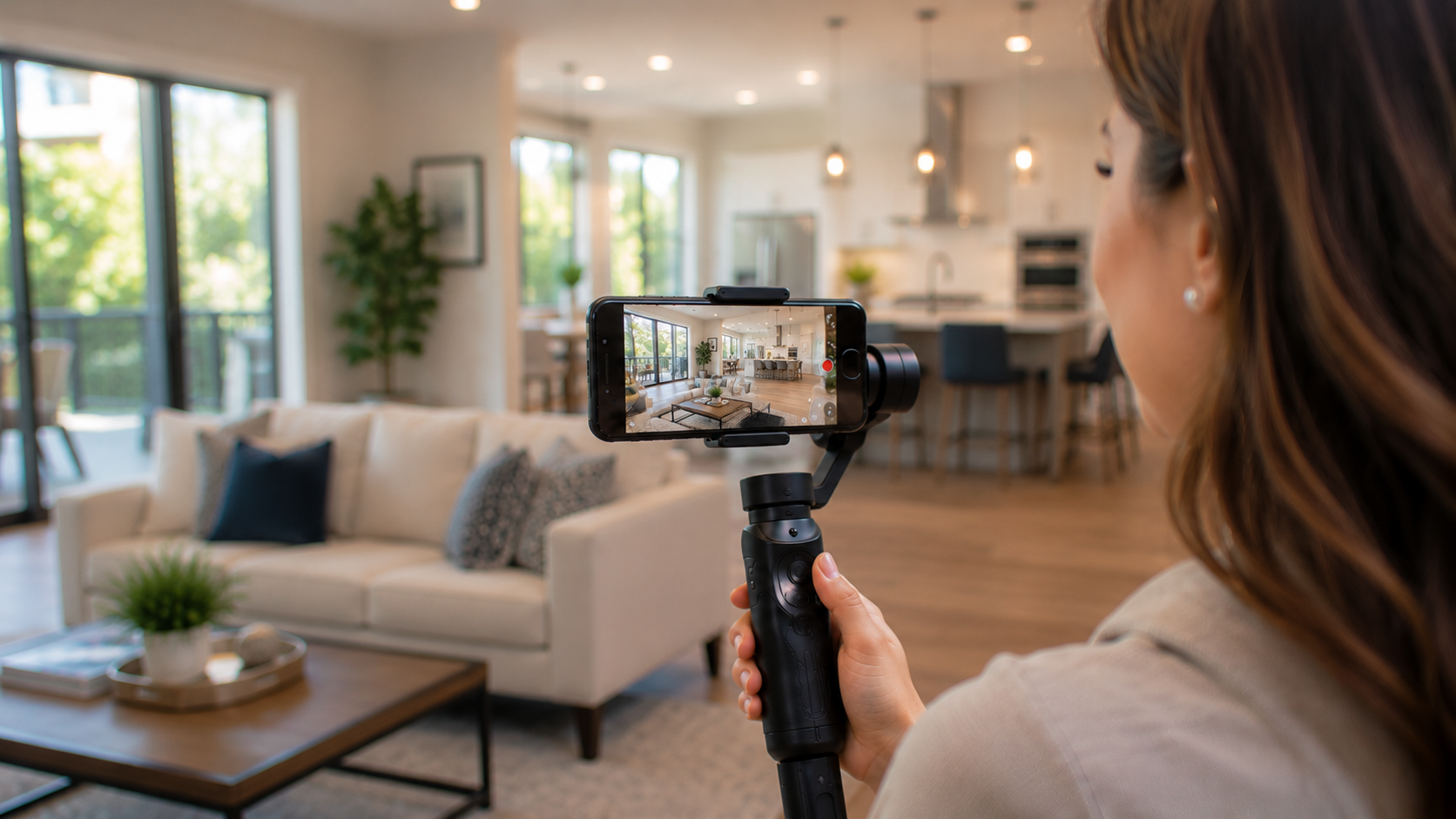
Can AI Replace Real Estate Videographers?
Published:
July 11, 2026
So, can AI replace real estate videographers? That is the spicy question everyone in real estate marketing keeps asking right now. Realtors are seeing AI tools that can edit videos, write scripts, create voiceovers, add captions, clean up audio, generate virtual staging, and even make basic video content from photos. On the surface, it looks like the machines are rolling in with a camera bag and saying, “Move over, humans, we got this.” But the real answer is more layered than that. AI can replace some tasks, speed up a ton of boring work, and make basic content easier to produce. But replacing a great real estate videographer completely? Nah, not so fast.
Real estate video is not just about showing rooms. It is about selling space, emotion, lifestyle, flow, light, neighborhood energy, and that little gut feeling buyers get when they think, “Okay, I can see myself living here.” AI is powerful, no doubt. It can do plenty of technical things faster than a human editor. But it does not walk into a home and instantly understand the weird little magic of a breakfast nook, the drama of a sunset view, or the way a hallway reveal should be shot to make a buyer lean closer to the screen. That is still human taste, human judgment, and human storytelling.
The smarter question is not “AI or videographers?” The smarter question is, “How should Realtors use AI and videographers together to create better real estate videos without wasting money?” Because that is where the real power is. AI is not just a threat. It is a tool. And like any tool, it depends on who is holding it. A lazy agent using AI can create generic, lifeless content. A skilled videographer using AI can create sharper, faster, more strategic videos. The future is not human versus machine. It is human creativity with AI muscle.
The Big Question: Is AI Coming for Videographers?
AI is absolutely changing real estate videography, and pretending otherwise would be silly. The industry is already moving away from the old workflow where everything had to be filmed, edited, captioned, formatted, and delivered manually from scratch. Today, AI can speed up post-production, suggest edits, auto-generate captions, remove background noise, create social media clips, resize videos for different platforms, and polish content in ways that used to take hours. For Realtors, this is a big deal because content demand is insane. One listing video is no longer enough. Agents need Reels, Shorts, YouTube videos, listing clips, neighborhood snippets, email videos, and seller presentation assets. That is a lot of content to feed the beast.
But here is where people get it twisted: because AI can automate parts of video production, they assume it can replace the entire creative process. That is like saying a microwave can replace a chef because it heats food quickly. Sure, it helps. But it does not know flavor, timing, plating, mood, or why one dish makes people remember the meal. Real estate videography works the same way. AI can process footage, but it does not truly understand why a certain shot makes a home feel luxurious, cozy, spacious, private, or emotionally warm.
The videographers most at risk are not the highly skilled creative pros. The ones at risk are the “press record, walk through the house, slap music on it” crowd. If a videographer’s only value is basic footage and basic editing, then yes, AI is coming for that lunch. But videographers who understand branding, light, movement, composition, buyer psychology, luxury presentation, and storytelling are still incredibly valuable. AI is raising the bar. It is not deleting the game.
AI Is Already Eating the Boring Parts
Let’s be honest: a lot of video work is repetitive. Cutting dead air, syncing audio, adding captions, resizing for Instagram, exporting different versions, cleaning background noise, removing awkward pauses, and creating quick teaser clips can be boring as heck. AI is very good at these tasks because they are pattern-based. It can spot silence, detect faces, transcribe speech, suggest highlight moments, and turn one long video into multiple smaller clips. For busy Realtors and video teams, that is not a small upgrade. That is a workflow glow-up.
This is where AI shines in real estate video marketing. Imagine filming a full property walkthrough and then using AI to create a 60-second Instagram Reel, a 30-second TikTok, a YouTube Short, a captioned Facebook version, and a polished email thumbnail clip. That kind of repurposing used to take serious time. Now, it can happen much faster. AI can also help with listing scripts, voiceover drafts, shot lists, title ideas, and video descriptions. It is basically like having a production assistant who does not complain about doing the tedious stuff.
But boring does not mean unimportant. These tasks still affect quality. Captions need to be accurate. Cuts need to feel natural. Music needs to match the property. A luxury waterfront home should not have the same vibe as a starter condo near downtown. AI can suggest, automate, and accelerate, but someone still needs to review the output. If nobody checks it, mistakes slip through. And nothing screams “cheap marketing” like captions getting the neighborhood name wrong or a video clip cutting off mid-sentence. AI eats the boring parts, but humans still need to season the final dish.
But Real Estate Video Is Not Just Button-Pushing
The big myth is that real estate video is just pressing record and walking around. That is rookie thinking. A good videographer knows how to guide the viewer’s eye. They understand which angle makes a room feel open, which movement reveals a feature naturally, and which shot should come first to create interest. They know when to slow down, when to move, when to use detail shots, and when to let a space breathe. That is not random. That is craft.
Homes are tricky subjects. Some rooms are dark. Some layouts are awkward. Some spaces look better in person than on camera. Some properties have a killer feature that is not obvious unless the videographer knows how to reveal it. AI does not walk into the home, feel the light, move furniture slightly, adjust blinds, notice reflections, avoid bad angles, or decide that the backyard should be the emotional anchor of the video. A person does that. A skilled person does that even better.
This matters because buyers judge quickly. A video that feels flat, confusing, or cheap can make a good home look average. A strong video can make buyers understand why the home is special. That does not mean lying or overhyping. It means presenting the property in its best honest light. Real estate video is part marketing, part storytelling, part psychology, and part technical skill. AI can support all of that, but it does not replace the human eye behind the camera. Not yet. And honestly, probably not fully anytime soon.
What AI Can Actually Do for Real Estate Video
AI can do a lot for real estate video, especially when agents and videographers use it as a production accelerator. It can help before filming, during editing, and after publishing. Before filming, AI can generate shot lists, scripts, voiceover drafts, social media hooks, and content angles based on the property type and target buyer. During editing, it can stabilize footage, improve color, remove noise, transcribe speech, generate captions, and suggest highlight clips. After publishing, it can help create video descriptions, tags, blog summaries, email copy, and social captions. That is a lot of horsepower.
For Realtors, this means video content becomes more accessible. A solo agent who cannot hire a full media team every week can still produce decent educational videos, market updates, short-form content, and simple listing clips. That is huge. AI lowers the barrier to entry. It gives smaller agents and boutique teams a way to show up online more consistently without spending every night trapped in editing software. If an agent has good local knowledge and a clear message, AI can help package that message faster.
But AI works best when the input is strong. Bad footage plus AI still usually equals polished bad footage. If the video is shaky, poorly framed, badly lit, or boring, AI can only help so much. Think of AI like a gym trainer for your content. It can help build muscle, improve shape, and tighten things up, but it cannot turn a couch potato clip into a luxury cinematic masterpiece by magic. The better your footage, planning, and strategy, the better AI performs. That is why professionals still matter.
Faster Editing, Captions, Scripts, and Voiceovers
Editing is one of the biggest areas where AI is changing the game. Real estate video requires tons of versions now. A listing video might need a horizontal YouTube version, a vertical Reel, a short teaser, a longer walkthrough, a silent-captioned version, and a social ad cut. Doing all of that manually can eat up hours. AI tools can speed up the process by identifying useful clips, removing dead space, creating captions, and exporting multiple formats. For agents who need content yesterday, that speed is valuable.
Scriptwriting is another easy win. A Realtor can feed AI basic listing details and get a clean draft for a walkthrough voiceover or social media clip. The trick is not to use the first draft like gospel. AI scripts often sound too polished, too generic, or too “real estate brochure with caffeine.” A smart agent edits the script to sound more natural. Instead of saying, “This stunning residence offers unparalleled elegance,” say, “This place has that calm, high-end feel without trying too hard.” That sounds human. That sounds watchable.
Voiceovers are also getting better, but they need careful use. AI voice can be useful for quick property summaries, multilingual versions, or agents who hate recording audio. But a bad AI voice can make a listing feel fake fast. Real estate is emotional, so tone matters. A human voice still brings warmth, pauses, personality, and subtle confidence. AI voiceovers can work, but they should support the brand, not make the video feel like a robot is selling a house from a spaceship.
Virtual Staging, Enhancement, and Repurposing
AI-powered virtual staging is one of the biggest shifts in real estate marketing. Empty homes can feel cold, confusing, and smaller than they are. Buyers often struggle to imagine how furniture fits or how a room could function. AI can digitally stage spaces with furniture, rugs, lighting, decor, and different design styles. That can make a listing video or visual campaign more appealing, especially when physical staging is too expensive or not practical. Used honestly, it is a great tool.
Enhancement is another area where AI helps. It can brighten footage, clean up shadows, sharpen details, reduce noise, and make videos look more polished. But there is a line. Enhancing a room so it looks like what the eye naturally sees is fine. Making a dark room look like it has sunlight pouring in from heaven when it absolutely does not? That is sketchy. Buyers hate feeling tricked. Good marketing highlights reality. Bad marketing creates disappointment.
Repurposing is where AI becomes a serious business advantage. One professionally shot listing video can become ten pieces of content. A kitchen clip for Instagram. A backyard clip for Facebook. A neighborhood teaser for TikTok. A full walkthrough for YouTube. A seller-facing example for a listing presentation. A short email video for buyer leads. AI helps cut and format all of this quickly. That means the value of one shoot goes way up. The best Realtors and videographers will not create one video and call it done. They will create a full content ecosystem from one strong production day.
Why Human Videographers Still Matter
Human videographers still matter because real estate video is not just technical output. It is taste, strategy, and emotional translation. A good videographer can walk into a property and immediately start making decisions that AI cannot make on its own. They notice what needs to be moved, what angle flatters the room, where the light is strongest, what feature should lead the video, and which parts of the home need extra explanation. That judgment is the difference between a video that simply documents a house and a video that sells the experience of living there.
A strong videographer also understands pressure. Real estate shoots are not always perfect. Sellers may still be cleaning when the videographer arrives. The weather might be bad. A room may be darker than expected. A neighbor might start mowing the lawn right when the exterior shot begins. A dog might bark through the voiceover. The agent might be running late. A human professional adapts. They make decisions on the fly. They solve problems in real time. AI can assist after the fact, but it is not managing the chaos on-site.
There is also a trust factor. Luxury sellers, high-end developers, and serious listing agents often want a real creative professional involved because presentation matters. When a property is worth serious money, “good enough” content is not always good enough. The visuals need to feel intentional, premium, and aligned with the brand. AI can help polish, but a videographer brings the eye and discipline needed to capture the home properly in the first place.
Lighting, Framing, Movement, and Composition
Lighting can make or break real estate video. A room with great natural light can look stunning, but only if it is filmed at the right time and from the right angle. A room with poor light needs thoughtful handling. A professional videographer understands how to balance windows, avoid harsh shadows, adjust exposure, and keep the home from looking washed out or gloomy. AI can brighten footage later, but it cannot fully replace capturing good light at the source. Garbage in, slightly shinier garbage out.
Framing matters just as much. A wide shot can make a room feel spacious, but too wide can look fake. A tight shot can feel intimate, but too tight can make buyers wonder what is being hidden. Good framing shows space honestly while making it look attractive. That balance is not automatic. It comes from experience. A videographer knows how to frame doorways, windows, kitchen islands, fireplaces, staircases, patios, and views so they feel intentional.
Movement is another underrated skill. Smooth movement can make a home feel elegant. Jerky movement makes people dizzy. A reveal shot can create drama. A slow push-in can make a feature feel important. A well-timed transition can help buyers understand layout. These are creative choices. AI can stabilize footage, but it cannot decide the best emotional movement before the camera rolls. A great videographer shoots with the final edit already in mind. That is a real skill, not a filter.
Storytelling Turns a House Into a Feeling
The best real estate videos tell a story. Not a cheesy fairy tale, but a simple emotional journey. The viewer enters the home, understands the main living space, feels the strongest lifestyle feature, sees the private areas, explores the outdoor space, and leaves with a clear impression. Maybe the story is “modern family comfort.” Maybe it is “downtown convenience.” Maybe it is “private luxury retreat.” Maybe it is “first-home charm with smart updates.” Every property has a story if someone knows how to find it.
AI can help structure a video, but it does not truly feel the story. It does not understand that the view should be revealed after the living room because that creates a wow moment. It does not know that the backyard is the emotional centerpiece because local buyers care about outdoor entertaining. It does not sense that the home office should be highlighted because remote workers are the likely buyer. A human with real estate marketing experience can make those calls.
Storytelling also affects how buyers remember the property. A basic video says, “Here are the rooms.” A story-driven video says, “Here is why this home matters.” That difference can influence saves, shares, showings, and offers. Buyers are not just collecting facts. They are building emotional certainty. A videographer who understands storytelling helps create that certainty. AI can speed the process, but human direction gives the video soul.
AI vs Real Estate Videographers: What Works Best?
The real debate is not whether AI is good or human videographers are good. Both can be useful. The better question is which one fits the job. Not every video needs a professional crew. Not every listing deserves a cinematic production budget. And not every piece of social content needs perfect lighting and drone shots. Sometimes speed and consistency matter more than polish. Other times, polish is exactly what wins the listing, attracts luxury buyers, or protects the agent’s brand.
For everyday educational content, market updates, quick tips, simple social clips, and basic repurposing, AI can be more than enough. A Realtor can record a strong message on a phone, then use AI to clean the audio, add captions, cut clips, and create platform-ready versions. That is smart. But for high-value listings, luxury properties, complex layouts, architecture-heavy homes, lifestyle campaigns, and seller-facing brand assets, a professional videographer is usually worth it. The stakes are higher, so the visuals need to hit harder.
Here is a simple breakdown:
Task
AI Tools
Human Videographer
Captions and transcripts
Excellent for speed
Reviews for accuracy and tone
Basic editing
Good for simple clips
Better for pacing and story
Listing walkthroughs
Can assist after filming
Best for professional capture
Lighting and angles
Limited
Strong advantage
Luxury property video
Helpful support tool
Usually essential
Social repurposing
Very strong
Adds creative direction
Brand storytelling
Can draft ideas
Strong human advantage
On-site problem solving
Weak
Essential
When AI Is Enough for Realtors
AI may be enough when the video goal is speed, education, or simple visibility. For example, if a Realtor wants to make a quick video explaining closing costs, a weekly market update, a seller tip, or a short neighborhood opinion, they do not need a full production crew. A phone, decent audio, good lighting, and AI editing can do the job. The message is the value. Buyers and sellers do not need cinematic perfection to learn something useful from you. They need clarity.
AI is also enough for repurposing existing content. If you already have a long webinar, listing video, market update, or neighborhood guide, AI can help pull out short clips and format them for social media. That is a no-brainer. Many Realtors are sitting on useful content and not using it fully. AI helps squeeze more value from what you already have. That is not cheap. That is efficient.
For lower-budget listings, rentals, quick updates, or internal marketing, AI-assisted video may also be perfectly fine. Not every property requires a luxury cinematic experience. The key is to match the production level to the goal. If the video needs to communicate basic information quickly, AI can help. If the video needs to create premium emotion and impress high-value sellers, bring in a human pro. Knowing the difference is what makes the strategy smart.
When You Should Hire a Pro Videographer
You should hire a professional real estate videographer when the property needs to look its absolute best. This includes luxury homes, unique architecture, large estates, waterfront properties, high-end condos, new developments, builder showcases, and listings where lifestyle is a major selling point. These properties need more than documentation. They need presentation. The lighting, pacing, angles, drone footage, detail shots, and story all need to feel intentional. That is where pros shine.
A pro is also worth hiring when your brand is on the line. Sellers judge your marketing. If you want to win better listings, you need public examples that show you market homes at a high level. A polished video can help you win future listing appointments because it proves your standard. Sellers do not just hear you say, “I use video.” They see it. That is powerful.
Professional videographers are also valuable when the shoot is complicated. Maybe the home has difficult lighting, a weird layout, reflective surfaces, tight rooms, or important exterior shots that require timing. Maybe the property needs drone footage, twilight shots, lifestyle footage, agent narration, or neighborhood clips. AI can help edit afterward, but it cannot replace skilled on-site capture. A pro knows how to get the footage right from the start. That matters because editing cannot fully save poor filming.
How Realtors Should Use AI Without Looking Cheap
Realtors should use AI to look sharper, not cheaper. That is the key. AI should improve the client experience, speed up production, and make content more consistent. It should not make your brand feel generic, fake, or lazy. Buyers and sellers can tell when content has no human touch. They may not say, “This was clearly AI-generated,” but they will feel the blandness. And bland does not win trust.
The easiest way to avoid cheap-looking AI content is to keep your real voice in the process. Use AI for drafts, not final personality. Use it to organize ideas, not replace judgment. Use it to polish, not fake expertise. If AI writes a video script, rewrite it so it sounds like something you would actually say. If AI creates captions, review them. If AI stages a room, label it clearly. If AI enhances video, make sure the home still looks real. Transparency matters.
Your goal should be a hybrid system. Let AI handle repetitive production tasks while humans handle strategy, authenticity, and quality control. That way, you get speed without losing trust. You can create more videos, post more consistently, respond faster, and still maintain a brand that feels human. That is the sweet spot. AI should be the assistant, not the personality.
Build a Hybrid Workflow That Saves Time
A strong hybrid workflow starts before filming. Use AI to brainstorm video angles based on the property, neighborhood, and likely buyer. Ask it for shot list ideas, social hooks, voiceover drafts, and content variations. Then let the human agent or videographer decide what actually makes sense. This saves planning time while keeping creative control where it belongs. AI gives options. Humans choose direction.
After filming, AI can speed up editing. It can identify highlight moments, generate captions, cut vertical clips, remove filler words, clean audio, and prepare platform-specific exports. A videographer or agent can then review the results and make sure the pacing, tone, and branding feel right. This is where the magic happens. AI handles the grind. Humans protect the quality.
After publishing, AI can help extend the life of the video. It can turn the video into a blog post, email copy, listing description support, YouTube description, Instagram captions, ad variations, and follow-up messages. One shoot becomes a full campaign. That is exactly how Realtors should think about video now. Do not just make one asset. Build a content machine around each property, neighborhood, or educational topic. AI makes that machine easier to run.
Keep Your Brand Human, Local, and Real
The biggest danger with AI content is sameness. If every agent uses the same prompts and the same templates, everyone starts sounding like the same overly enthusiastic robot. That is not a brand. That is digital wallpaper. To stand out, Realtors need to keep their content human, local, and real. Talk like yourself. Share your actual opinions. Mention real neighborhood details. Use examples from the field. Say the things buyers and sellers actually need to hear.
Local knowledge is especially important. AI can generate generic lines about “great amenities” and “desirable neighborhoods,” but that stuff is weak sauce. A real Realtor can say which street gets more traffic, which coffee shop locals love, where buyers want to be for commute reasons, and why one pocket of a neighborhood sells faster than another. That is the kind of detail that builds trust. AI can format it, but you need to supply the truth.
Being human also means being honest. Do not use AI to overhype every property. Every home is not stunning, rare, perfect, and must-see. Sometimes a home has trade-offs, and that is okay. Buyers respect honest framing. Sellers respect smart positioning. Your brand gets stronger when people feel like you are giving them real guidance, not just polished noise. AI can help you say things better. It should not make you say things that are not true.
The Future of Real Estate Videography
The future of real estate videography is not a simple robot takeover. It is a reshaping of the job. Videographers will spend less time on repetitive edits and more time on creative direction, production quality, brand strategy, and storytelling. Realtors will expect faster turnaround, more formats, and more content from every shoot. The videographers who adapt will become more valuable, not less. The ones who ignore AI and keep charging premium prices for basic output may have a tougher road.
AI will also raise client expectations. Sellers will expect better videos. Buyers will expect better virtual experiences. Agents will expect faster delivery. Social platforms will demand more versions of every asset. That means the old “one video file and done” model is fading. A modern videographer may need to deliver a full content package: full listing video, vertical clips, teaser reels, neighborhood cuts, captioned versions, thumbnail suggestions, and maybe even AI-assisted virtual staging options. That is the new bar.
For Realtors, this is good news if they are willing to be strategic. Video production can become more efficient and more powerful at the same time. AI makes content easier to scale. Human videographers make content worth watching. Together, they create a better system. The future belongs to agents and creatives who understand that video is not just a listing extra. It is brand-building, lead generation, seller proof, buyer education, and local authority all rolled into one.
Videographers Who Use AI Will Beat Those Who Ignore It
Videographers who use AI well will have a serious edge. They can deliver faster, create more versions, reduce repetitive editing time, and offer more value to agents. Instead of fearing AI, smart videographers will use it like a production partner. They will spend less time manually cutting captions and more time improving the story, look, and strategy of the video. That is a better use of talent.
This also means videographers need to position themselves differently. The value is no longer just “I can shoot video.” Plenty of people can shoot video now. The value is “I know how to make real estate content that helps homes stand out, helps agents win listings, and helps buyers feel the property.” That is a much stronger pitch. AI can help with production, but strategic creative thinking becomes the premium service.
The same goes for Realtors. Agents who learn how to use AI will create more consistent content, but agents who pair AI with real human creativity will win bigger. The worst move is to blindly automate everything and call it innovation. The best move is to use AI for speed and humans for judgment. That combo is hard to beat. AI is not the death of real estate videography. It is the filter that separates basic operators from true creative partners.
Conclusion
AI can replace parts of the real estate video workflow, but it cannot fully replace a skilled real estate videographer. It can edit faster, generate captions, write scripts, create voiceovers, enhance footage, stage rooms virtually, and repurpose videos across platforms. Those tools are incredibly useful. They save time, lower costs, and help Realtors create more content. But AI still struggles with the parts that make video truly powerful: human taste, on-site judgment, lighting, framing, movement, storytelling, emotional pacing, and brand feel.
The real winners will not be the agents who choose only AI or only humans. The winners will be the ones who build a smart hybrid workflow. Use AI to speed up repetitive tasks. Use human videographers for professional capture, creative direction, and high-stakes listings. Use your own local expertise to keep the content honest and specific. That is how you create videos that feel polished without feeling fake.
So, can AI replace real estate videographers? It can replace weak, basic, low-effort video work. But it will not replace great videographers who understand real estate, marketing, and storytelling. In fact, AI may make the best videographers even more valuable because it gives them better tools to work faster and deliver more. The future is not AI versus videographers. The future is videographers, Realtors, and AI working together to create smarter, sharper, more human real estate video content.
Real estate videos, made simple.
Subscribe