Open House Videos vs Property Tour Videos: Which Works Better?
Published:
July 11, 2026
Real estate video is not just a fancy extra anymore. It is one of the main ways buyers decide whether a home is worth their time, and it is one of the clearest ways sellers judge whether an agent actually knows how to market. But here is where things get interesting: not every video does the same job. An open house video and a property tour video may both show a home, but they hit differently. One feels more alive, spontaneous, and social. The other feels more polished, controlled, and evergreen. So, which one works better? The real answer is not as simple as “pick this one and ditch the other.” It depends on the listing, the audience, the market, and what kind of action you want from the viewer.
Think of it like this: an open house video is like inviting people into the room while the party is happening. There is movement, energy, real-time commentary, and sometimes that subtle feeling of “people are interested in this place, so maybe I should be too.” A property tour video is more like a guided private showing that buyers can watch anytime. It slows things down, explains the layout, highlights the best features, and gives the home a clean digital presentation. Both can be powerful. Both can flop if done badly. The trick is knowing when to use each one.
For real estate agents, sellers, and property marketers, this is not just a content-style debate. It affects lead quality, buyer attention, showing requests, seller confidence, and the overall perception of the listing. A weak video can make a great home feel average. A smart video can make the right buyer stop scrolling, lean in, and say, “Okay, I need to see this.” That is the whole game. So let’s break it down like real people, not like some stiff marketing manual.
The Quick Answer: It Depends on the Job
If you want the quick but honest answer, property tour videos usually work better for long-term listing marketing, while open house videos work better for urgency, engagement, and real-time interest. A polished property tour gives buyers a clean, clear look at the home and helps them understand the layout without distractions. It is the video you want living on a listing page, in buyer follow-ups, in email campaigns, and in any place where someone may discover the property days or weeks after it goes live. It is controlled, professional, and easy to reuse. That makes it a strong foundation.
Open house videos, on the other hand, are great when you want to create momentum. They can make a property feel active, current, and worth paying attention to right now. A quick video before, during, or after an open house can show the vibe of the home, answer common buyer questions, give behind-the-scenes energy, and remind people that the property is available to see in person. It is less polished by nature, but that can actually be part of the charm. People like content that feels real. They like seeing a human talk through a space without everything feeling overly scripted.
The problem starts when agents use the wrong video for the wrong purpose. A shaky open house video should not be the only visual asset for a premium listing. A beautiful cinematic property tour should not be expected to create the same “come see it today” urgency as a live-style open house clip. Each format has a lane. When you understand those lanes, your video marketing gets sharper fast. Instead of asking which one is universally better, ask what job the video needs to do. That is where the smarter answer lives.
What Each Video Is Designed to Do
An open house video is designed to capture immediacy. It says, “This is happening now. Come check it out. Here is what the home feels like today.” It often works best as short, informal, personality-driven content. The agent might walk through the main living area, point out a few standout features, mention the open house time, talk about neighborhood perks, or answer questions people are likely to ask. The goal is not usually to document every single room perfectly. The goal is to create interest, energy, and action.
A property tour video is designed to give buyers a complete, organized view of the home. It should show the layout clearly, highlight the strongest features, and make the property easy to understand from a distance. This matters because many buyers do not want to waste time on homes that only look good in photos. They want to know how the kitchen connects to the living room, whether the bedrooms are separated well, how the outdoor area flows, and what the home actually feels like when moving through it. A property tour answers those questions better than photos alone.
The two formats also create different emotional responses. Open house videos feel more casual and alive. They can make buyers feel like they are getting a real-time peek behind the curtain. Property tour videos feel more polished and trustworthy. They give buyers the sense that the listing is being presented seriously. Neither emotional response is “better” all the time. A busy entry-level listing may benefit from open house buzz. A luxury home may need a polished property tour first. The format should match the message. That is the move.
Why “Better” Depends on the Goal
The word “better” gets thrown around too loosely in real estate marketing. Better for what? More views? More serious buyers? More seller confidence? More showing requests? More shares? More long-term search value? An open house video might get more quick engagement because it feels fresh and personal. But a property tour video might bring better-qualified buyers because it gives them enough detail to decide whether the home truly fits. Those are different kinds of success.
For example, if an agent wants to drive traffic to an open house happening this weekend, an open house video or preview clip is probably the better choice. It can be timely, direct, and a little punchy. “This home is open today, and wait until you see the backyard” is the kind of simple hook that can get attention fast. But if the goal is to help relocation buyers evaluate the home from another city, a polished property tour is usually stronger. Those buyers need clarity, not hype. They need to understand the space before booking a flight or requesting a virtual showing.
Sellers also view these formats differently. A seller may love the energy of open house videos because they show activity and effort. But they may judge the agent’s professionalism more heavily based on the quality of the property tour. A polished tour feels like a marketing asset. An open house video feels like a promotional moment. Both matter, but they do not carry the same weight. So instead of picking one forever, smart agents build a video strategy where each format plays its role.
What Open House Videos Do Best
Open house videos shine when the goal is to create buzz. They are not meant to be perfect little movie trailers. They are meant to feel current, real, and human. That is exactly why they can work so well. Buyers are surrounded by polished listing content all day, and sometimes a casual video from inside the home feels more believable. It gives viewers the sense that someone is actually there, walking through the space, noticing details, and inviting them into the moment. That kind of energy can be hard to fake.
A strong open house video can also show buyer activity without saying too much. Even if you are careful not to film private visitors directly, you can still communicate that the home is getting attention. The agent’s energy, the setup, the signage, the natural movement through the property, and the quick commentary can all send a signal: this listing is active. In real estate, perceived demand can influence behavior. When buyers feel like other people may be interested, they often pay closer attention.
Open house videos are also great for agent branding. They let people see how you talk, how you explain a home, and how comfortable you are in the space. A polished property tour may show the listing beautifully, but an open house video shows you as the guide. That matters. Buyers and sellers both want to work with someone who feels confident, clear, and approachable. A short open house clip can do more for personal trust than a hundred generic “just listed” graphics. It feels less like advertising and more like a real person saying, “Hey, let me show you something worth seeing.”
Create Urgency and Live Energy
Urgency is where open house videos really flex. A property tour can be beautiful, but it often feels timeless. That is a strength in some cases, but not when you need people to act now. Open house videos have built-in timing. They can say, “This is happening today,” or “We are here this weekend,” or “Buyers are already asking about this feature.” That kind of timing gives viewers a reason to move instead of casually saving the listing and forgetting about it. Real estate attention disappears fast, so urgency matters.
The live energy also makes the content more watchable. A casual clip where an agent walks through the kitchen, steps into the living room, and says, “This is the part people are going to lose their minds over,” can feel more engaging than a slow, silent pan across the same space. It has personality. It has momentum. It feels like the agent is talking directly to the viewer. That is powerful because people connect with people, not just square footage.
But urgency should not turn into fake pressure. Nobody likes that desperate “run, don’t walk” energy when it feels forced. The best open house videos create natural urgency by being specific. Mention the showing window, the standout feature, the type of buyer who should see it, or the reason the home is worth visiting. For example, “If outdoor space is high on your list, this backyard is the reason to stop by today” sounds helpful. “This will be gone in five seconds!” sounds cheesy unless the market truly supports it. Real talk beats fake hype every single time.
Build Trust Through Real-Time Presence
Open house videos build trust because they show the agent present and active. Sellers love seeing that their agent is not just uploading the listing and vanishing into the void. Buyers like seeing someone inside the home who can explain it in plain language. Real-time presence sends a message: this agent is working, showing, explaining, and paying attention. That is simple, but it matters. Real estate is emotional, and visible effort gives people confidence.
These videos are also useful because they can answer questions quickly. During an open house clip, an agent might mention the natural light, storage, room flow, parking, nearby amenities, or recent updates. These are the little details buyers often wonder about while scrolling. Instead of making them dig through the listing description, the video gives them a quick human explanation. It feels more natural than a wall of text. It also gives the agent a chance to frame the home properly.
For sellers, open house videos can be a subtle proof of marketing effort. A seller may not understand every detail of online advertising, but they can understand seeing their agent actively promoting the home. That builds confidence in the process. It also creates shareable content the seller may send to friends, neighbors, or potential buyers they know. The more the video circulates, the more exposure the listing gets. Open house videos are not always the prettiest asset in the toolbox, but they can be one of the most human.
What Property Tour Videos Do Best
Property tour videos are the heavy lifters of real estate video marketing. They are designed to present the home in a clean, organized, buyer-friendly way. A good tour helps viewers understand the layout, appreciate the strongest features, and imagine moving through the space. This is especially important because photos can sometimes make homes feel fragmented. A buyer sees the kitchen, then a bedroom, then a bathroom, then a patio, but they may not know how everything connects. A tour solves that problem.
A property tour is also more controlled than an open house video. The lighting can be planned. The rooms can be staged. The camera movement can be smooth. The edit can be clean. The best features can be introduced in the right order. That level of control matters when the goal is to make the listing look professional and trustworthy. For higher-end listings, unique homes, or properties where presentation is a major factor, a strong tour can make a huge difference in buyer perception.
These videos also work well over time. An open house clip may feel outdated after the event passes, but a property tour remains useful as long as the listing is active. It can live on the listing page, in follow-up messages, in ads, in email campaigns, and in buyer conversations. It becomes the main visual reference for the home. If someone asks, “Can you send me more info?” the property tour can do a lot of explaining before the agent even types a reply. That is why property tours are often the better core asset.
Show Layout and Flow Without Distractions
The biggest advantage of a property tour video is clarity. Buyers want to know how the home works. Not just how it looks, but how it lives. Does the front door open into the main living space? Is the kitchen connected to the dining area? Are the bedrooms grouped together or split apart? Is the outdoor area easy to access? Does the basement feel usable or forgotten? A property tour can answer all of that in a way photos usually cannot.
Good flow is one of the biggest emotional triggers in a home search. A buyer may not use the word “flow,” but they feel it. They feel whether the home makes sense. They feel whether moving from one room to another is natural. They feel whether entertaining, parenting, working from home, or relaxing would be easy there. A tour video helps communicate that feeling. It lets the buyer mentally walk through the house before stepping inside physically.
The “without distractions” part is important. Open house videos may have real-time charm, but they can also include noise, visitors, rushed movement, or casual framing. A property tour removes those distractions. It gives the home the spotlight. The viewer can focus on the space, the finishes, the light, and the layout. For serious buyers, that clarity matters. They are not watching just for entertainment. They are deciding whether the home belongs on their shortlist.
Work Harder as Evergreen Listing Assets
A property tour video keeps working after the day it is posted. That is one of its biggest strengths. It is not tied to one event, one weekend, or one open house window. As long as the property is available, the tour remains relevant. It can be sent to new leads, shared with out-of-town buyers, embedded in listing materials, included in seller updates, and reused in marketing campaigns. That gives it more long-term value than a quick open house clip.
This evergreen quality is especially useful for buyers who discover the listing later. Not everyone sees a property the day it hits the market. Some buyers search midweek. Some are relocating and browsing from another time zone. Some need to show the home to a spouse, parent, investor partner, or friend before making a decision. A property tour gives them something complete and easy to share. It keeps the home alive in the conversation.
For agents, this matters because every listing is also a portfolio piece. A strong property tour does not just market the current home. It shows future sellers what kind of marketing they can expect. That is a big deal. Sellers are watching. They want to know whether you can make their home look strong online. A polished tour says, “Yes, I take presentation seriously.” That message can help win future listings long after the current one sells.
Head-to-Head Comparison: Open House Videos vs Property Tours
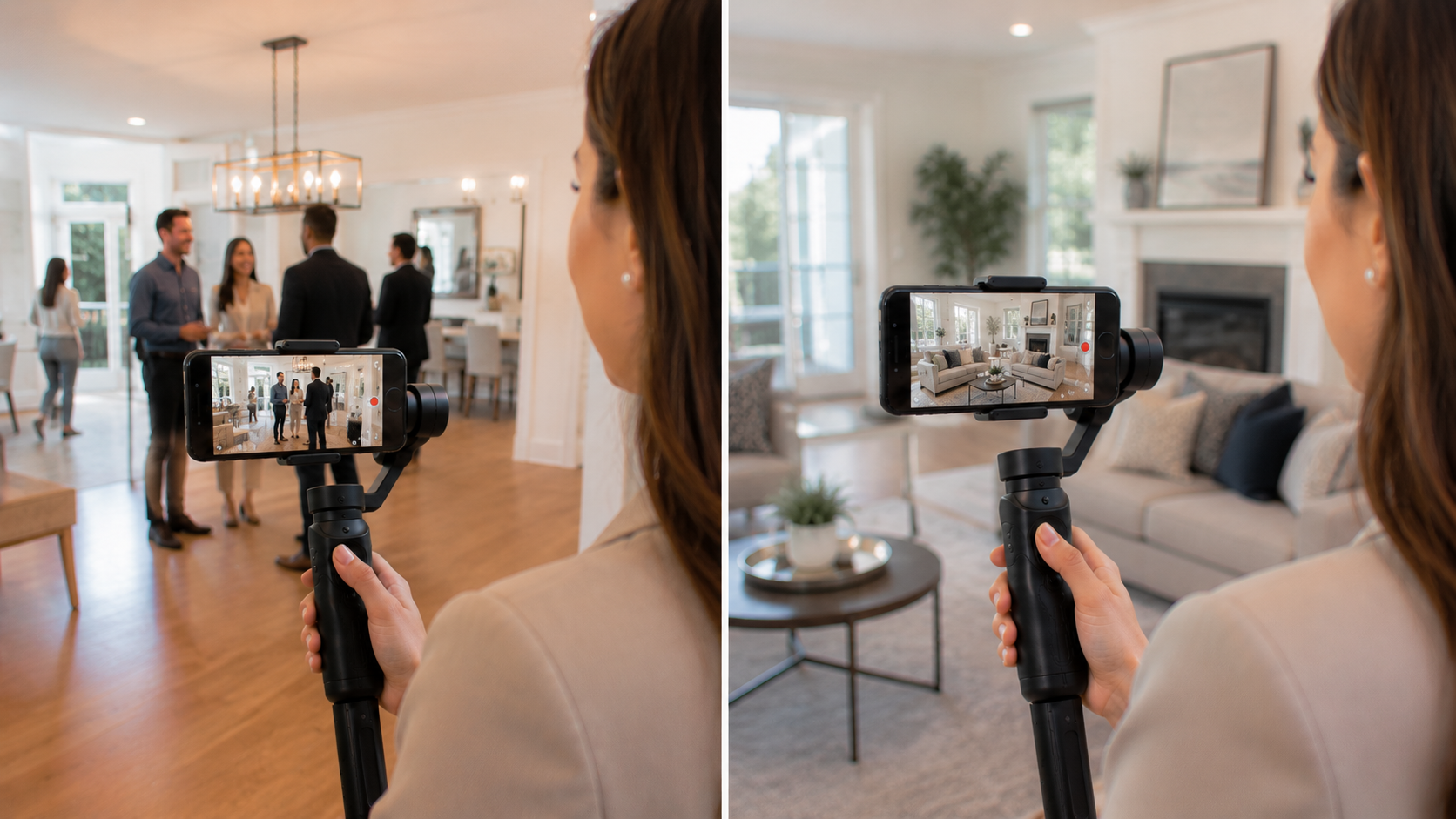
When you compare open house videos and property tour videos side by side, the biggest difference is purpose. Open house videos are best for immediacy, personality, and event-driven promotion. Property tour videos are best for clarity, polish, and long-term listing performance. One creates energy around a moment. The other creates a structured visual asset. The mistake is acting like they are interchangeable. They are not. They are different tools.
A practical way to compare them is to look at the buyer’s mindset. A casual viewer scrolling quickly may respond better to an open house video because it feels more direct and lively. A serious buyer narrowing down options may prefer a property tour because it gives better information. A seller evaluating an agent may appreciate both: the open house video shows effort and activity, while the property tour shows professionalism and marketing quality. That is why the best strategy often includes both, especially for listings that need maximum exposure.
Here is a simple comparison:
Video Type
Best Use
Main Strength
Main Weakness
Open house video
Event promotion and quick engagement
Energy, urgency, personality
Short shelf life and less polish
Property tour video
Listing marketing and buyer education
Layout clarity, polish, evergreen value
Can feel boring if poorly paced
Quick teaser clip
Social attention
Fast hooks and easy sharing
Limited detail
Full guided tour
Serious buyer research
Depth and confidence
Needs strong production
Hybrid video
Premium campaigns
Combines energy and clarity
Requires more planning
Best for Buyers Who Need Confidence
For buyers who need confidence, property tour videos usually win. Buying a home is a big decision, and serious buyers need more than a quick vibe check. They need to understand whether the home actually fits their life. A property tour gives them the information they need to feel comfortable taking the next step. It shows layout, room transitions, scale, outdoor flow, and key features in a more complete way. That can reduce uncertainty and increase serious showing requests.
This is especially true for relocation buyers, busy professionals, and buyers comparing several homes at once. They may not have time to visit every property that looks decent in photos. A good tour helps them narrow the list. If the home feels right on video, they are more likely to schedule a showing. If it clearly does not fit, they can move on without wasting anyone’s time. That is actually a win for everyone. Better-informed buyers create better showings.
Open house videos can still help buyers, but usually in a different way. They can create excitement and remind buyers to act quickly. They can show personality and answer a few timely questions. But if a buyer is seriously deciding whether to see or offer on a home, a property tour gives them more confidence. It is the stronger decision-support tool. Open house videos spark interest. Property tours deepen it.
Best for Sellers Who Want Strong Marketing
For sellers, property tour videos usually feel like the stronger marketing asset because they look more polished and intentional. Sellers want their home presented well. They want to feel like the agent is doing more than basic exposure. A clean property tour gives them visible proof that the home is being marketed professionally. It also gives them something they can share with friends, neighbors, and potential buyers. That makes the listing feel more premium.
Open house videos still matter to sellers because they show action. Sellers like seeing their agent show up, promote the event, and talk about the home in real time. It gives them confidence that the listing is not just sitting online waiting for luck. But an open house video alone may not be enough to impress a seller, especially if the home is higher-end or the listing presentation promised strong digital marketing. Sellers expect polish. A strong tour delivers that polish.
The best seller-facing strategy is to explain both formats clearly. Tell the seller that the property tour is the main long-term marketing asset, while open house videos create timely buzz and human engagement. When sellers understand the role of each video, they appreciate the strategy more. They see that video is not random content. It is part of a plan to attract attention, build confidence, and move buyers toward action.
How to Choose the Right Format for Your Listing
Choosing between an open house video and a property tour video starts with the property and the goal. Is the home visually impressive? Does it have a unique layout? Is it in a market where buyers need more information before touring? Is the open house a major part of the strategy? Is the seller expecting premium marketing? Is the likely buyer local, relocating, first-time, luxury-focused, investor-minded, or move-up? These questions matter because different buyers need different content.
For a simple, affordable listing in a fast-moving market, a clean property tour plus a few energetic open house clips may be enough. For a luxury home, the property tour should be the centerpiece, with open house content used carefully to support momentum. For a quirky home with an unusual layout, the tour becomes critical because buyers need clarity. For a home in a lifestyle-heavy neighborhood, both formats should include local context. The format should serve the story of the listing.
Agents should also think about where the video will live. A property tour belongs anywhere buyers need full information. An open house video belongs in timely promotional channels, follow-up messages, and short-form content spaces. A tour says, “Here is the home.” An open house video says, “Here is why you should pay attention now.” When used together, they cover more of the buyer journey.
Match the Video to the Buyer Journey
The buyer journey usually starts with awareness, moves into interest, then confidence, then action. Open house videos work well at the awareness and action stages. They can catch attention quickly and push people toward a specific event or showing window. Property tour videos work best in the interest and confidence stages. They help buyers understand the home deeply enough to decide whether it is worth pursuing. When you map the videos this way, the choice becomes much easier.
A buyer who has never seen the home before may need a quick teaser first. Something short, punchy, and feature-focused can grab attention. Once they are interested, they need a full tour. That is where the property tour steps in. Then, when an open house is coming up, a timely open house video can remind them to visit. Each video moves the buyer one step forward. That is smarter than dumping one video online and hoping it does everything.
This approach also makes follow-up stronger. If a lead asks basic questions, send the property tour. If they seem interested but hesitant, send a short clip highlighting the feature they care about. If an open house is coming up, send a personal video invite. Video becomes a conversation tool, not just a marketing asset. That is how good agents turn content into actual client movement.
Use Both When the Listing Deserves It
For many listings, the best answer is not either-or. It is both. A property tour gives the listing a polished foundation. Open house videos add urgency and personality. Together, they create a fuller marketing campaign. The tour helps serious buyers understand the home. The open house clips keep the listing feeling active and fresh. That combo can be especially powerful in competitive markets where attention moves fast.
Using both does not mean creating random duplicate content. Each video should have a distinct purpose. The property tour should be planned, clean, and organized. The open house video should be timely, conversational, and focused on action. The property tour might say, “Here is the full experience of the home.” The open house clip might say, “Here are three reasons to come see it this weekend.” Different message, different energy, same listing.
This strategy also helps agents show sellers a more complete marketing plan. Instead of saying, “We do video,” you can say, “We use a polished tour to help buyers understand the home, then use open house videos to drive timely attention and engagement.” That sounds strategic because it is strategic. Sellers notice when agents have a real plan. And buyers notice when the content actually helps them.
Common Mistakes That Kill Video Results
The biggest video mistake in real estate is making content without a purpose. Some agents film because they know they “should do video,” but they do not think about what the video needs to accomplish. The result is usually a random walkthrough, weak hook, poor pacing, and no clear next step. That kind of content may technically count as video, but it does not do much heavy lifting. Video should not just exist. It should help buyers understand, feel, trust, or act.
Another mistake is ignoring audio and lighting. A video does not need to look like a Hollywood production, but it should not feel sloppy. Dark rooms, shaky footage, echoey audio, weird camera angles, and rushed movement can make a good home look worse. That is brutal because the whole point of video is to improve buyer perception. If the video creates confusion or discomfort, it is hurting the listing. Clean basics matter: steady footage, bright rooms, clear sound, and logical movement.
Agents also mess up by making every video too long. Length is not value. A five-minute video that says something useful can work beautifully. A five-minute video that slowly wanders through every corner like a lost ghost is painful. Viewers will leave. Strong pacing matters more than runtime. Show what matters, explain what helps, cut what drags. Respect the viewer’s time and they are more likely to reward you with attention.
Turning Every Video Into a Boring Walkthrough
The boring walkthrough is the villain of real estate video. You know the type: slow pan of the front door, awkward hallway shot, kitchen, bathroom, bedroom, another bedroom, backyard, done. No story. No energy. No explanation. No sense of who the home is for. It technically shows the property, but it does not sell the property. Buyers do not just need to see rooms. They need to understand why those rooms matter.
A better video has a point of view. It tells the viewer what to notice. It might say, “This layout is great for entertaining because the kitchen opens right into the main living space.” Or, “This split-bedroom setup gives everyone more privacy.” Or, “The backyard is the real star here because it gives you space to host without feeling boxed in.” That kind of commentary turns video into guidance. Guidance builds trust.
Even silent property tours can avoid being boring if the shots are planned well. Lead with the strongest feature. Move through the home logically. Use detail shots to break up wide shots. Show flow. Keep the edit tight. Let the home breathe, but do not let it nap. A video should feel like a smart showing, not like security camera footage with music. When agents understand that difference, their content instantly gets better.
Conclusion
So, open house videos vs property tour videos: which works better? Property tour videos usually work better as the main listing asset because they give buyers clarity, show layout, build confidence, and stay useful throughout the life of the listing. They are polished, reusable, and strong for serious buyer decision-making. If you can only create one video for a listing, a clean property tour is usually the safer and stronger choice.
But open house videos bring something property tours do not: urgency, personality, and live energy. They make the listing feel active. They help agents promote showing windows. They build trust by showing real-time presence. They are especially useful for driving attention around a specific event or giving buyers a quick, human reason to care right now. They may not replace a full tour, but they can absolutely boost momentum.
The smartest strategy is not to fight these formats against each other. Use them together when the listing deserves it. Let the property tour do the deep explaining. Let the open house video create buzz and movement. One builds confidence. The other creates urgency. When both are done well, the listing gets a stronger shot at grabbing attention, earning trust, and turning views into real buyer action.
Real estate videos, made simple.
Subscribe