Psychology of Video Marketing in Property Sales
Publicado:
June 1, 2026
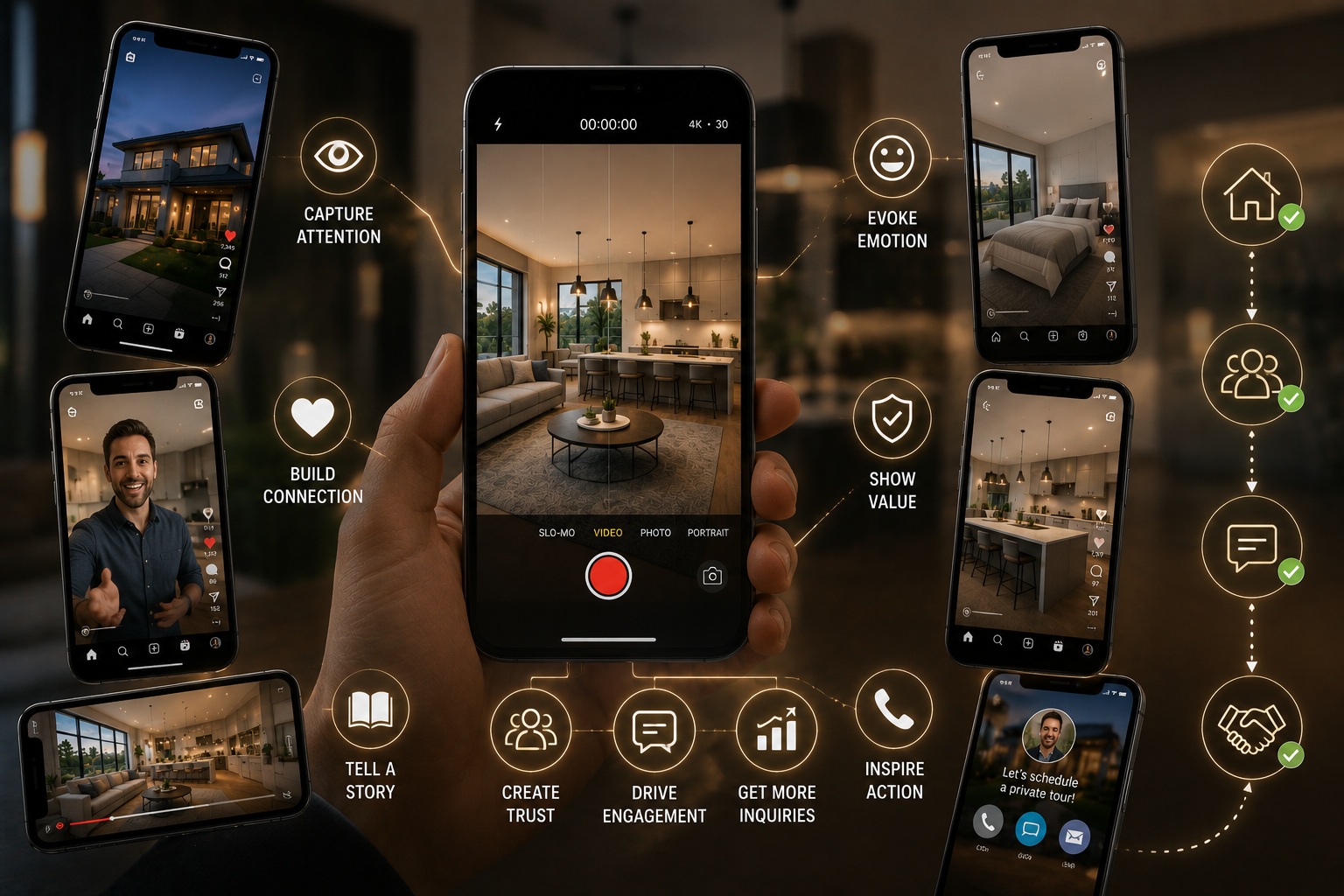
Buying property has never been just about walls, square footage, or location. People buy homes emotionally first and logically second. That’s exactly why video marketing has become one of the most powerful tools in modern real estate. A good property video does much more than showcase rooms — it triggers feelings, creates trust, and helps buyers imagine a future lifestyle before they ever schedule a viewing.
The psychology behind video marketing is fascinating because it taps directly into how people make decisions. Our brains process visual information faster than text, and emotions heavily influence memory and purchasing behavior. In real estate, where buying decisions involve massive financial and emotional investment, video can shape perception in seconds.
A cinematic walkthrough, soft lighting, relaxing music, and carefully chosen storytelling can completely change how buyers feel about a property. Two identical homes can receive very different levels of interest simply because one was presented in a more emotionally engaging way.
Understanding the psychology behind real estate video marketing helps agents, developers, and marketers create content that not only looks professional but actually drives action.
Why Human Emotions Drive Property Purchases
Most buyers believe they make rational decisions based on price, size, or investment potential. In reality, psychology plays a much larger role than people realize.
A home represents safety, identity, comfort, achievement, and future dreams. Buyers often imagine family moments, social status, personal success, or peaceful living while viewing a property. These emotional associations strongly affect decision-making.
Video marketing works so well because it activates emotional imagination. Instead of simply reading about “a spacious living room,” viewers can actually see sunlight entering the windows, hear soft background music, and visualize themselves relaxing in the space.
This emotional immersion creates a stronger psychological connection than photos alone. Neuroscience studies consistently show that emotional content improves attention and memory retention. That means buyers are far more likely to remember properties that made them feel something.
In property sales, emotional memory can become a huge competitive advantage.
The First Impression Happens Within Seconds
Human psychology reacts extremely quickly to visual information. Research shows people form first impressions in just a few seconds, and those impressions are difficult to change later.
In real estate video marketing, the opening scene matters enormously. If the first few seconds feel boring, shaky, dark, or outdated, viewers may immediately lose interest. On the other hand, a visually stunning introduction can instantly increase curiosity and emotional engagement.
Visual Triggers Influence Perception
Certain visual elements naturally create positive psychological responses:
- Bright natural lighting creates feelings of openness and comfort
- Warm color tones feel inviting and luxurious
- Smooth camera movement feels premium and calming
- Wide, uncluttered spaces create mental relaxation
- Greenery and outdoor scenes reduce stress psychologically
These details may seem subtle, but they strongly affect how viewers emotionally interpret a property.
Luxury real estate marketing uses these psychological triggers constantly. Elegant drone shots, cinematic pacing, and carefully staged interiors are designed specifically to create emotional aspiration.
Storytelling Creates Emotional Attachment
One of the biggest psychological strengths of video marketing is storytelling. Human brains naturally connect with stories more deeply than plain information.
A simple slideshow of rooms rarely creates strong emotional impact. But when a video tells a story about lifestyle, comfort, freedom, or family life, viewers become emotionally invested.
For example, a property video might begin with morning sunlight entering the kitchen, followed by coffee brewing, family spaces, outdoor relaxation areas, and cozy evening scenes. This creates a subconscious emotional narrative around daily life inside the home.
The buyer no longer sees just a property. They begin imagining their future experiences there.
That emotional transition is critical because buyers are not truly purchasing buildings. They are purchasing feelings, aspirations, and imagined lifestyles.
Music and Sound Influence Buyer Psychology
Sound design has a surprisingly strong psychological effect on property marketing. Music changes emotional perception almost instantly.
A luxury penthouse video with dramatic cinematic music feels completely different from the same footage paired with soft acoustic piano. One may feel energetic and modern, while the other feels calm and sophisticated.
How Audio Shapes Emotional Response
Different audio styles trigger different psychological reactions:
Audio Style
Emotional Effect
Soft piano
Comfort, elegance, warmth
Upbeat electronic music
Energy, modern lifestyle
Acoustic guitar
Relaxation, authenticity
Ambient cinematic music
Luxury, aspiration
Natural environmental sounds
Calmness, realism
Even subtle sound elements influence buyer perception. Birds singing outside, ocean waves, fireplace sounds, or city ambiance can make viewers emotionally connect with the environment.
Silence or poor audio quality, on the other hand, can make videos feel awkward and unprofessional.
The Brain Loves Movement More Than Static Images
Human attention is naturally drawn to movement. This is one reason video consistently outperforms static photography online.
Motion creates immersion. Smooth walkthrough shots help viewers mentally explore the property as if they are physically present. This activates stronger emotional and cognitive engagement.
Smooth Camera Movement Builds Trust
Psychologically, smooth motion feels controlled, professional, and calming. Shaky footage creates subtle discomfort and lowers perceived quality.
This is why professional real estate videographers use stabilizers and gimbals. Controlled camera movement subconsciously signals competence and luxury.
Slow cinematic movement also gives viewers time to process details. Fast cuts or chaotic movement can overwhelm the brain and reduce emotional connection.
Good real estate videos guide viewers naturally through spaces instead of rushing them.
Social Proof and Trust in Property Videos
Trust is one of the biggest psychological barriers in real estate sales. Buyers are making major financial decisions, often based on online content alone.
Video helps reduce uncertainty because it feels more transparent than photos. Buyers can better understand layout, lighting, dimensions, and atmosphere through moving visuals.
Why Authentic Videos Perform Better
Modern audiences are highly sensitive to fake or overly polished marketing. Over-edited footage, unrealistic filters, or misleading camera angles can damage trust quickly.
Authentic video content performs better psychologically because viewers perceive it as more honest and believable.
That does not mean videos should look amateur. Professional quality still matters. But authenticity creates emotional safety, which is essential during large purchasing decisions.
Some agents now appear on camera personally because seeing a human face increases trust and emotional familiarity. Buyers often feel more comfortable contacting agents who appear approachable and genuine.
Lifestyle Marketing Influences Desire
One of the strongest psychological principles in property video marketing is aspiration. People often buy homes based on the lifestyle they represent.
Luxury homes rarely market only bedrooms and bathrooms. Instead, videos focus on emotional experiences:
- Morning coffee with ocean views
- Entertaining friends outdoors
- Relaxing beside a fireplace
- Family dinners in open kitchens
- Peaceful backyard moments
These lifestyle visuals activate aspirational thinking. Buyers begin imagining improved quality of life, personal success, or emotional comfort.
That imagined future becomes emotionally persuasive.
In psychology, this is closely connected to identity-based decision-making. People buy things that reflect who they are — or who they want to become.
Fear of Missing Out in Real Estate Marketing
The psychology of scarcity also plays a major role in property sales.
When videos present homes as highly desirable, exclusive, or unique, buyers may experience FOMO — fear of missing out. This emotional pressure can increase urgency and motivate faster decisions.
Luxury video marketing often subtly uses this strategy by emphasizing:
- Rare locations
- Limited availability
- Exclusive architecture
- Unique views
- High-demand neighborhoods
The goal is not manipulation. It is positioning the property as valuable and emotionally desirable.
When buyers believe opportunities are limited, emotional attachment often grows stronger.
Drone Footage and Psychological Scale
Drone footage has become extremely popular because aerial visuals create emotional impact that ground-level footage cannot always achieve.
Psychologically, drone shots increase perceived scale, prestige, and importance. Large homes look more impressive from above, while surrounding landscapes create stronger environmental context.
Aerial footage also helps viewers mentally place the property within its surroundings. Beaches, parks, skylines, lakes, or golf courses become part of the emotional experience.
This broader perspective can significantly increase perceived property value.
Color Psychology in Property Videos
Colors influence emotions more than most people realize. Real estate video marketers often use color psychology intentionally during staging, filming, and editing.
Common Psychological Color Effects
Color
Emotional Association
White
Cleanliness, simplicity
Beige
Warmth, comfort
Blue
Calmness, trust
Green
Nature, peace
Black
Luxury, sophistication
Gold
Wealth, elegance
Even editing tones matter. Warm color grading often makes homes feel more welcoming, while cooler tones create modern or minimalist moods.
These psychological details subtly shape buyer perception without viewers consciously noticing.
Attention Spans and Video Length
Modern audiences consume content quickly, especially on mobile devices. Attention psychology plays a huge role in video performance.
If property videos feel too slow, repetitive, or overly long, viewers lose focus. The brain constantly seeks novelty and stimulation.
That is why the best real estate videos maintain balanced pacing. Each scene should provide new visual information or emotional value.
Short-Form Content Is Changing Real Estate Marketing
Platforms like TikTok, Instagram Reels, and YouTube Shorts have transformed buyer behavior. Short-form videos create rapid emotional engagement and can generate massive visibility.
Quick property teasers often work because they trigger curiosity instead of giving away everything immediately.
This creates psychological momentum that encourages buyers to learn more.
Emotional Memory Helps Properties Stand Out
Buyers often view dozens of listings within short periods. Most properties eventually blend together mentally.
Video helps break that pattern because emotional experiences are easier to remember than static information.
A home with a memorable cinematic video creates stronger mental recall later. Buyers may forget room dimensions, but they remember how the property made them feel.
That emotional memory becomes incredibly valuable during final decision-making.
The Future of Psychology in Real Estate Video Marketing
Technology continues changing the way buyers interact with properties. Virtual tours, AI-generated personalization, immersive experiences, and interactive walkthroughs are becoming increasingly common.
But despite technological changes, human psychology remains constant.
People still respond to emotion, trust, storytelling, aspiration, and authenticity. The most effective real estate videos will always understand these psychological fundamentals.
Technology simply provides new ways to deliver emotional experiences more effectively.
Conclusion
The psychology of video marketing in property sales goes far beyond beautiful visuals. A successful property video works because it connects emotionally with viewers, influences perception, and helps buyers imagine a future lifestyle inside the home.
Lighting, music, storytelling, pacing, movement, color, and authenticity all shape psychological response in subtle but powerful ways. Buyers may think they are making purely logical decisions, but emotions strongly guide which properties feel memorable, trustworthy, and desirable.
In today’s digital real estate market, video is not just a marketing tool. It is a psychological bridge between a property and the human emotions that drive buying decisions.
Vídeos inmobiliarios, simplificados.
Suscribirse